
Overview
Finding out that you have a low sperm count can raise many questions. Can you still become a father? Does a low sperm count always mean infertility? Could habits like smoking or drinking alcohol be making it worse? While a low sperm count or oligospermia can reduce the chances of natural conception, it does not mean that pregnancy is impossible. Many men with low sperm counts go on to father children naturally or with the help of fertility treatments.
What happens if the sperm count is low depends on the severity of the condition, overall sperm health and the underlying cause. In some cases, lifestyle changes, such as quitting smoking, reducing alcohol intake and maintaining a healthy weight, can improve sperm count. Others may require medical treatment or assisted reproductive techniques. This article explains how low sperm count affects fertility, its common causes, available treatments and what you can do to improve your chances of becoming a father.
Table of Contents
What Happens If the Sperm Count Is Low?
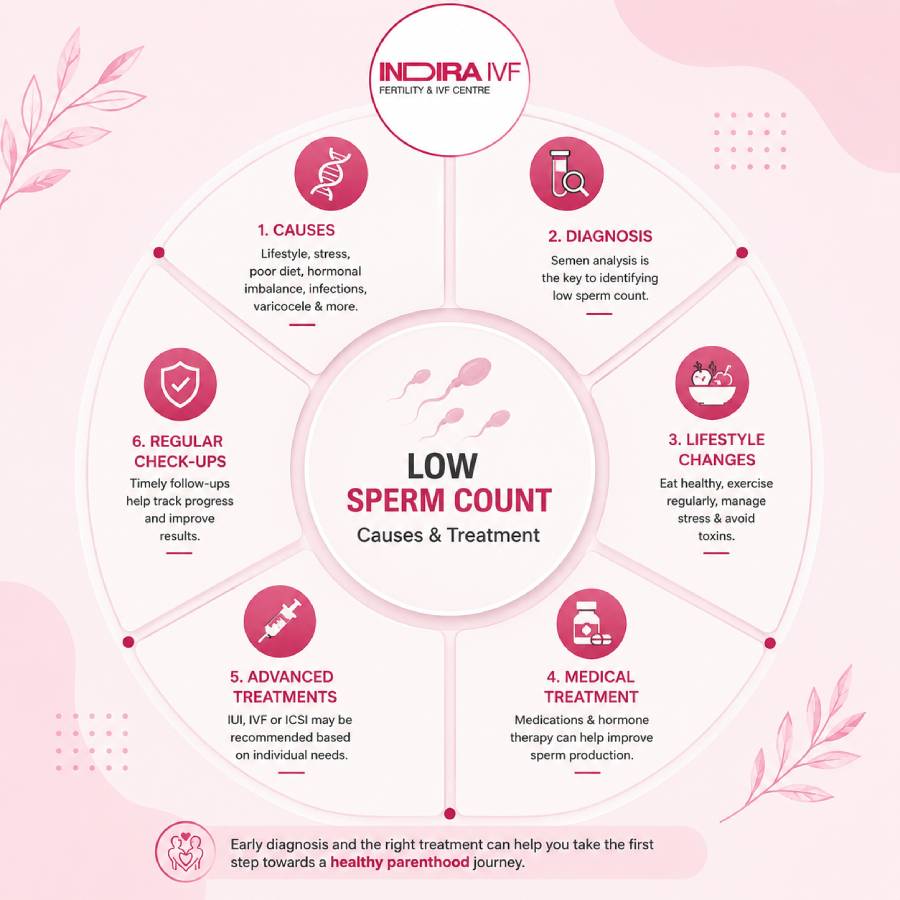
Low sperm count reduces the chances of natural conception because fewer sperm are available to reach and fertilise the egg. This condition, called oligospermia, is diagnosed when sperm concentration is below 15 million per mL or total count is below 39 million per ejaculate, based on WHO 2021 reference values.
These are reference ranges, not strict fertility cut-offs, so conception can still occur depending on individual factors.
Fertility also depends on sperm motility, morphology and the female partner’s health. Mild cases may still allow natural conception, though it may take longer. In more severe cases, assisted reproductive techniques may be required. In many men, treating the underlying cause or improving lifestyle can enhance sperm parameters over time.
How Is Low Sperm Count Classified?
Low sperm count (oligospermia) is classified based on how many sperm are present in each millilitre of semen. This helps assess severity and guide next steps in treatment or fertility planning.
Category | Specific Causes | Reversibility |
Anatomical | Varicocele, ductal obstruction, undescended testes | Often reversible with surgery |
Hormonal | Hypogonadotrophic hypogonadism, hyperprolactinaemia, thyroid disorders | Usually treatable with medication |
Genetic | Klinefelter syndrome, Y-chromosome microdeletions, CBAVD | Generally not reversible; ART may help |
Infections | Orchitis, epididymitis, sexually transmitted infections | Often reversible if treated early |
Lifestyle | Smoking, excess alcohol, obesity, anabolic steroid use, heat exposure | Reversible with lifestyle changes |
Environmental | Pesticides, heavy metals, BPA, phthalates | Partially reversible; exposure reduction helps |
Idiopathic | No identifiable cause (around 30-40% of cases) | Managed case-by-case; ART may be considered |
In general, lower counts mean fewer sperm are available to reach and fertilise the egg, but fertility potential also depends on sperm motility and shape, not just concentration.
How Does a Varicocele Cause Low Sperm Count?
A varicocele is an enlargement of the veins in the scrotum that disrupts normal blood flow. Instead of helping the area stay cool, it causes warm blood to pool around the testes. Since sperm production needs a temperature slightly lower than body temperature, this extra heat can interfere with sperm formation.
It can also reduce proper blood circulation, meaning less oxygen reaches the testicular tissue and waste products are not cleared efficiently. Over time, this leads to oxidative stress, which can damage sperm-producing cells and affect both sperm count and quality.
Varicoceles are found in roughly 35% of men evaluated for infertility, and in many cases, surgical repair can improve sperm concentration and overall fertility outcomes.
Can Lifestyle Choices Lower Sperm Count?
Yes, everyday habits can meaningfully affect sperm production, often more than people realise.
Smoking exposes the body to toxins that damage sperm-forming cells and increase DNA fragmentation in sperm. Alcohol, especially in excess, interferes with testosterone production, which is essential for healthy sperm formation.
Weight also plays a role. Obesity can shift hormone balance by increasing oestrogen levels and lowering testosterone, which can suppress sperm production.
Anabolic steroids are particularly harmful because they signal the body to stop natural testosterone production, which can drastically reduce or even shut down sperm production while in use.
Even heat exposure matters. Regular use of hot tubs, saunas, tight undergarments or keeping laptops directly on the lap can raise scrotal temperature enough to reduce sperm output temporarily.
In many cases, improving these habits can lead to noticeable improvements in sperm count over a few months.
What Are the Symptoms of Low Sperm Count?

Low sperm count (oligospermia) usually does not cause any noticeable physical symptoms on its own. Most men have normal semen volume, colour, and consistency, so there is no visible way to tell based on appearance alone. In most cases, the only clear low sperm count signs is difficulty conceiving after a year of regular, unprotected intercourse (or six months if the female partner is over 35).
What sometimes causes symptoms is the underlying issue behind low sperm count. For example, a varicocele can cause a dull ache in the scrotum, often worse after long periods of standing and may feel like a soft “bag of worms” on one side.
Hormonal imbalances may present as reduced sex drive, fatigue, loss of muscle mass or decreased body hair. If an infection is present, there may be pain, swelling or discomfort in the testicles.
These symptoms point to the underlying cause rather than the sperm count itself. That is why a semen analysis remains the only reliable way to confirm oligospermia.
How Does Low Sperm Count Affect Fertility?
A low sperm count reduces the chance of natural conception in each cycle because fewer sperm are available to make the long journey through the cervix and uterus to reach the egg. Since the egg is only viable for about 12–24 hours, timing and sperm numbers both matter.
The impact becomes more significant when a low count is combined with poor motility or abnormal morphology. In mild cases where sperm quality is otherwise normal, natural conception is still possible, but it may take longer. In more severe cases, assisted reproductive techniques (ART) are often needed.
Does Low Sperm Count Mean Infertility Is Certain?
No. Low sperm count does not mean infertility is certain. Many men with mild to moderate oligospermia can still conceive naturally.
Even in severe cases, techniques like intracytoplasmic sperm injection (ICSI) can achieve fertilisation using a single sperm. In some cases, sperm can also be retrieved directly from the testes.
Can Low Sperm Count Affect the Health of Children?
In most cases, no. Children conceived with low sperm count are generally as healthy as others.
The main exception is when the cause is genetic, such as Y-chromosome microdeletions. These may be passed to male offspring and affect their fertility later in life. Genetic testing may be advised before certain fertility treatments.
How Is Low Sperm Count Diagnosed?
Low sperm count is diagnosed through a semen analysis. The sample is usually collected after 2 to 5 days of abstinence and examined within an hour. It checks sperm concentration, total count, motility, morphology, volume, and pH.
If results are abnormal, the test is repeated after 4 to 6 weeks to confirm the finding before making any diagnosis.
Once a low sperm count is confirmed, further tests are done to find the cause. These often include blood tests for hormones such as FSH, LH, testosterone prolactin and TSH.
A scrotal ultrasound may be used to evaluate for conditions such as a varicocele. In severe cases, genetic tests such as karyotyping and Y-chromosome microdeletion analysis may be recommended.
If semen volume is also low, a urine test after ejaculation may be done to rule out retrograde ejaculation.
What Is the Treatment for Low Sperm Count?
Treatment depends entirely on the underlying cause. It usually follows a stepwise approach, starting with lifestyle changes and moving to medication, surgery or assisted reproductive techniques if needed.
Can Lifestyle Changes Improve Sperm Count?
Yes, especially when the cause is related to daily habits. Sperm take about 2 to 3 months to mature fully, so improvements are usually seen after this period.
Common changes that help include:
- Stopping smoking
- Reducing alcohol intake
- Losing excess weight
- Stopping anabolic steroid use
- Avoiding heat exposure to the groin
- Limiting exposure to toxins and endocrine-disrupting chemicals
These changes can improve sperm concentration in mild-to-moderate cases.
What Medical Treatments Are Available for Low Sperm Count?
Medication is used when a specific medical cause is identified.
- Hormone therapy (FSH/LH injections): Used when the body is not producing enough reproductive hormones. This can directly stimulate sperm production.
- Antibiotics: Used when a confirmed infection is affecting the reproductive tract and may be impacting sperm quality or production.
- Dopamine agonists (for example, cabergoline): Used when elevated prolactin levels are interfering with hormone signals needed for normal sperm production.
- Thyroid treatment: Given when thyroid levels are too high or too low, correcting the imbalance can help improve sperm parameters and overall reproductive function.
When Is Surgery Recommended for Low Sperm Count?
Surgery is usually considered when a structural issue is correctable.
- Varicocelectomy: Repairs enlarged scrotal veins and can improve sperm count and motility.
- Vasectomy reversal: For men who have had a vasectomy and want to restore fertility.
- Duct surgery: Used when sperm flow is blocked in the reproductive tract.
What Assisted Reproductive Options Are Available for Low Sperm Count?
If natural conception is difficult, assisted reproductive techniques (ART) can help.
- IUI (Intrauterine Insemination): Washed and concentrated sperm are placed directly into the uterus. Used in mild to moderate cases.
- IVF (In Vitro Fertilisation): Eggs and sperm are combined in a lab to achieve fertilisation.
- ICSI (Intracytoplasmic Sperm Injection): A single sperm is injected directly into an egg. Used in severe cases of low sperm count.
- Surgical sperm retrieval + ICSI: In cases with no sperm in semen, sperm can be extracted directly from the testes or epididymis and used for fertilisation.
Key Takeaways
Low sperm count mainly lowers the chances of natural conception, but it does not rule out the possibility of having children. The impact varies depending on how low the count is and whether other factors, such as sperm movement, shape or underlying health issues, are also present.
In many cases, the cause can be identified and treated. Options like varicocele repair, hormone correction, infection treatment, and lifestyle changes can improve sperm parameters over a few months. If these are not enough, assisted reproductive techniques such as ICSI can still make fertilisation possible even with very few sperm.
The key step after a low semen analysis result is a proper evaluation to understand the cause. Once that is clear, treatment can be directed appropriately and in many cases, fertility potential can improve significantly rather than being permanently affected.