
Overview
Yoga asanas are useful for women trying to get pregnant or who are facing challenges in conceiving. No single yoga asana has been scientifically proven in improving fertility, but practising yoga can help reduce stress, improve blood circulation, and enhance muscle flexibility. Yoga offers many advantages both physically and mentally to assist in preparing for conception, an enjoyable pregnancy and a healthy delivery. In this article, we will explore how yoga can improve and enhance your fertility and your ability to become pregnant, along with various yoga asanas that can help improve your fertility.
Table of Contents
- Introduction
- Does Yoga Improve IVF Success?
- Can You Practise Yoga During IVF?
- Benefits of yoga asanas for fertility
- Yoga asanas for fertility
- Tips for Practising Yoga Safely During IVF
- When Should You Stop Yoga During IVF?
- Can Men Practise Yoga During Fertility Treatment?
- Conclusion
- Beyond Yoga: Other Ways to Support Yourself During IVF
Introduction
Couples who face challenges to conceive often undergo a lot of stress. Though medical interventions and treatments are available, natural methods combined with medical treatments can offer the best results to improve fertility. Yoga asanas for fertility include physical poses, breathing exercises, and meditation that improve reproductive health. Couples must understand the factors that can affect reproductive health. Stress, lifestyle factors, and other health problems can influence fertility and the chance of getting pregnant. Yoga exercises improve blood flow to the reproductive system, calm the nervous system, balance hormones, and strengthen the pelvic muscles. Regular yoga practice can help to improve ovulation, support healthy sperm and egg production, and enhance overall health.
Does Yoga Improve IVF Success?
Many couples wonder whether yoga can improve IVF success. While there is no scientific evidence that yoga directly increases pregnancy or live birth rates, it can support your IVF journey in other meaningful ways. Yoga may help reduce stress, improve sleep, encourage relaxation, and support overall physical and emotional well-being. When practised alongside medical treatment and under professional guidance, it can be a helpful addition to a healthy lifestyle during fertility treatment.
Can You Practise Yoga During IVF?
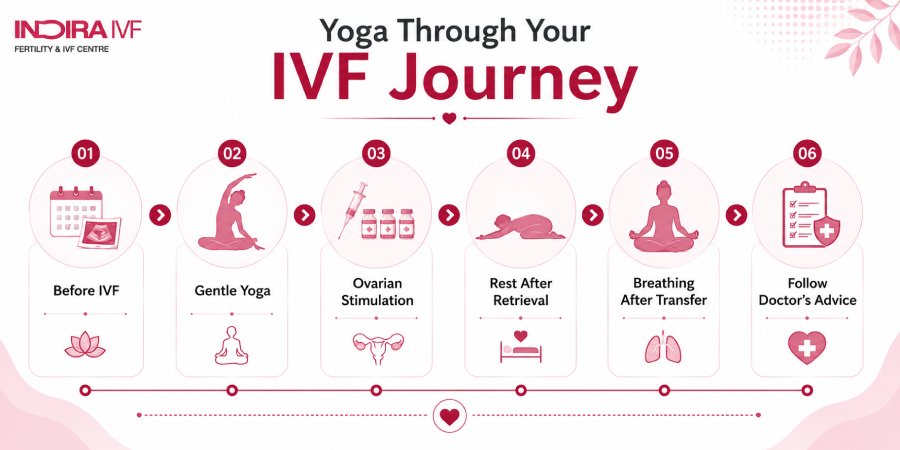
Yes, yoga during IVF is generally considered safe when practised with care and your fertility specialist's approval. Gentle stretching, breathing exercises, and relaxation techniques are usually preferred, especially before and during treatment. However, during ovarian stimulation, the ovaries become enlarged, so strenuous poses, deep twists, jumps, and intense workouts should be avoided.
After embryo transfer, many specialists recommend sticking to light movements or simple breathing exercises until they advise otherwise. Choosing safe yoga poses during IVF and listening to your body's signals can help you stay active without placing unnecessary strain on your body during treatment.
|
IVF Stage |
Yoga? |
|
Before IVF |
Yes |
|
Ovarian stimulation |
Gentle yoga only |
|
After Egg Retrieval |
Rest for a few days |
|
After Embryo Transfer |
Only gentle breathing/relaxation if advised |
Benefits of Yoga Asanas for Fertility
Daily practice of yoga asanas is known to increase energy and improve reproductive health in both men and women. Benefits of yoga asanas for fertility include:
- Yoga is the best way to relieve stress. High levels of stress are strongly associated with fertility as they disrupt the reproductive hormones. Regular yoga sessions can help to minimise stress and improve fertility outcomes naturally.
- Some yoga asanas help to improve blood flow to the pelvic area, which further improves reproductive health. This helps to improve the quality of eggs and sperm by supplying proper nutrients.
- Yoga asanas help enhance the production of necessary hormones by the endocrine system, improving ovulation and increasing the chances of conception.
- Yoga helps to build a strong connection between body and mind. Regular practice also allows for increased self-awareness and better functioning of multiple body systems, including the reproductive system.
- Couples who are trying to become parents may experience emotional challenges, and yoga can be a method to help support their mental state in a non-intrusive manner.
Yoga Asanas for Fertility
The most effective yoga asanas for fertility include the following:
1. Baddha Konasana (Bound Angle Pose)
- For this yoga asana, you have to sit on the floor while breathing, fold your legs close to the body so that both foot soles touch each other in front.
- Let your knees fall to the sides.
- Hold the toes of your feet, and the soles of your feet should touch the ground.
- Ensure your back is stretched through the top and shoulder blades are pressed to the back. Breathe normally in and out.
Benefits:
- It is a good yoga asana for women suffering from PCOS.
- Helps to relieve cramps during pregnancy
- Helps to release stress from the hip and pelvic area
- Stretches inner thighs, knees, and pelvic region.
- Increases blood flow to the pelvic region.
2. Setu Bandhasana (Bridge Pose)
- Lie on your back with knees bent and feet flat on the floor.
- Lift your hips while keeping your feet and shoulders touching the ground.
Benefits
- It helps to strengthen pelvic muscles
- Improve thyroid functions
- Improves blood flow to the uterus and ovaries.
3. Viparita Karani (Legs up the wall pose)
- Keep a folded blanket or pillow some inches away and parallel to the wall.
- Lie down on the blanket and place your legs up against the wall. There should be no space between your legs and the wall.
- Keep your arms on the side and make them face upwards.
- Hold and breathe deeply
Benefits
- Improves blood flow to the pelvic region
- Stimulates the secretion of progesterone and other pregnancy hormones
- Reduces anxiety and depression
- Helps to improve fertility by strengthening pelvic muscles.
4. Paschimottan Asana (Seated forward fold)
- Extend your arms and reach overhead.
- Stretch spine upwards and fold forward, hinging at the hips, and keep your back straight.
- Bend forward while keeping your back extended
- Take deep breaths.
Benefits
- Helps to improve the functioning of reproductive organs
- Relieves stress
- Improves the strength of the hips, hamstrings, and lower back muscles.
5. Bhujangasana (Cobra pose)
- Lie flat on the abdomen, cross hands to support the head.
- Place your forehead on the floor and bring your legs together
- Fold arms at the elbows and palms near the shoulders
- Raise elbows, lift forehead and chin, and inhale.
- Lift your back and keep your abdomen on the floor, and stretch your back.
Benefits
- Improves blood flow and energy
- Helps to manage stress
- Reduces weight
- Strengthen pelvic muscles
6. Dhanurasana (Bow Pose)
Lie on your front, bend your legs at the knees and hold the ankles while lifting the upper body and thighs off the floor. This position is best for women with hypothyroidism or those looking to balance hormones. Benefits
- Expands the chest, belly and pelvis
- Increases the amount of blood that reaches the internal reproductive organs
- Regularises the menstrual cycle
7. Supta Baddha Konasana (Reclining Bound Angle Pose)
Lie flat on back with feet together-knees apart, support- knees with cushion if needed.
Benefits
- Reduces period and PMS pain
- Improves blood circulation to the ovaries and uterus
- Helps to relax pelvic muscles
8. Marjariasana - Bitilasana (Cat-Cow Pose)
Arch your spine (cat) and let the lower abdomen sag (cow) on hands and knees alternately for 1 to 2 minutes. This position may benefit reproductive health.
Benefits
- Massages the internal reproductive organs
- Enhances the flexibility of the spine
- Increases blood flow to the pelvic area
9. Malasana (Garland Pose)
Sit down in a deep squat position, pressing the elbows against the knees while holding the hands together. This position is best for promoting natural fertility, reducing pelvic congestion and relieving constipation.
Benefits
- Strengthens the pelvic area
- Increases the mobility of reproductive organs
10. Chakrasana - Wheel Pose
Lie on your back, place palms near your head, and lift the body into a wheel shape.
Benefits
- Helps to activate the endocrine glands
- Provides better toning of the abdominal and pelvic muscles
- Increases energy levels and may help create a better hormone balance.
Stand straight, bend forward from the hips, and let the head and arms hang down.
Benefits
- Reduces period pain and PMS through improved blood circulation and relaxation of the pelvic muscles
- Increases blood supply to the ovaries and the uterus
- Decreases anxiety and stressful feelings
12. Shavasana - Corpse Pose
Lie flat on the floor with your arms open and legs relaxed, and breathe naturally for 5–10 minutes.
Benefits
- Provides deep relaxation, which leads to decreased stress through the lowering of hormones such as cortisol and adrenaline
- Assist in regulating a woman's menstrual cycle
Tips for Practising Yoga Safely During IVF
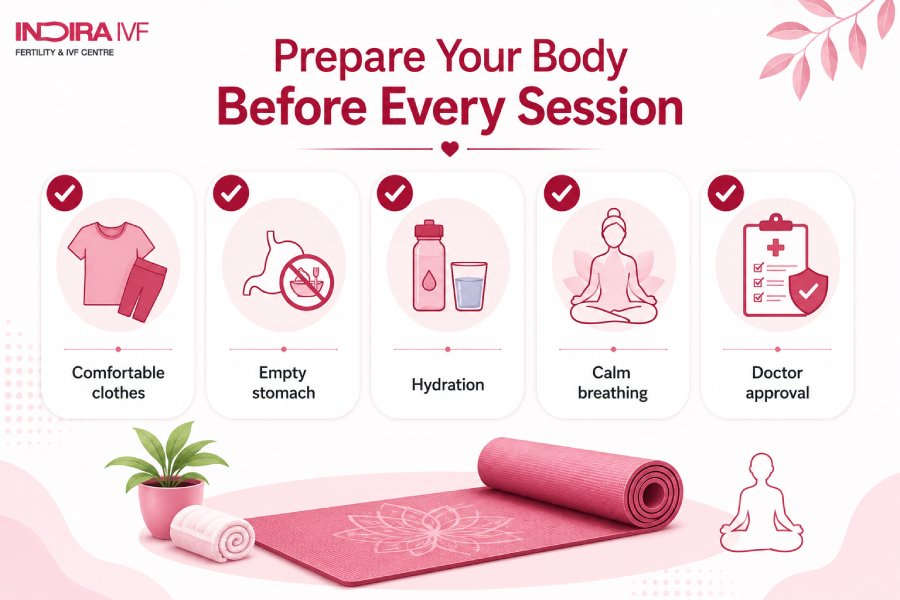
Practising yoga safely during IVF helps you enjoy its benefits without placing unnecessary strain on your body. Keep these tips in mind:
- Always consult your fertility specialist before starting or continuing yoga during IVF.
- If possible, practise under the guidance of a certified yoga instructor familiar with fertility care.
- Choose gentle stretches, breathing exercises, and relaxation techniques instead of high-intensity yoga.
- Stay well hydrated before and after each session.
- Avoid overheating, especially during ovarian stimulation. Skip hot yoga or heated rooms.
- Wear loose, comfortable clothing that allows easy movement.
- Listen to your body and avoid overexertion or challenging poses.
- Stop immediately if you feel pain, discomfort, dizziness, or unusual symptoms.
- After embryo transfer, follow your doctor's advice regarding physical activity and yoga.
When Should You Stop Yoga During IVF?
Stop practising yoga immediately if you experience vaginal bleeding, severe abdominal or pelvic pain, dizziness, breathlessness, or severe bloating during your IVF cycle. These symptoms may require prompt medical evaluation and should not be ignored. Contact your fertility specialist as soon as possible to understand the cause and receive appropriate guidance before resuming any physical activity.
Can Men Practise Yoga During Fertility Treatment?
Yes. Yoga can also benefit men who are undergoing fertility treatment with their partner. Regular practice may help reduce stress, improve sleep quality, encourage relaxation, and support overall hormone balance. It also promotes healthier lifestyle habits such as regular exercise and mindfulness, helping couples stay physically and emotionally prepared throughout their fertility journey together.
Conclusion
Fertility yoga asanas give a natural and holistic way to enhance reproductive health. Yoga asanas improve blood circulation, reduce stress, and support hormonal balance. Couples facing fertility challenges must consider doing yoga asanas to improve fertility, but must consult with an expert before starting.
Beyond Yoga: Other Ways to Support Yourself During IVF
Yoga works best when combined with other healthy habits. Eat a balanced, nutritious diet, maintain a healthy weight, and aim for adequate sleep each night. Take your prescribed medicines exactly as directed, avoid smoking, limit alcohol consumption, and attend all scheduled IVF appointments. Following your treatment plan closely while maintaining a healthy lifestyle can help you stay physically and emotionally prepared throughout your fertility journey.
Common Questions Asked
Can I do yoga under the supervision of a yoga teacher?
Under the supervision of a qualified yoga teacher who practices fertility yoga, poses should be performed correctly to ensure safe and effective practice and to achieve optimal results.
Can I perform fertility yoga while menstruating?
During menstruation, simple yoga poses or breathing practices are typically considered safe; however, if experiencing excessive bleeding, it is best to avoid routine or vigorous activity.
What is the best time to do yoga to increase your chances of having children?
To maximise your chances of conceiving, the most advantageous times to practice yoga for fertility are early in the morning when you are on an empty stomach and approximately 30 minutes, 4-5 times a week for optimal results.
How soon will I experience the benefits of fertility-focused yoga?
Most people experience benefits associated with their fertility within a couple of months of commencing regular practice; however, results may vary greatly depending on numerous other factors, including age, pre-existing health issues, and lifestyle choices.
Are there specific yoga postures for male fertility?
There are a number of yoga poses designed to aid male fertility by increasing blood flow to the male reproductive area and improving sperm quality.