
Overview
Couples who are considering fertility treatments can be filled with fear and common IVF myths. This guide addresses some of the misconceptions about IVF and provides evidence-based facts that help readers understand what IVF is, what to expect, and when to seek expert medical advice.
Table of Contents
- Introduction
- Myth 1: Is IVF Only for Couples Who Can't Have Children Naturally?
- Myth 2: Does IVF Mostly Result in Twins or Triplets?
- Myth 3: Is IVF the Last Option for Everyone?
- Myth 4: Is IVF Always Successful the First Time?
- Myth 5: Is IVF Only for Women Over 35?
- Myth 6: Is IVF Extremely Painful?
- Myth 7: Does IVF Cause Birth Defects?
- Myth 8: Are IVF Babies Different from Naturally Conceived Babies?
- Myth 9: Does Male Fertility Not Affect IVF?
- Myth 10: Can Stress Alone Cause IVF Failure?
- Myth 11. Does IVF Guarantee Pregnancy?
- Myth 12: Do You Need Complete Bed Rest After Embryo Transfer?
- Myth 13: Does Age Stop Mattering If You're Doing IVF?
- Myth 14: Are Frozen Embryos Less Successful Than Fresh Embryos?
- Myth 15: Is IVF Unsafe?
- Myth 16: Is IVF Only Used to Treat Infertility?
- Myth 17: Does Lifestyle Not Affect IVF Outcomes?
- Myth 18: Does One Failed IVF Cycle Mean It Will Never Work?
- Myth 19: Does IVF Cause Early Menopause?
- Myth 20: Is IVF Unnatural?
- Myth 21: Is IVF Only for Couples Without Children?
- Conclusion
Introduction
IVF is a very common fertility treatment, but there are still a lot of IVF misconceptions floating around. Advice from friends, posts on social media, and old information make it hard for couples to sort out fact from fiction. This confusion can lead to unnecessary panic and delay in seeking medical care.
The fact is, millions of families across the globe have been helped by IVF. Like any medical treatment, it has benefits, limits, and success rates that vary from person to person. Couples are guided to make informed decisions by knowing the IVF myths and facts from reliable medical evidence instead of being misled by false information.
Here are some of the most common IVF myths, answered from the current scientific evidence and guidelines from leading fertility organisations:
Myth 1: Is IVF Only for Couples Who Can't Have Children Naturally?
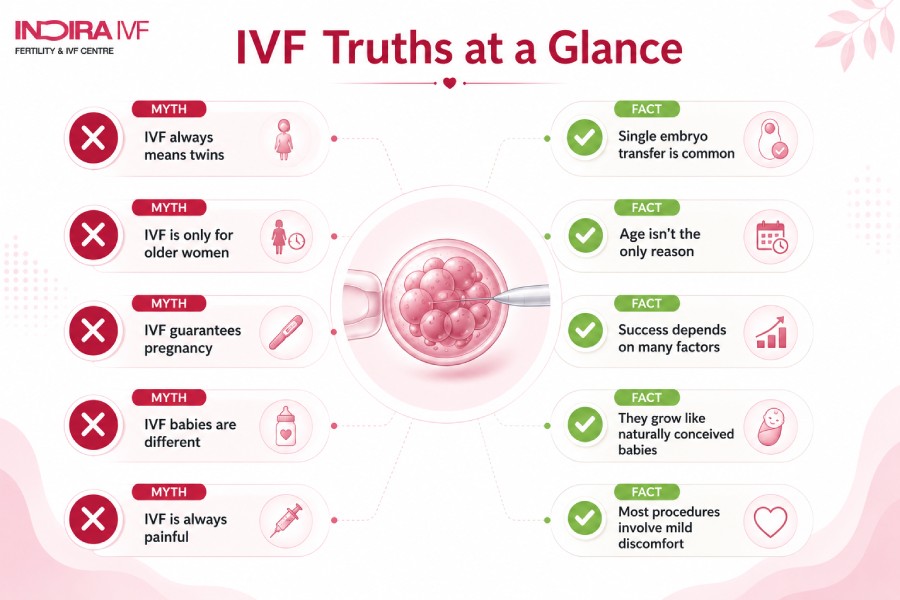
Fact: IVF is one of several fertility treatments available and is only recommended when medically necessary.IVF may help couples where the fallopian tubes are blocked, the man has very poor sperm motility and/or quality, the woman cannot develop eggs, endometriosis, unexplained infertility, or genetic disorders are present. Some couples might prefer to conceive naturally before or even after IVF.
Takeaway message: IVF is one treatment method, but it is not the only way to conceive.
Myth 2: Does IVF Mostly Result in Twins or Triplets?
Fact: With the improvement in embryo selection,multiple pregnancies have been drastically reduced. Many patients are now advised to have only one embryo transferred to enhance the safety of both the mother and the baby.
Takeaway message: Twin pregnancies are not guaranteed with IVF.
Myth 3: Is IVF the Last Option for Everyone?
Fact:There are more treatments available than just IVF; the best treatment will depend on the root cause of the fertility problem.
The reality is that some couples may need to make lifestyle changes or do IUI first, and others who have blocked tubes, or are severely affected by male infertility, or have a low ovarian reserve, may be recommended to skip IUI and go straight to IVF.
Key takeaway: Fertility treatment should always be personalised.
Myth 4: Is IVF Always Successful the First Time?
Fact: The success of IVF is dictated by several medical factors. Success depends on age, embryo quality, uterine health, sperm quality, and overall reproductive health. A lot of couples need more than one IVF cycle.
Key takeaway: A failed IVF cycle is not a permanent IVF failure.
Myth 5: Is IVF Only for Women Over 35?
Fact: IVF can be offered at any age of reproduction if there is a medical indication. If a woman is under the age of 35 and has blocked fallopian tubes, severe endometriosis, genetic conditions, or male infertility, she may require IVF. Fertility assessment is more than just age.
Takeaway: IVF is about diagnosis, not just age.
Myth 6: Is IVF Extremely Painful?
Fact: Most IVF procedures involve only mild discomfort. Hormone injections, blood tests, and ultrasound scans are routine. Egg retrieval is performed under sedation or anaesthesia, making the procedure comfortable for most women.
Key takeaway: IVF is generally well tolerated.
Myth 7: Does IVF Cause Birth Defects?
Fact: Most babies born through IVF are healthy. Research shows that the overall risk of birth defects remains low. Maternal age and existing medical conditions often influence pregnancy outcomes more than IVF itself.
Key takeaway: IVF is considered a safe fertility treatment.
Myth 8: Are IVF Babies Different from Naturally Conceived Babies?
Fact: IVF babies grow and develop just like other children. Children conceived through IVF are no different in terms of intelligence, growth, or development,studies show.
Bottom line: IVF changes the beginning of pregnancy, not the growth of a child.
Myth 9: Does Male Fertility Not Affect IVF?
Fact: Male fertility is just as important. Sperm count, movement, shape, and DNA quality can all affect fertilisation and embryo development. Assessment of male fertility is an important part of IVF planning.
Important note: Fertility needs to be assessed in both partners.
Myth 10: Can Stress Alone Cause IVF Failure?
Fact: There has never been any proof that stress directly leads to IVF failure. Emotional stress often accompanies fertility treatment. Though stress management is an important part of overall well-being, implementation is primarily governed by medical and biological factors.
Key takeaway: If treatment doesn’t work, don’t blame yourself.
Myth 11. Does IVF Guarantee Pregnancy?
Fact: Many fertility treatment myths suggest that it can guarantee a pregnancy. IVF improves chances of conception for many couples, but IVF treatment facts is it depends on age, diagnosis, embryo quality, and several individual factors.
Key takeaway: The odds are in your favour with IVF, but not every single cycle.
Myth 12: Do You Need Complete Bed Rest After Embryo Transfer?
Fact: Bed rest is usually not recommended. Most fertility specialists recommend resuming light daily activities after embryo transfer. There is no convincing evidence that bed rest improves implantation or pregnancy rates.
Bottom line: Gentle activity is OK every day, unless the doctor says to avoid it.
Myth 13: Does Age Stop Mattering If You're Doing IVF?
Fact: Age remains one of the biggest factors in the success of IVF; however, you can still go for IVF following all the tests. The natural decline in the number and quality of eggs occurs as women age. IVF can improve the odds of getting pregnant but cannot reverse the effects of ageing on fertility.
Take-home message: Early assessment of fertility often allows more treatment options.
Myth 14: Are Frozen Embryos Less Successful Than Fresh Embryos?
Fact: Frozen embryo transfer can be just as successful as fresh embryo transfer. Advances in embryo freezing techniques have greatly improved success rates. In many situations,frozen embryo transfer offers pregnancy rates similar to, or sometimes better than, fresh transfers.
Key takeaway: The best option depends on each patient's medical condition.
Myth 15: Is IVF Unsafe?
Fact: IVF is considered a safe and well-established fertility treatment. Like any medical procedure, IVF has potential risks, such as ovarian hyperstimulation syndrome (OHSS) or multiple pregnancy in selected cases. However, careful monitoring helps minimise these risks.
Key takeaway: IVF is generally safe when performed under specialist supervision.
Myth 16: Is IVF Only Used to Treat Infertility?
Fact: IVF may also help prevent certain inherited genetic conditions. Some couples undergo IVF together with preimplantation genetic testing (PGT) to reduce the risk of passing specific inherited genetic disorders to their children.
Key takeaway: IVF has medical uses beyond infertility treatment.
Myth 17: Does Lifestyle Not Affect IVF Outcomes?
Fact: Making healthy lifestyle choices is good for reproductive health. Keeping a healthy weight, not smoking, limiting alcohol, eating a well-rounded diet, exercising regularly, and controlling medical conditions may help to improve overall fertility and treatment outcomes.
The Bottom Line: Good habits boost fertility before and during IVF.
Myth 18: Does One Failed IVF Cycle Mean It Will Never Work?
Fact: Many successful pregnancies occur after later IVF cycles. After an unsuccessful cycle, fertility specialists review embryo quality, medications, laboratory findings, and uterine factors before planning the next treatment. Small adjustments can improve future outcomes.
Key takeaway: One unsuccessful cycle should not discourage future treatment.
Myth 19: Does IVF Cause Early Menopause?
Fact: IVF does not cause early menopause. During IVF, medications help mature eggs that would naturally be lost during that menstrual cycle. They do not permanently reduce ovarian reserve or speed up menopause.
Key takeaway: Don’t let one failed cycle deter future treatment
Myth 20: Is IVF Unnatural?
Fact: IVF only helps fertilisation outside the body. The embryo is then placed in the uterus, and the pregnancy proceeds as usual. The growth and development of the baby is the same biological process as any other pregnancy
Key takeaway: IVF helps conception but doesn’t alter how pregnancy progresses.
Myth 21: Is IVF Only for Couples Without Children?
Fact: IVF can also be helpful for couples who are planning to have another baby. Fact. A couple with one child may suffer from secondary infertility. If natural conception has not occurred after suitable assessment, IVF may be advised.
Key takeaway: IVF is helpful for both first-time and second-time parents.
Conclusion
There are numerous IVF myths, but medical research reveals a very different story. Understanding the myths about IVF allows couples to make informed decisions rather than relying on misinformation. IVF is a well-known treatment that has helped millions of people start families.
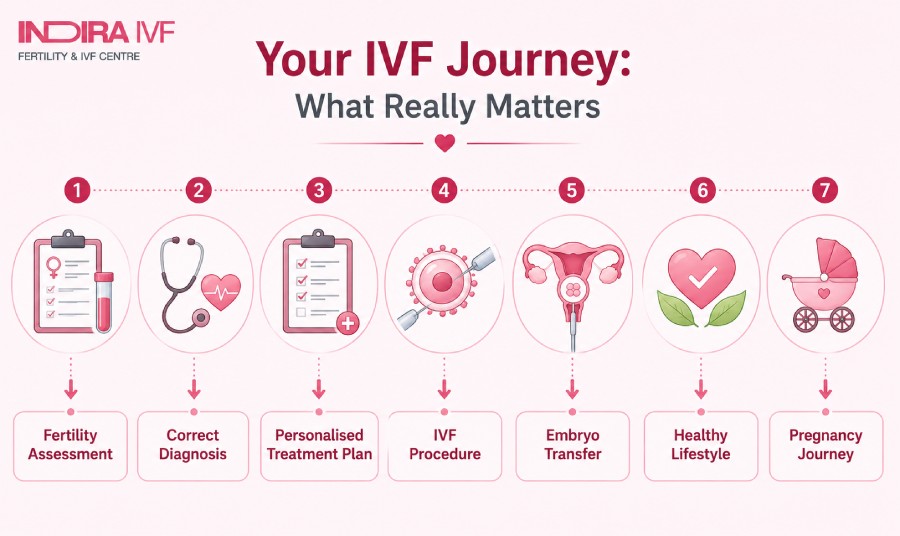
If your pregnancy is taking longer than expected or you are concerned about your fertility, you should consult a fertility specialist rather than relying on social media or hearsay. A proper fertility assessment can help determine the underlying cause and the most appropriate treatment.
Contacting us for accurate information at the right time is the first step towards making informed reproductive health decisions.