
Overview
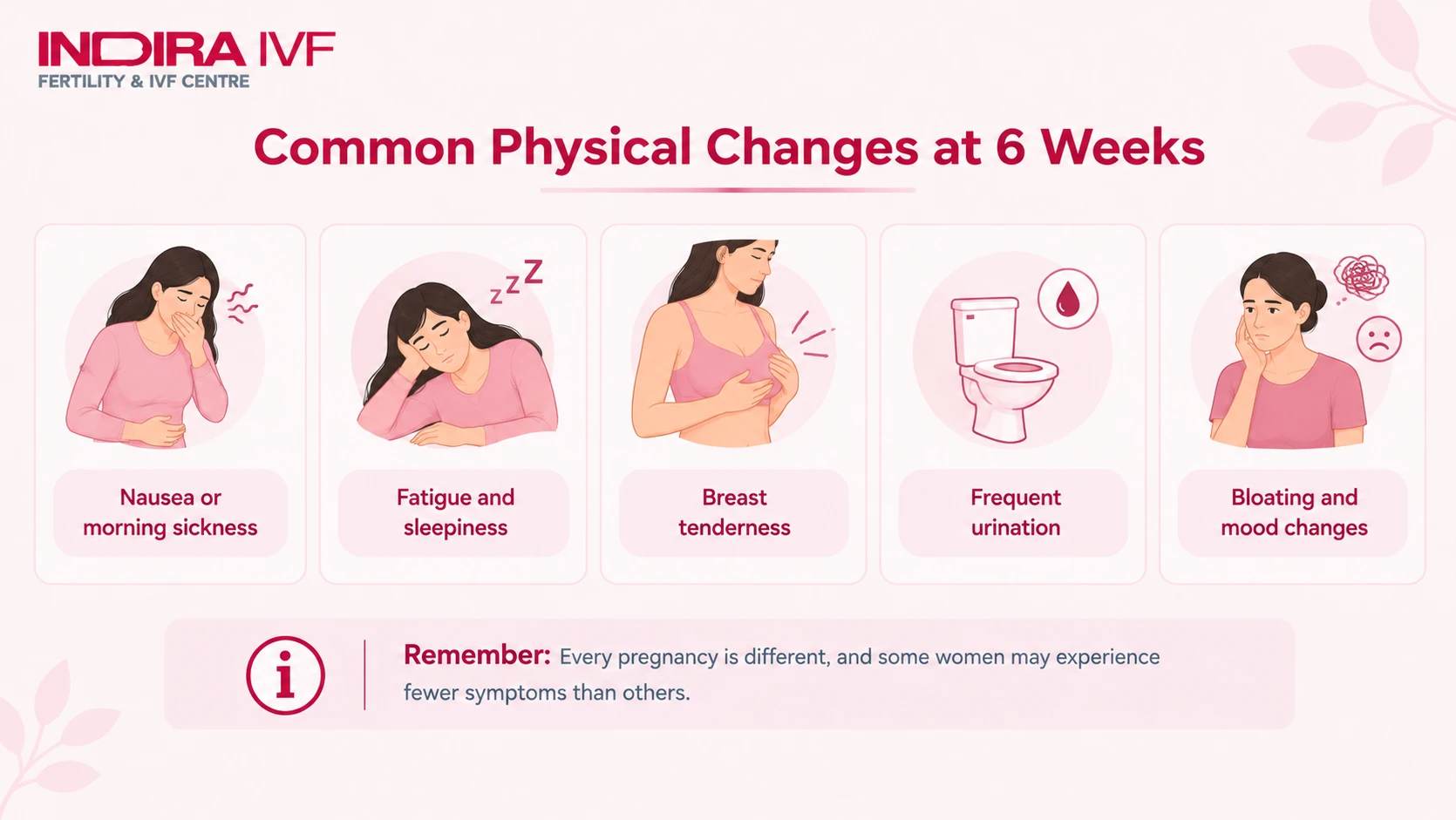
Being 6 weeks pregnant can be an emotional roller coaster. Your body experiences a lot of changes during this stage. You may be feeling sick, tired, and having sore breasts. You may also need to urinate more often. Some women feel several of these changes, while others notice very little.
Knowing what 6th week pregnancy symptoms can feel like may make this stage easier to understand. Here, we will cover baby development at 6 weeks pregnant, common symptoms, signs of a healthy pregnancy, and what you may experience at your first appointment.
Table of Contents
- 6 Weeks Pregnant: Baby Development, Symptoms & Signs
- 6th Week Pregnancy Symptoms: What You May Experience
- Early Signs of Pregnancy at 6 Weeks
- Is Week 6 the Worst Week of Pregnancy?
- What Are Signs of a Healthy Pregnancy at 6 Weeks?
- What Are Good Signs Your Pregnancy Is Progressing?
- What Happens to Your Body at 6 Weeks Pregnant?
- How to Take Care of Yourself at 6 Weeks Pregnant
- What Should You Avoid at 6 Weeks Pregnant?
- When Should You Contact Your Doctor at 6 Weeks Pregnant?
- What to Expect From Your First Pregnancy Appointment
- Conclusion
6 Weeks Pregnant: Baby Development, Symptoms & Signs
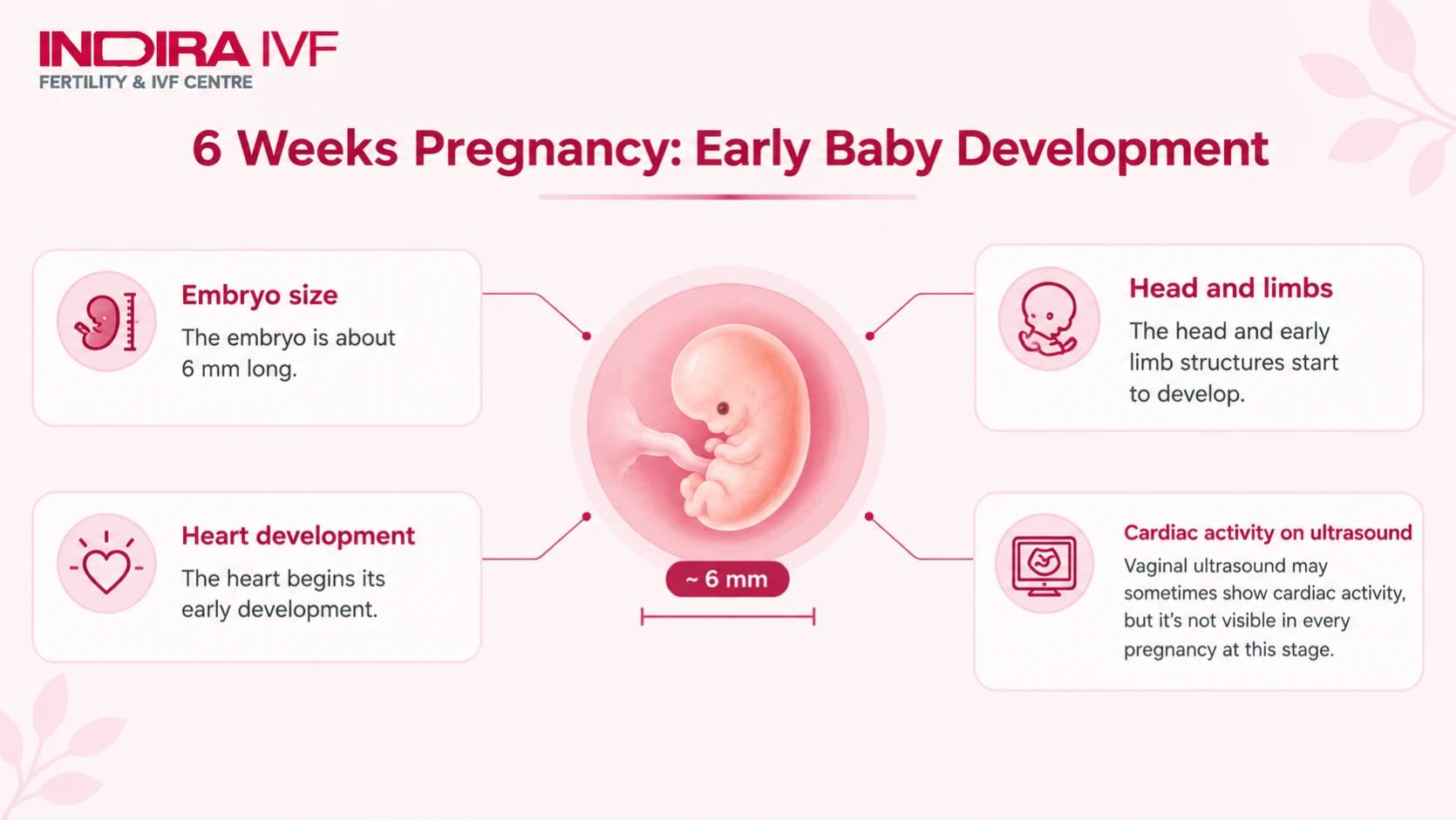
Baby development at 6 weeks pregnant progresses rapidly. The embryo is about 6 mm long, roughly the size of a pea. Structures such as the head, heart, and limbs begin to form. Small structures that will become the ears are also beginning to form. Cardiac activity may be seen on a vaginal ultrasound around this stage, although it may not be visible in every pregnancy yet.
In addition, your pregnancy will probably become even more evident as your hormone levels continue to increase. This may lead to various changes.
6th Week Pregnancy Symptoms: What You May Experience
The common symptoms at 6 weeks pregnant may vary from one individual to another. These may arise quickly or take some time to develop.
Nausea and Morning Sickness
Nausea is common in early pregnancy and may occur at any time of day, not just in the morning. Small meals, plain foods, and adequate fluids may help. If you cannot keep fluids down or feel dizzy or faint, contact your doctor.
Fatigue and Increased Sleepiness
Feeling unusually tired is another sign of pregnancy and can start early. Hormonal changes can cause tiredness. Getting enough sleep and eating healthy are crucial. You can add physical exercise to your daily schedule if your doctor approves it.
Breast Tenderness and Changes
You may experience breast tenderness, fullness, and/or sensitivity. Your nipples and the area around your nipples will also go through changes. It happens because of pregnancy hormones and decreases during pregnancy.
Frequent Urination
It is very common for women who are pregnant to find themselves needing to urinate more often than before. This results from hormonal changes and increased blood flow to the kidneys.
Early Signs of Pregnancy at 6 Weeks
The early signs of pregnancy at 6 weeks can include a missed period, nausea, tiredness, tender breasts, frequent urination, constipation, increased vaginal discharge, and changes in food preferences or smell. Mild cramping or light spotting can also occur, but bleeding should be discussed with your doctor.
Not everyone experiences the same symptoms. Having fewer symptoms does not, by itself, mean that something is wrong.
Is Week 6 the Worst Week of Pregnancy?
Week 6 is not necessarily the worst week of pregnancy. Symptoms may be stronger because hormone levels are rising, but each pregnancy is unique. Nausea and fatigue may vary in the coming weeks. If your symptoms are severe or keep you from eating or drinking, contact your healthcare provider.
What Are Signs of a Healthy Pregnancy at 6 Weeks?
Healthy pregnancy signs at 6 weeks that are commonly experienced include morning sickness, soreness in the breasts, fatigue, and a frequent urge to pass urine. But each person experiences different pregnancy symptoms, and they alone cannot be an assurance that your pregnancy is developing well. Medical history, physical examination, blood tests, and ultrasound can help your doctor evaluate the pregnancy's development.
What Are Good Signs Your Pregnancy Is Progressing?
By week 6, you will begin experiencing changes in your body. As the pregnancy progresses, nausea, fatigue, and soreness in breasts may be increasingly common. However, these symptoms alone aren't enough to determine your pregnancy's progress. Ultrasound or other examinations help your doctor get a clearer picture of your pregnancy's development.
What Happens to Your Body at 6 Weeks Pregnant?
A lot is going on in your body at this point, although you may not look very different on the outside. Changes in hormones might make you feel sick. Your breasts may feel sore, and you may find yourself using the bathroom more often. Bloating, mood changes, and more vaginal discharge can happen too.
How to Take Care of Yourself at 6 Weeks Pregnant
This is a good time to focus on the basics:
- Take folic acid and other supplements your doctor prescribed.
- Eat a healthy and well-balanced meal.
- Drink enough fluids to stay hydrated.
- Get adequate sleep whenever you wish.
- Do light exercise as your doctor recommends.
- Go for your scheduled pregnancy check-ups.
- Ask your doctor before taking any medicine or herbal product.
What Should You Avoid at 6 Weeks Pregnant?
Do not consume alcohol or smoke cigarettes. Do not eat foods that may contain harmful bacteria, such as pasteurised products and raw meat, eggs, and seafood. Food containing a lot of mercury should also be avoided.
Always wash your fruits and vegetables thoroughly before consumption. If you are taking any medicine, do not stop taking it on your own without checking with your doctor.
When Should You Contact Your Doctor at 6 Weeks Pregnant?
Some discomfort is common in early pregnancy, but you should not ignore certain symptoms.
- Tell your doctor if you have vaginal bleeding or abdominal or pelvic pain that is strong or getting worse.
- Severe abdominal pain or fainting needs urgent medical attention.
- Contact your doctor if you have shoulder pain with bleeding, as it can be a sign of ectopic pregnancy
- The same applies if vomiting is so severe that you cannot keep fluids down or you are becoming dizzy or passing very little urine.
What to Expect From Your First Pregnancy Appointment
Your first appointment is mainly about getting a clear picture of your pregnancy and your health. It is also a good opportunity to ask questions about anything you have been experiencing.
Pregnancy Confirmation and Medical History
Your doctor will ask questions about the date of your last menstrual cycle, previous pregnancies, past illnesses, and any medicines you may be taking. This information will help determine how many weeks pregnant you are and the care you may need.
Early Pregnancy Ultrasound
You may be advised to have an ultrasound at this stage. It can help confirm where the pregnancy is developing and estimate your due date. Around 6 weeks, you may sometimes see cardiac activity on a vaginal ultrasound. It is not always visible this early.
Tests and Supplements Your Doctor May Recommend
You may need blood or urine tests during the early weeks. Your physician might also prescribe some folic acid and other prenatal vitamins as per the requirements of your body.
Conclusion
Week 6 can feel different for everyone. It can bring many changes, and it is normal to have questions about what you are feeling. Nausea, tiredness, breast tenderness, and frequent urination are common, while some women may have only a few symptoms. On the other hand, there are some important developments that occur in the development of your baby at the same time. It is a great time to focus on yourself, take the recommended vitamins, eat a healthy diet, stay hydrated, and attend all your pregnancy appointments. Learning what to expect during week 6 of pregnancy will be of great help to you.
Remember, if you have bleeding, severe pain, very heavy vomiting, or anything that concerns you, do not hesitate to speak with your doctor. With the right care and regular check-ups, you can take the next steps of your pregnancy with greater confidence.