
Overview
IVF has evolved enormously over the past four decades. The procedures, the laboratory science, and the level of personal care available today look very different from what existed in 1978. Couples starting IVF now can expect higher safety standards, better success rates, and far more tailored treatment than the pioneers of the field could have imagined.
This article traces IVF's origins, the changes it has undergone since, and the realistic outcomes couples can expect from treatment today.
Table of Contents
- Introduction
- The Birth of the First IVF Baby
- IVF Then vs Now: An Overview
- How IVF Worked in the Early Days
- How Modern IVF Has Evolved
- Major Advances That Have Changed IVF
- Success Rates: Then vs Now
- How Patient Care Has Improved
- Modern IVF Offers More Options Than Before
- Common Myths About Modern IVF
- Challenges That Still Remain
- What Couples Should Know Before Choosing IVF
- The Future of IVF
- Conclusion
Introduction
Trying to conceive and not succeeding, cycle after cycle, takes a real emotional toll on couples. The waiting is hard. The hope is wavering. And the disappointment, if it comes, can feel heavier each time. Infertility affects people across every background, and for decades, it has left many couples with few real options. However,In Vitro Fertilisation (IVF) changed that.
The birth of the world's first IVF baby marked a turning point in reproductive medicine. It proved that conception could occur outside the human body and still result in a healthy birth. That single event opened the door to a field that has since helped millions of people worldwide build families.
The Birth of the First IVF Baby
Louise Brown was born in Oldham, England, in 1978. She was the first person conceived through IVF. Dr Patrick Steptoe, a gynaecologist, and Dr Robert Edwards, a physiologist, had spent nearly a decade working out how to fertilise a human egg outside the body and transfer the embryo back into the uterus. Their earlier attempts had failed. Louise Brown became the first child born following IVF treatment.
Not everyone welcomed the news. Some scientists questioned the safety of the procedure. Some religious leaders raised ethical objections. The scepticism didn't settle until Louise Brown grew up. She was healthy and went on to have two children of her own, both conceived naturally.
Edwards received the Nobel Prize in Physiology or Medicine in 2010, more than three decades after that first birth. Steptoe had died in 1988 and so was never eligible, since the prize isn't awarded posthumously. By then, the technique they'd developed together had helped millions of people come into the world.
Before 1978, a blocked fallopian tube orunexplained infertility often meant the end of the road for a couple trying to conceive. IVF has helped couples dealing with male infertility, genetic conditions, and cases with no clear diagnosis at all.
IVF Then vs Now: An Overview
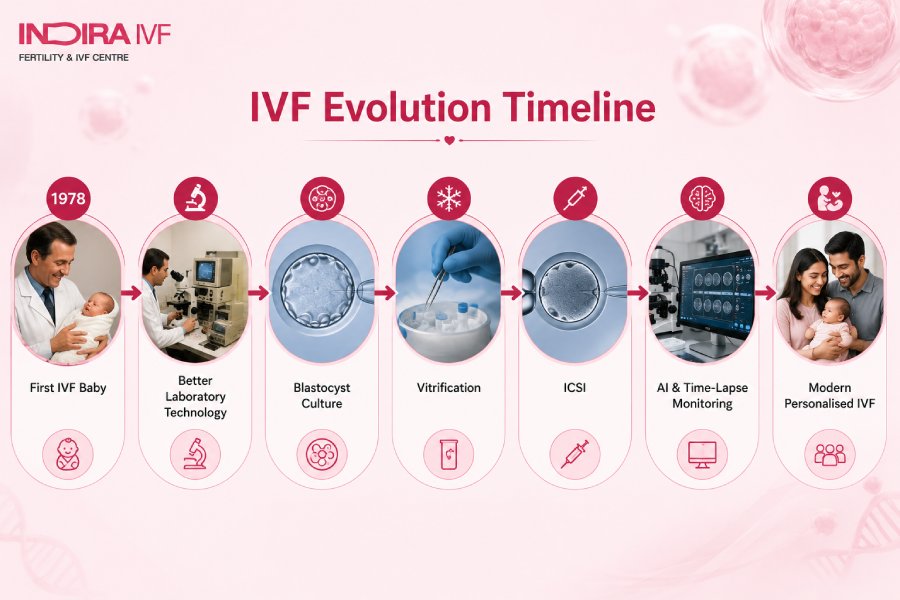
Aspect | Early IVF (1978) | Modern IVF |
Fertility Evaluation | Basic testing, limited diagnostic tools | Detailed hormonal, ovarian reserve, and genetic evaluation |
Ovarian Stimulation | Minimal or no stimulation, natural cycle IVF | Personalised stimulation protocols based on individual response |
Laboratory Technology | Basic incubators, manual monitoring | Advanced incubators with controlled conditions and monitoring systems |
Embryo Selection | Visual assessment only | Time-lapse imaging, blastocyst culture, and genetic testing when indicated |
Cryopreservation | Slow freezing, lower survival rates | Vitrification, with significantly higher embryo survival |
Success Rates | Around 6 per cent per cycle | Considerably higher, varying by age and individual factors |
Personalisation | One general protocol for most patients | Individualised treatment plans based on each patient's profile |
How IVF Worked in the Early Days
The early IVF process was simple by today's standards. Doctors monitored a woman's natural cycle and retrieved a single egg at the right time. This egg was fertilised in a lab dish with sperm, and if fertilisation occurred, the embryo was transferred back into the uterus.
Much of this simplicity came from how little was understood at the time. Doctors in the 1970s often couldn't explain why a couple wasn't conceiving.Diminished ovarian reserve and specific sperm abnormalities, both routinely diagnosed today, had no name yet and no real research behind them.
This lack of understanding showed up throughout treatment. Egg retrieval required surgery under general anaesthesia, since laparoscopic techniques were still new. Lab conditions were harder to control, and embryologists knew far less about what an embryo actually needed to develop outside the body.
None of this made success easy. Success rates hovered around 6 per cent per cycle, and couples went into treatment knowing the odds were difficult. For many, though, IVF was still the only option they had.
How Modern IVF Has Evolved
- Assessment happens before treatment even begins
Ovarian reserve, hormone levels, and sperm quality are all evaluated in detail, which is why doctors today can walk a couple through realistic expectations from the first consultation.
- Stimulation protocols aren't one-size-fits-all anymore, either
A 25-year-old and a 38-year-old respond to fertility medication very differently, so dosing is built around each woman's age, hormone profile, and the way her body reacts. This has reduced complications such as ovarian hyperstimulation and increased the number of usable eggs per cycle.
- Embryo culture techniques have improved
In the lab, incubators now hold temperature, humidity, and gas levels steady enough to mimic conditions inside the fallopian tube. Embryos can sit in culture for five to six days before transfer, long enough to reach the blastocyst stage, where embryologists get a far better read on which ones are in optimal condition to implant.
- Retrieval has changed
The procedure once required more invasive surgery, but now can be done under light sedation with ultrasound guidance. It is an outpatient procedure that's quicker and considerably easier on the patient than it was in IVF's early years.
Major Advances That Have Changed IVF
- Ultrasound imaging has advanced to the point that doctors can now track follicle growth closely and time egg retrieval to the day, making the whole process both safer and more precise.
- Freezing technology changed with vitrification. It is a fast-freeze method that replaced the older, slower approach and dramatically improved the survival of eggs and embryos during thawing.
- Embryologists can now observe embryos for several additional days before transfer, culturing them to the blastocyst stage. The extra time reveals which embryos are actually likely to implant. This information wasn't available before.
- Cameras built into the incubator now enable continuous time-lapse monitoring of embryonic development, giving embryologists more data without disturbing the embryos.
- For couples dealing with male infertility, ICSI changed what was possible. In this procedure, a single sperm is injected directly into an egg, bypassing the barriers that would otherwise prevent fertilisation.
- For select cases, preimplantation genetic testing screens embryos for specific chromosomal or genetic conditions before transfer. It isn't part of every cycle; whether it's recommended depends on a couple's individual medical history.
Success Rates: Then vs Now
Success rates have improved substantially since 1978, though it's worth noting that no clinic can guarantee a sure-shot outcome. Success rates depend on a variety of patient factors, including age, ovarian reserve, and the underlying cause of infertility.
Much of the improvement is due to improved embryo culture and vitrification, which have increased the odds per cycle. Doctors also start with far more information now than they did decades ago, since diagnostic testing before treatment allows for a plan built around the patient.
Egg and sperm quality influence outcomes, along with uterine condition and how a woman's body responds to stimulation medication. Smoking and body weight can also affect results, which is why doctors often address lifestyle factors as part of the treatment plan.
Age has a stronger effect on success than most other factors. Egg quality declines over time, so younger patients generally see higher success rates. Many women in their late 30s and early 40s do go on to conceive with an appropriate treatment plan. It generally comes down to controllable factors, including the infertility doctor's experience and the advanced procedures and equipment used.
How Patient Care Has Improved
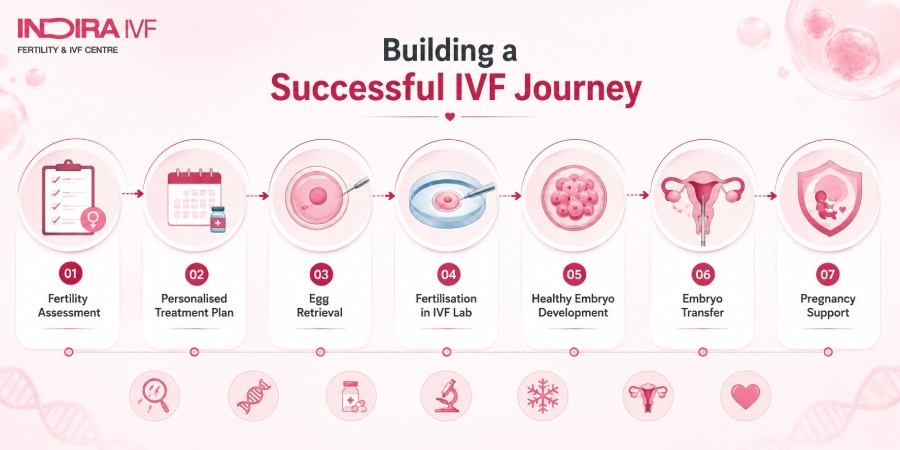
- Better fertility counselling
Before starting treatment, couples now receive a detailed explanation of their diagnosis, the treatment options available to them, and what they can realistically expect.
- Individualised treatment plans
A woman's hormone levels, age, and medical history shape her treatment. Two patients with the same diagnosis can still end up on different paths.
- Improved safety protocols
Egg retrieval carries less risk than it once did. Medication dosing has become more precise. Ovarian hyperstimulation syndrome, once a significant concern, is now managed with far more consistency.
- Emotional and psychological support
The IVF procedure places a considerable emotional burden on patients. This calls for the right emotional and psychological support from the family, friends, and experts. Many top fertility centres now provide support through dedicated counselling alongside medical treatment.
Modern IVF Offers More Options Than Before
IVF with ICSI
When the problem is the sperm rather than the egg, standard IVF often isn't enough. Sperm still have to reach and penetrate the egg on their own.ICSI removes that requirement by injecting a single sperm directly into the egg, which is why it's become the standard approach for severe male infertility.
Frozen Embryo Transfer (FET)
Instead of transferring an embryo right after retrieval, doctors can freeze it and transfer it in a later cycle. The uterus is still recovering from stimulation medications right after retrieval, and a fresh transfer during that window doesn't always give an embryo its best chance. A frozen transfer, done once the uterus has recovered, often works better.
Donor Egg and Donor Sperm Programs
Some patients cannot conceive using their own eggs or sperm at all.Donor programs exist for exactly this situation. Single parents, same-sex couples, and women with premature ovarian failure can all turn to donor programs.
Fertility Preservation
Freezing eggs, sperm, or embryos isn't only for people undergoing IVF right now. Someone might want to do it because they're not ready for children yet. Someone else might do it before chemotherapy, as the treatment could affect their fertility permanently.
Genetic Testing in Selected Cases
Couples with a known family history of genetic conditions can have embryos screened for specific inherited conditions before transfer. However, this isn't standard for every patient.
Common Myths About Modern IVF
IVF Always Results in Multiple Pregnancies
This was truer decades ago, when doctors transferred several embryos to improve the odds of at least one implanting. This approach has changed. Most clinics now transfer a single embryo per cycle, and twin rates in well-managed programs are low.
IVF Guarantees Pregnancy
No fertility treatment can promise a pregnancy, and IVF is no exception. It can meaningfully raise a patient's odds of conceiving, but by how much depends on age, diagnosis, and other individual factors.
IVF Babies Are Less Healthy
Children conceived through IVF have been followed into adulthood in multiple long-term studies, and their health outcomes match those of children conceived naturally.
IVF Is Only for Women
Fertility treatment often gets framed as a woman's issue, but male infertility factors account for a substantial share of cases. ICSI exists specifically for this. It is a technique developed to work around sperm-related barriers to conception.
Challenges That Still Remain
- Age still limits what IVF can do. A woman's egg quality declines over time, and no lab technique has yet to overcome that.
- Smoking and chronic stress affect fertility on their own, and IVF doesn't erase that effect once treatment begins.
- Endometriosis and severe male infertility make conception harder, even with a well-managed cycle.
- IVF has advanced enormously, but it was never a guarantee. Couples do best when they understand this going in.
What Couples Should Know Before Choosing IVF
Before starting IVF, couples should think through a few factors:
- Waiting to understand a fertility problem only delays treatment. A couple who gets tested sooner has more time to weigh their options and choose the right path.
- Fertility clinics don't all operate at the same standard. A well-equipped lab and an experienced embryology team can make a measurable difference in how a cycle performs.
- Two patients with similar diagnoses can still end up on different protocols, depending on how each one's body responds. Doctors should explain why they chose a particular approach for a specific patient.
- Medication has to be taken at specific times for a reason, and the same goes for lifestyle changes a doctor recommends during treatment. Skipping or adjusting either one can change how a cycle turns out.
The Future of IVF
Embryo assessment has traditionally relied on an embryologist's visual grading, but that's starting to change. Artificial intelligence tools are now being tested as a second layer of analysis. These tools can flag patterns a human eye might miss.Researchers are also working on non-invasive ways to judge embryo health. These approaches wouldn't require touching the embryo at all, which could lower risk while improving the accuracy of embryo ranking.
Freezing technology continues to improve as well. Vitrification remains the current standard, and refinements to the process continue to raise survival rates for eggs and embryos. Reproductive genetics has also advanced. Patients with a known genetic condition now have more information about embryo health before transfer than they did a few years ago.
Conclusion
Louise Brown's birth in 1978 was the start of something that has changed enormously since. IVF began as an experimental procedure with low odds of success, and decades of research since then have turned it into a safe, well-understood treatment. These advances don't guarantee an outcome, but many couples who try IVF today do go on to have children with the right treatment and support behind them. Anyone considering IVF should start by talking to afertility specialist, who can walk through which options actually fit their situation.