
Overview
If you are preparing for IVF (in vitro fertilisation), you may know about medication schedules and transfer days. However, you might be unaware of the role of the air inside the lab where the embryo grows. It is easy to overlook, since you cannot see, smell or check it yourself. IVF lab air quality means how clean and stable that air is, including chemical vapours, dust and airborne particles it may contain. This is important because embryos develop outside the body for days, where there is no natural filtering system to protect them. This article covers what affects air quality in an IVF lab and how labs control it.
Table of Contents
- Why Is Air Quality Important in an IVF Lab?
- What Can Affect Air Quality Inside an IVF Lab?
- How Can Poor Air Quality Affect IVF?
- What Is the Ideal VOC Level in an IVF Lab?
- How Do IVF Labs Maintain Clean Air?
- What Other Environmental Conditions Are Controlled in an IVF Lab?
- How Is IVF Lab Air Quality Monitored?
- Can Air Pollution Outside the IVF Lab Affect IVF?
- Key Takeaways
Why Is Air Quality Important in an IVF Lab?
During IVF, embryos are developed in the laboratory for several days before they are transferred to the uterus or frozen for later use. This means they spend a critical part of their early development in a carefully controlled laboratory environment.
Unlike an embryo developing inside the body, an embryo in an IVF lab is exposed to its surroundings through the culture system. Certain airborne chemicals and pollutants can enter the culture environment and potentially affect the conditions in which the embryo develops.
That is why air quality in an IVF laboratory is carefully controlled. IVF labs use specialised ventilation and air-filtration systems to minimise airborne pollutants and maintain a stable, clean environment for embryo development.
What Can Affect Air Quality Inside an IVF Lab?
Several sources can affect air quality, even in a carefully maintained IVF laboratory.
Volatile Organic Compounds (VOCs)
VOCs are chemical vapours released by paints, adhesives, plastics and some laboratory materials. They can also come from products used around embryo culture systems. A 2021 review by Sciorio, Rapalini and Esteves identifies VOCs as an important concern for IVF laboratory air quality standards. They are difficult to detect and can gradually accumulate.
Airborne Particles and Contaminants
Dust, skin cells, fibres and microbial particles can enter through doors or ventilation systems and may settle on surfaces or exposed culture dishes.
Chemicals, Cleaning Products and Laboratory Materials
Disinfectants, cleaning products and other chemicals used near the laboratory can release fumes into the surrounding air. Renovation work can also increase VOC levels and may require additional precautions.
How Can Poor Air Quality Affect IVF?
The research done by Sciorio et al. (2021) revealed a statistical reduction in pregnancy rates as the VOC concentration increased. Exposure to VOCs could also affect sperm DNA, which causes DNA fragmentation and leads to problems with cell division. This is how air quality affects the embryos. It is a process that happens gradually.
What Is the Ideal VOC Level in an IVF Lab?
According to Sciorio et al. (2021), total VOC levels in an IVF lab should remain below 400 to 800 ppb (parts per billion). The research found that even VOC levels below 100 ppb could affect early embryo development. Aldehydes, a particularly harmful group of VOCs, should be kept below 80 to 100 ppb.
How Do IVF Labs Maintain Clean Air?
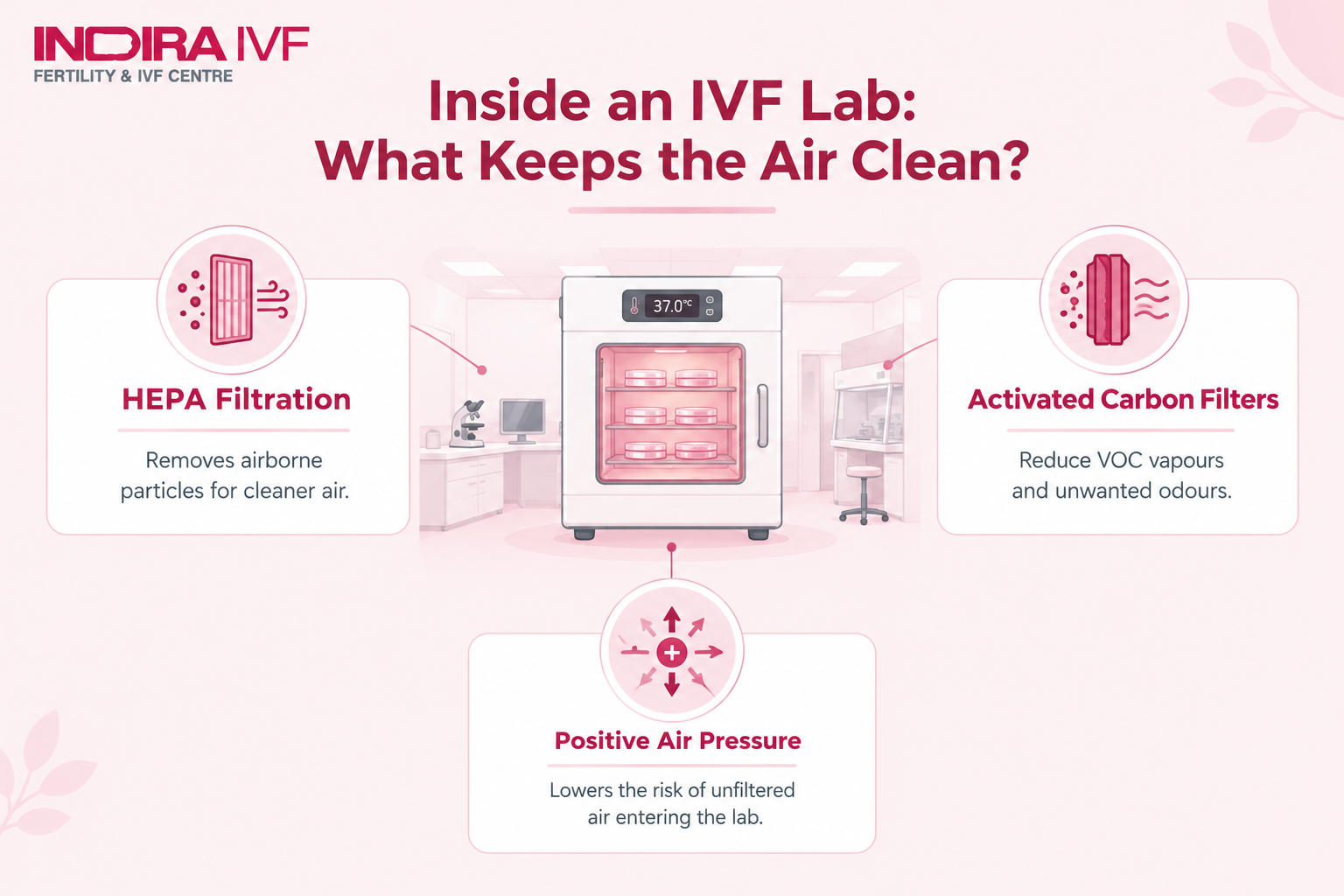
Labs often use several filtration methods because no single system removes every type of pollutant:
- HEPA filters remove 99.97% of particles as small as 0.3 microns.
- Activated carbon filters help remove VOC vapours.
- Positive air pressure helps prevent unfiltered air from entering when doors open.
- ISO Class 5 cleanroom design is used in some facilities.
Esteves and Bento (2013) found that centralised filtration systems generally perform better than portable air purifiers for maintaining clean air in IVF laboratory settings.
What Other Environmental Conditions Are Controlled in an IVF Lab?
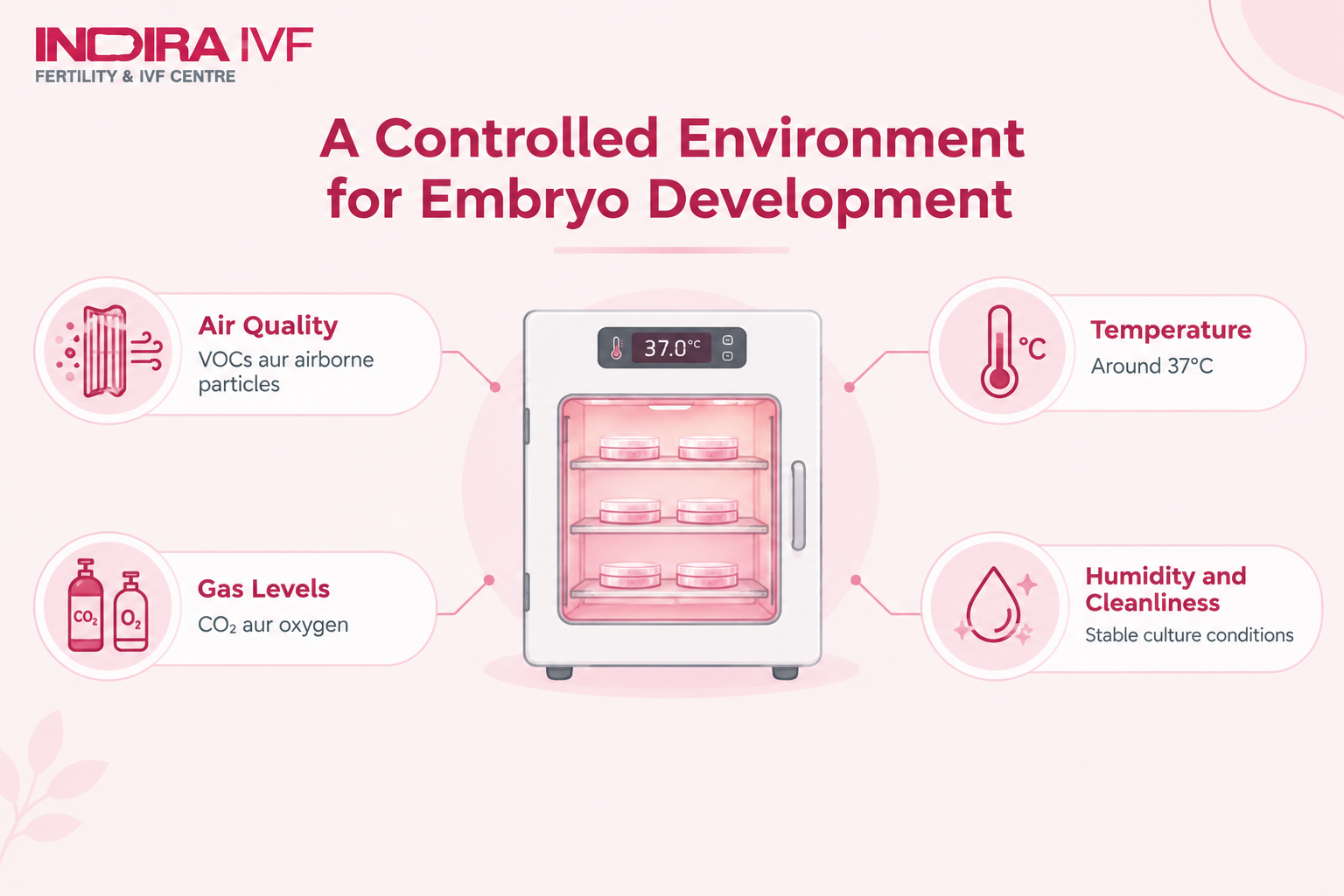
Air quality is just one part of the carefully controlled environment inside an IVF laboratory.
Temperature and Humidity
Embryos are cultured at close to body temperature (around 37°C) since even small changes over time can affect their development. Humidity is also controlled so that the culture medium does not evaporate.
Gas Levels
Incubators carefully regulate carbon dioxide and oxygen levels. This helps provide conditions that support normal embryo development.
Air Pressure and Laboratory Cleanliness
IVF labs are often kept at slightly higher air pressure than surrounding areas. This helps prevent outside air from entering when doors open. Strict cleaning and hygiene protocols are important to minimise contamination.
How Is IVF Lab Air Quality Monitored?
Labs use continuous VOC monitors, particle counters, and regular air sampling to check air quality. Filters are replaced on a planned schedule. Some also monitor individual incubators, as even briefly opening an incubator can change the air conditions inside.
Can Air Pollution Outside the IVF Lab Affect IVF?
Yes. As per a 2024 ESHRE (European Society of Human Reproduction and Embryology) study by Dr Sebastian Leathersich, which followed 3,659 frozen embryo transfers over eight years in Perth, Australia, higher outdoor PM10 levels before egg retrieval were associated with about 38% lower odds of a live birth. This suggests that air pollution and IVF success may be connected even before the egg reaches the laboratory.
Key Takeaways
Air quality inside an IVF lab is a carefully controlled part of treatment, alongside temperature, gas levels, and humidity. Keeping VOCs low, filtering airborne particles, and maintaining stable air pressure are important to provide embryos with a clean, stable environment while they develop outside the body. Understanding these measures can make IVF feel less mysterious and give patients a clearer picture of the care taken to protect embryos at this very early stage.