
Overview
Every pregnancy is different, so it is natural to wonder whether yours is progressing normally or if it needs more care. You may have come across the term ‘high-risk pregnancy’ during a doctor's visit or while reading about pregnancy online, and it can sound worrying. In most cases, it simply means that you and your baby need closer monitoring and extra care throughout the pregnancy. In a normal pregnancy, the mother’s health and the baby’s growth generally follow the expected pattern. Routine prenatal check-ups and screening tests are usually all that is needed unless a new concern arises. However, factors such as an existing medical condition, maternal age or a complication that develops during pregnancy can make it high-risk. While this means there is a greater chance of complications, it does not mean that problems will definitely occur. With timely diagnosis, regular monitoring and the right medical care, many high-risk pregnancies progress well and result in healthy outcomes for both mother and baby.
Table of Contents
- What Is a Normal Pregnancy?
- What Is a High-Risk Pregnancy?
- Normal Pregnancy vs High-Risk Pregnancy: Key Differences
- Common Characteristics of a Normal Pregnancy
- What Can Make a Pregnancy High Risk?
- Medical Conditions Associated with High-Risk Pregnancy
- Symptoms That May Require Additional Monitoring
- Prenatal Care in a Normal Pregnancy
- Prenatal Care in a High-Risk Pregnancy
- How High-Risk Pregnancies Are Managed
- Can a High-Risk Pregnancy Become a Normal Pregnancy?
- Tips for Maintaining a Healthy Pregnancy
- Emotional Well-Being During Pregnancy
- Conclusion
What Is a Normal Pregnancy?
Doctors often refer to a normal pregnancy as a low-risk pregnancy. This means there are no significant medical concerns affecting the mother or baby, and the pregnancy is progressing as expected. At routine check-ups, your baby's growth, along with your blood pressure, blood sugar levels, and overall health, remain within the expected range.
Prenatal care usually involves roughly one visit a month for the first six months and then more frequent visits as the due date approaches. A normal pregnancy still involves the same routine blood tests,ultrasounds, and vaccinations as any other pregnancy. The main difference is that no additional tests or specialist visits are needed unless something changes along the way.
What Is a High-Risk Pregnancy?
A high-risk pregnancy may occur because of a condition present before conception, such as diabetes or high blood pressure, or because of some complication that develops during the pregnancy itself.
High-risk pregnancy monitoring usually means more frequent visits, additional blood tests, and ultrasounds to track the baby's growth. However, a high-risk pregnancy does not automatically mean that you and your baby will experience problems. It can still lead to a healthy birth.
According to a 2023 study published in the Journal of Global Health, based on India's National Family Health Survey-5 data, nearly half of all pregnancies in India, 49.4 per cent, carry one or more high-risk factors, and the majority of these are managed successfully with the right care.
Normal Pregnancy vs High-Risk Pregnancy: Key Differences
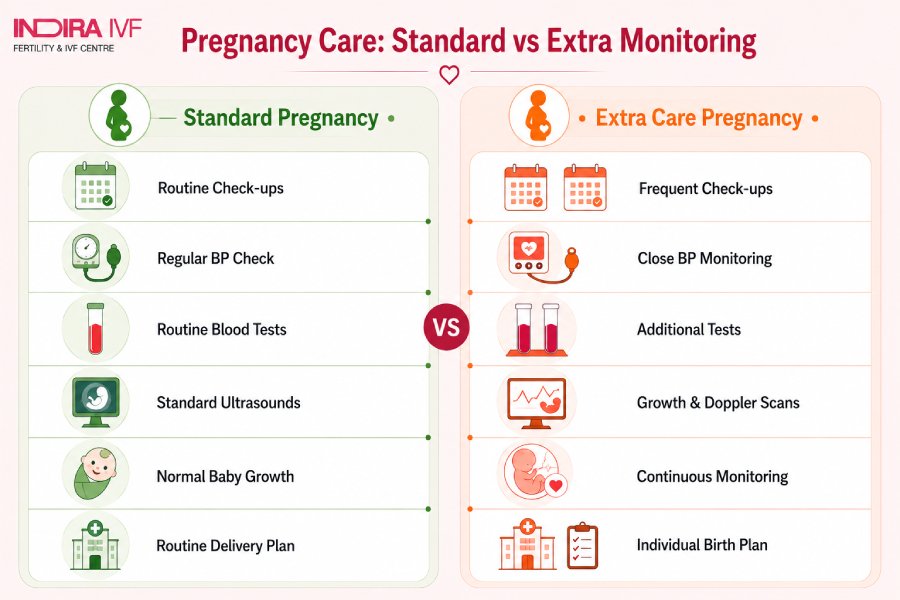
The table below shows how a normal pregnancy and a high-risk pregnancy differ across the most important factors.
Factor | Normal Pregnancy | High-Risk Pregnancy |
Prenatal visits | Monthly, then more frequent near term | Every one to two weeks, sometimes weekly |
Ultrasounds | Two to three standard scans | Additional scans to track growth closely |
Blood pressure and blood sugar | Stay within the expected range | May need closer tracking or treatment |
Specialist involvement | Not usually required | Often includes a specialist team |
Maternal age | Typically 18 to 34 years | Often under 18 or over 35 |
Pre-existing conditions | None significant | Diabetes, hypertension, thyroid or heart disease, among others |
Delivery planning | Standard delivery plan | Individualised plan, may need early delivery |
Every pregnancy is unique. Learn what makes a pregnancy high-risk and how the right care can support a healthy journey for both mother and baby.
- Dr. Vishwa
Common Characteristics of a Normal Pregnancy
There are a few signs which indicate a normal pregnancy:
- Healthy maternal health: No chronic illness, stable weight gain and steady energy levels through the trimesters.
- Normal foetal growth and development: The baby's size and heart rate match expected milestones at each scan.
- Stable blood pressure and blood sugar levels: Readings stay within the normal range at every check-up.
- Absence of major pregnancy complications: No bleeding, severe swelling, or infections that need treatment.
What Can Make a Pregnancy High Risk?
Several factors can make a pregnancy high-risk:
- Maternal age factors: Conceiving before 18 or after 35
- Pre-existing medical conditions: Diabetes, high blood pressure, thyroid disorders or heart disease present before conception
- Multiple pregnancy: Carrying twins or more
- Previous pregnancy complications: A history of miscarriage, preterm birth or preeclampsia (a blood pressure disorder of pregnancy) in an earlier pregnancy
- Lifestyle factors: Smoking, alcohol use or a very low or very high body weight before pregnancy
- Pregnancy-related conditions: Gestational diabetes or high blood pressure during pregnancy
Medical Conditions Associated with High-Risk Pregnancy
Certain medical conditions can commonly lead to a high-risk pregnancy:
- Gestational diabetes: It refers to high blood sugar that develops during pregnancy and is a common cause of high-risk pregnancy in Indian women.
- High blood pressure and preeclampsia: Preeclampsia is marked by high blood pressure and protein in the urine, usually after 20 weeks.
- Thyroid disorders: An underactive or overactive thyroid gland can affect the baby's growth if left untreated.
- Obesity: A higher body weight before pregnancy raises the chance of gestational diabetes and high blood pressure.
- Autoimmune conditions: Disorders such as lupus, where the immune system mistakenly attacks the body's own tissue, need closer monitoring during pregnancy.
- Heart or kidney disease: Existing strain on these organs can be affected by the extra demands of pregnancy.
Symptoms That May Require Additional Monitoring
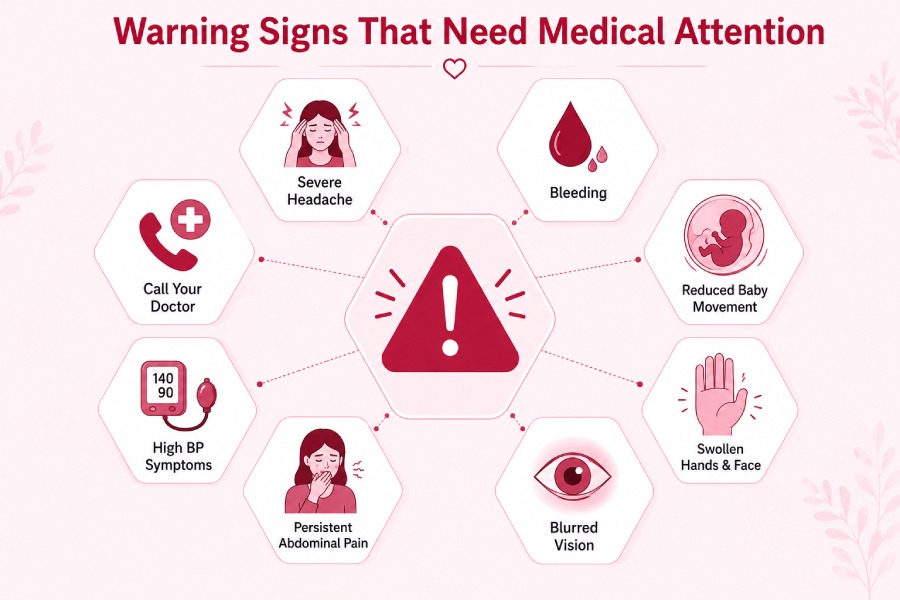
Pregnancy can bring many new sensations, and most are harmless. However, some symptoms should never be ignored because they may indicate that you need medical attention. Contact your doctor promptly if you experience any of the following:
- Severe headaches
- Vaginal bleeding
- Persistent abdominal pain
- A noticeable drop in the baby's movements
- Swelling of the hands and face
- Changes in vision, such as blurring or spots
- Symptoms of high blood pressure, such as dizziness or a pounding headache
While any of these symptoms is not a cause for alarm, you should still get checked, so that any issue can be caught and managed early.
Prenatal Care in a Normal Pregnancy
Prenatal care in a normal pregnancy generally follows a predictable pattern. The World Health Organization recommends a minimum of eight antenatal contacts during pregnancy to help improve maternal and newborn health outcomes. It means visits are scheduled once every month until 28 weeks, every two weeks until 36 weeks, and then every week until delivery. Standard ultrasounds and screening tests are carried out, which include:
- A dating scan in the first trimester
- An anomaly scan around 18 to 20 weeks to check the baby’s organs and growth
- Blood tests for anaemia (low haemoglobin, the protein in red blood cells that carries oxygen), blood group and infections
The doctor may recommend you take iron, folic acid and calcium supplements alongside a balanced diet. Apart from that, moderate activity, adequate rest and avoiding tobacco and alcohol are important.
Prenatal Care in a High-Risk Pregnancy
Prenatal care for high-risk pregnancy adds several layers to the standard schedule:
- More frequent check-ups: Visits are required every one to two weeks, sometimes weekly in the final trimester.
- Additional ultrasound monitoring: Growth scans and Doppler studies, a scan that checks blood flow to the baby, help track development closely.
- Specialised blood tests: Tests tailored to the specific condition, such as thyroid function or clotting tests, are undertaken.
- Foetal well-being assessments: Non-stress tests, which check the baby's heart rate response to movement, and biophysical profiles are also a part of prenatal care.
- Multidisciplinary care: Specialists such as an endocrinologist or cardiologist, alongside the obstetrician, are involved in the care when the underlying condition requires it.
How High-Risk Pregnancies Are Managed
Managing a high-risk pregnancy means extra care and monitoring. First, your doctor creates an individualised treatment plan for you. It involves helping keep existing medical conditions, such as diabetes or high blood pressure, under control with medication adjustments and lifestyle changes suited to pregnancy.
Regular scans help monitor the baby’s growth and development closely. As the pregnancy progresses, your doctor also prepares a specific plan for labour and delivery. This usually includes the right timing, the safest mode of delivery, and whether the birth should happen at a facility equipped for higher-level newborn care.
Can a High-Risk Pregnancy Become a Normal Pregnancy?
In some cases, the factor that made a pregnancy high-risk can become well-controlled. If a risk factor like gestational diabetes is properly managed through diet, medication, or lifestyle changes, the chance of complications may drop. This may significantly reduce the risk of complications and help the pregnancy progress more smoothly. However, closer monitoring often continues until delivery as a precaution.
Tips for Maintaining a Healthy Pregnancy
A few practical habits are important, whether your pregnancy is normal or high-risk:
- Attend all prenatal appointments, even when you feel well.
- Follow a balanced diet with adequate protein, iron, and calcium.
- Stay physically active, as advised by your doctor.
- Avoid smoking and alcohol during pregnancy.
- Manage chronic health conditions with your doctor's guidance.
- Monitor new symptoms and seek timely care when they appear.
Emotional Well-Being During Pregnancy
It is worth acknowledging that pregnancy brings its own emotional challenges. Managing anxiety and stress through simple routines, such as regular sleep and short daily walks, is helpful. Hearing that your pregnancy is high-risk can leave you feeling anxious or uncertain, and those feelings are completely understandable. However, it may not necessarily be a sign that something is wrong with how you are handling it. Building a support system of family and friends who understand what you are going through helps with emotional well-being. If anxiety feels persistent or overwhelming, seek professional guidance from a counsellor or therapist.
Conclusion
The difference between a normal pregnancy and a high-risk pregnancy lies in how closely they need to be monitored. Prenatal care in both cases should be built around the mother’s health and medical history, along with the baby’s development, rather than a generic checklist. If your pregnancy has been marked as high-risk, it reflects that you need closer attention. It is not a prediction of the outcome.
Many high-risk pregnancies, even with gestational diabetes, high blood pressure, or a mother’s age, result in a healthy delivery when they are closely monitored and managed well. Stay in contact with your doctor, attend every scheduled visit and report any new symptoms as they appear. This gives you and your baby the best chance of a safe pregnancy, regardless of whether your pregnancy is considered low-risk or high-risk.