
Overview
Many Indian families have a strict "no" for papaya in pregnancy, especially during the first three months, as it is believed to cause miscarriage or premature labour.
However, a ripe papaya is a nutrient-rich fruit full of vitamin C, folate, fibre and antioxidants. It generally assists the immune system, digestion and overall health. Hence, this article will talk about the myths and facts about papaya in pregnancy, explain the difference between the ripe and unripe papaya, and give practical guidelines to help you make safe food choices
Table of Contents
- What Are the Concerns About Eating Papaya During Pregnancy?
- Is Papaya in Pregnancy Really Unsafe, or Is It a Myth?
- What Makes Ripe Papaya Different From Unripe Papaya?
- What Does Science Say About Papaya and Miscarriage Risk?
- Benefits of Eating Ripe Papaya During Pregnancy?
- Papaya During Pregnancy by Trimester
- Who Should Completely Avoid Papaya During Pregnancy?
- Takeaway
- How To Safely Include Papaya During Pregnancy If Your Doctor Allows
What Are the Concerns About Eating Papaya During Pregnancy?
The concern in consuming papaya in pregnancy is due to the action of unripe or semi‑ripe papaya and its latex on the uterus. Researchhas indicated that it is not papaya in itself that causes the problem, but it is the unripe or semi-ripe papaya and papaya latex that can cause the uterus to contract.
It contains a milky white latex containing enzymes such as papain, which have been found to stimulate the uterus in animals and/or laboratory settings, which may increase the risk in experimental settings.
Many traditional systems, therefore, consider green papaya a possible abortifacient (a substance that may induce abortion) and advise strongly against it in early and late pregnancy.
Is Papaya in Pregnancy Really Unsafe, or Is It a Myth?
Available evidence and expert opinion generally agree that:
- Unripe or semi-ripe papaya and papaya latex should not be consumed in pregnancy, especially during the first trimester.
- Small portions of fully ripe papaya are likely low risk for many otherwise healthy pregnant women, but because high-quality human studies are limited, most doctors still recommend an individualised, cautious approach.
So the fear is not entirely a myth. It applies mainly to unripe papaya and papaya products that contain latex, not necessarily to every piece of ripe papaya.
What Makes Ripe Papaya Different From Unripe Papaya?
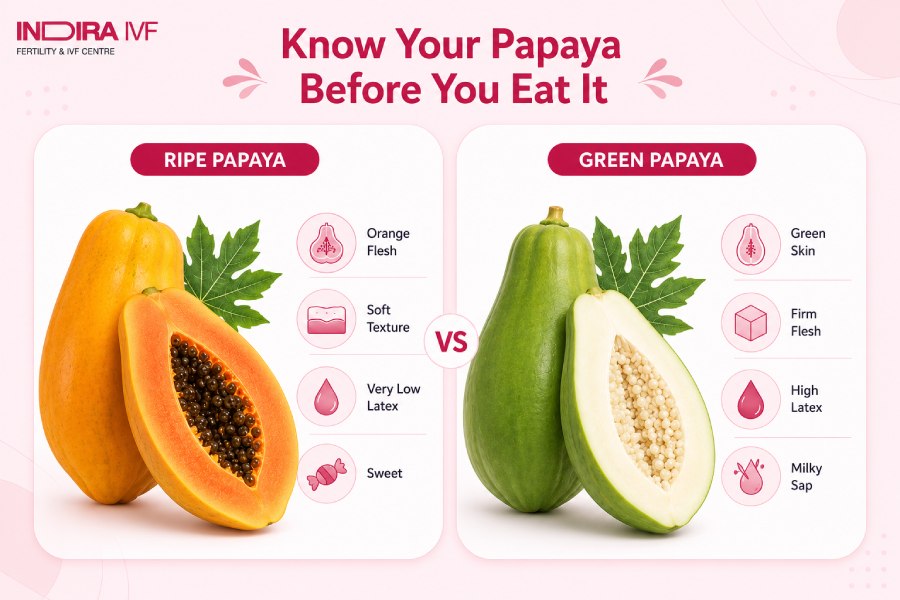
If you are thinking about eating papaya during pregnancy, you must know the difference between ripe and unripe papaya.
Ripe Papayas
- Skin: Yellow to deep orange, little or no green present.
- Flesh: soft, orange or salmon-coloured, sweet-smelling and sweet-tasting.
- Latex: Very low; there is usually not much milky sap when you cut it.
Green or Semi-Ripe Papaya
- Skin: All green or mostly green with some yellow.
- Flesh: Hard or crisp, pale, not quite ripe.
- Latex: White sticky sap when cut or bruised.
- Risks: This latex contains high levels of papain and related compounds, which have been demonstrated to induce uterine contractions, soften the cervix and cause miscarriage or early labour in animal and laboratory studies.
Most doctors suggest not eating unripe or semi-ripe papaya during pregnancy and suggest consulting your gynaecologist before eating ripe papaya
What Does Science Say About Papaya and Miscarriage Risk?
Animal and laboratory studies form much of the scientific base for guidance on papaya in pregnancy:
- In one experimental study, pregnant animals were given ripe papaya at usual dietary doses. The study did not show increased fetal loss, reduced implantation or signs of toxicity. The same study found that ripe papaya did not induce contractions in isolated uterine tissue, whereas papaya latex produced strong contractions similar to those induced by oxytocin and prostaglandin.
- There is no solid human evidence that small portions of fully ripe papaya cause miscarriage or birth defects.
- There is enough experimental concern about unripe papaya, latex, leaf and seed preparations that they are best treated as unsafe in pregnancy, especially in the first trimester and near the due date.
Benefits of Eating Ripe Papaya During Pregnancy?
If your doctor says it is safe for you to eat ripe papaya during pregnancy, it can provide you with lots of nutrients that help both you and your baby.
- Boosts immunity: Vitamin C may improve iron absorption and boost the immune system, lowering the chances of suffering from iron deficiency.
- Relieves constipation: Fibre in ripe papaya aids in healthy digestion and regular bowel movement, a common concern during pregnancy.
- Keeps the body hydrated: Ripe papaya contains very high water content that helps the body stay hydrated, especially in hot weather conditions.
- Promotes baby's early growth:Folate is necessary for the healthy development of the brain and spinal cord during early pregnancy
- Supports healthy skin - Vitamins A and C help maintain healthy skin and support normal tissue repair.
- Contains natural antioxidants: Antioxidants help protect the body’s cells against daily oxidative stress.
Papaya During Pregnancy by Trimester
Advice on eating papaya during pregnancy varies depending on whether the papaya is ripe or unripe and how far along you are in your pregnancy. Being aware of what is generally recommended for each trimester can help pregnant women make safer dietary choices.
First Trimester
Doctors usually advise against eating raw papaya during the first trimester of pregnancy because it contains more latex, which some experiments have shown can cause the uterus to contract. If you want to eat ripe papaya, ask your obstetrician first.
Second Trimester
If the pregnancy is healthy and uncomplicated, small amounts of fully ripe papaya may be acceptable for women if approved by their doctor. Avoid unripe or half-ripe papaya.
Third Trimester
The same advice applies in late pregnancy. Only eat fully ripe papaya after medical advice and do not eat raw papaya, papaya leaf products or papaya supplements.
Who Should Completely Avoid Papaya During Pregnancy?
Certain women are better off avoiding papaya during pregnancy altogether, even in ripe form, unless their obstetrician clearly advises otherwise. This includes those who:
Have a history of:
- Recurrent miscarriages.
- Preterm labour or premature rupture of membranes.
- Cervical incompetence or the presence of a cervical stitch.
Are currently Pregnant:
- Vaginal bleeding or spotting.
- Strong cramping or contractions that are under evaluation.
- Placenta previa, low-lying placenta or a threatened abortion.
- Have known allergies to papaya, papain, or natural rubber/latex (cross-reactions are possible).
Are already consuming below things:
- Papaya leaf juice or herbal concoctions containing papaya.
- Papaya seed extracts.
- Concentrated papaya enzyme tablets or capsules for digestion or weight loss.
For these groups, the safest option is to skip papaya in pregnancy and choose other fruits, unless a specialist provides very specific, supervised instructions.
Takeaway
Whether you can or cannot eat papaya during pregnancy is often debated because cultural beliefs, personal experiences and scientific evidence tend to overlap.
The safest way is to avoid unripe papaya, papaya leaf or seed products, and papaya enzyme supplements; consider only small portions of ripe papaya if your obstetrician agrees it is appropriate for you. With so many other safe fruit options available, you can easily build a healthy, enjoyable pregnancy diet without relying on papaya if there is any doubt.
How To Safely Include Papaya During Pregnancy If Your Doctor Allows
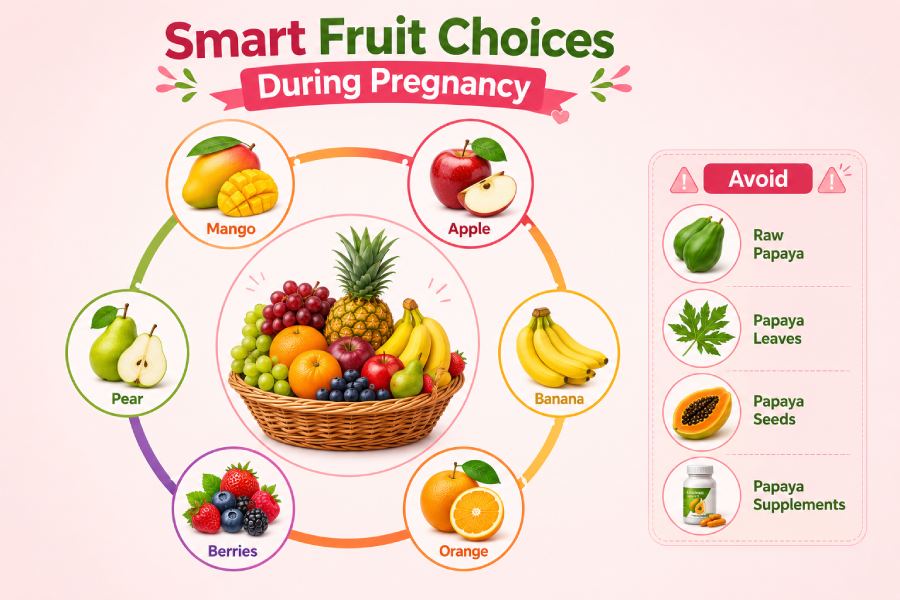
If you are low risk and your obstetrician has clearly said that a little ripe papaya is acceptable for you, follow these precautions:
- Choose only fully ripe papaya.
- Keep portions small and occasional.
- Avoid risky forms completely.
- Listen to your body and symptoms.
By taking this cautious approach, you can minimise the risks while still enjoying the potential benefits of ripe papaya when permitted.
Common Questions Asked
Is it okay to eat papaya during the first trimester of pregnancy?
Doctors generally advise against eating raw or semi-ripe papaya in the first trimester. The suitability of ripe papaya should be discussed with your obstetrician.
Why is papaya considered more risky early in pregnancy?
The natural latex found in unripe papaya has been shown to stimulate the uterus in animal studies. Human data are limited, and caution is advised in early pregnancy.
Are there any safe alternatives to papaya during pregnancy?
Yes, there are. Pregnant women are often recommended to consume nutritious fruits like apples, bananas, oranges, pears, berries, and pomegranates.
Can other fruits provide the same benefits as papaya in pregnancy?
Yes. Great alternatives are citrus fruits provides vitamin C; bananas, which provide potassium; berries, which have antioxidants; and oranges, which provide folate.
What should I do if I accidentally eat an unripe papaya while pregnant?
Don’t panic if you ate papaya by mistake in pregnancy. A little doesn’t have to be bad. Call your doctor, especially if you develop pain, bleeding, or contractions.
Does eating a small amount of unripe papaya always cause miscarriage?
Nope. There is no evidence that a small accidental amount will always cause miscarriage. “Most of the concerns are based on laboratory and animal studies and not on proven information from humans.
Should I seek medical advice after accidental papaya consumption?
Yes. If you’re concerned because you accidentally ate papaya while pregnant or you experience bleeding, abdominal pain, or contractions, call your healthcare provider for advice and reassurance.