
Overview
PCOD is a hormonal disorder that affects women during their reproductive age. The main PCOD symptoms include excess facial hair, irregular periods, acne, weight gain, and infertility in some women. In this article, we will discuss each symptom in detail, why it occurs, and how insulin resistance and hormonal imbalance are responsible for the problems. You can also learn how PCOD affects fertility and the relationship between PCOD and IVF. Seek quick medical help by identifying the early signs of PCOD in females to get proper medical care and treatment and to prevent complications such as metabolic problems, infertility, and diabetes.
Table of Contents
Introduction
Polycystic ovarian disease is a hormonal issue affecting women during the reproductive years. It is caused by a hormonal imbalance; therefore, it impacts ovulation, metabolism, and reproductive health of a woman. Early detection of the signs and symptoms can provide long-term reproductive health. This article will explain what are the symptoms of PCOD in detail. Identifying PCOD symptoms early helps prevent complications such as diabetes, infertility, and menstrual problems.
What causes PCOD?
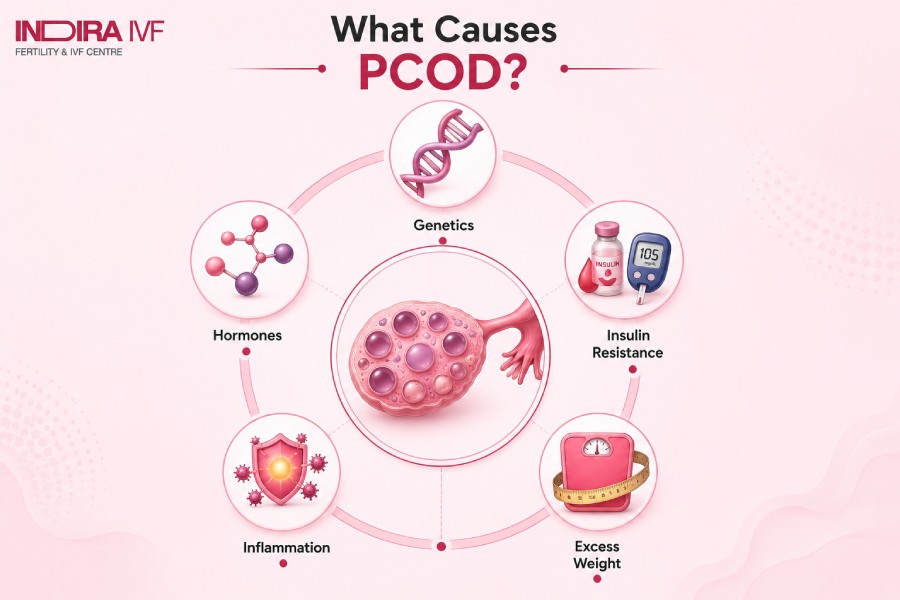
PCOD is a combination of hormonal, genetic and lifestyle factors. The precise cause remains unknown, but there are a number of risk factors identified.
- Increased androgen (male hormone) levels: An imbalance of hormones may be responsible for an increase in androgen levels, which can lead to excess hair growth and acne.
- Insulin resistance: Many women with PCOD are insulin resistant, and the body makes excess insulin, which may lead to excess production of androgens.
- Genetic factors: PCOD may be familial – meaning that it can run in families and the predisposition to the condition may be inherited.
- Excess weight: Over-weight can make the symptoms more noticeable due to worsening of insulin resistance and hormonal imbalance.
- Low-grade inflammation: Certain studies have indicated that there is a link between chronic inflammation and high androgen production and metabolic changes which may help cause PCOD.
Early Signs and Symptoms of PCOD
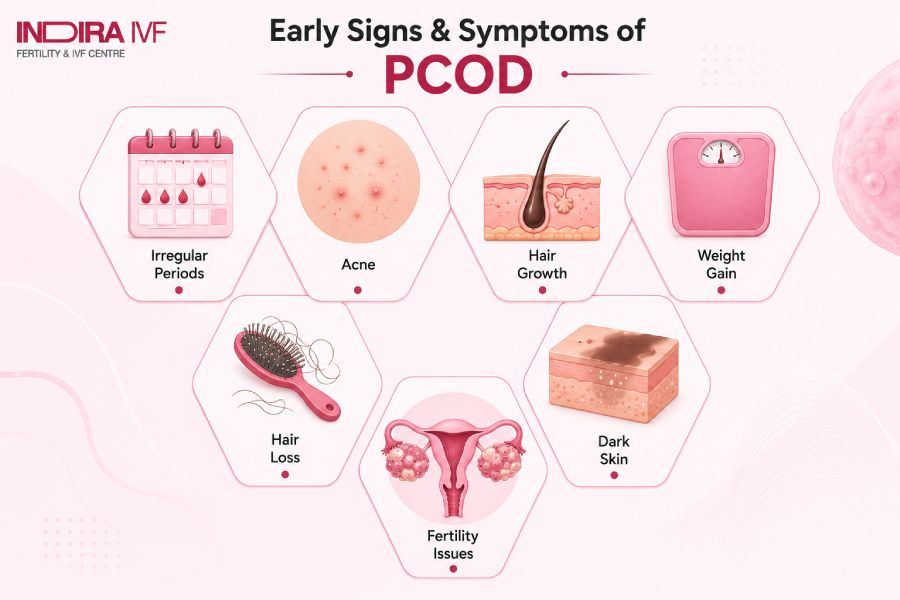
Some of the most common PCOD symptoms experienced by a woman are:
- Irregular periods
- Excess hair growth (Hirsutism)
- Acne and Oily Skin
- Weight gain or difficulty losing weight
- Thinning hair or hair loss
- Darkened skin and skin tags
- Fertility problems
Irregular Periods
Women often experience irregular periods. They may miss one or two months, and menstrual cycles are more than 35 days. Some women experience heavy bleeding, whereas others may have light spotting during periods. Irregular periods occur due to hormonal imbalances and insulin resistance, which interfere with egg maturation. This delays the periods and results in no ovulation. Irregular periods are the most common signs and symptoms of PCOD.
Excess Hair Growth (Hirsutism)
Women with PCOD may develop unwanted hair on the chin, abdomen, back, chest, face, and thighs. Unwanted hair results from high levels of androgens, which stimulate hair follicles in some areas, leading to male-pattern hair growth.
Acne and Oily Skin
Women with PCOS will have oily skin, due to which they experience acne on the back, chest, cheeks, chin, and jawline. They may experience frequent breakouts, especially before periods. This occurs due to high androgen levels that stimulate sebum production, clogging pores, and producing acne. Acne is also the most common sign of PCOS in females, especially in young girls.
Weight Gain or Difficulty Losing Weight
PCOD causes unexplained weight gain in women. Women also find it difficult to lose weight despite doing exercise and managing their diet. Weight gain is especially around the abdomen, which makes them feel bloated. This occurs due to insulin resistance, and glucose is stored as fat.
Thinning Hair or Hair Loss
Hair becomes thin, weak, and falls rapidly in women with PCOS. Some women experience male pattern baldness. This also occurs due to increased levels of androgens that cause hair thinning. Hair growth increases in other areas, but scalp hair becomes thin.
Darkening of Skin and Skin Tags
Hormonal imbalance in PCOD also affects the skin and causes dark patches on the thighs, neck, underarms, groin, and elbows. Some women also have skin tags around the neck or underarms. The reason for skin tags is insulin resistance. High insulin levels cause skin pigmentation and enhance the formation of skin tags.
Fertility Problems
Women with PCOD have difficulty getting pregnant. This happens due to the absence of ovulation and irregular periods. The risk of miscarriage also increases if pregnancy takes place in women with PCOD. It becomes difficult to conceive without regular ovulation.
Can PCOD Symptoms Be Different for Every Woman?
Yes, symptoms of PCOD can vary greatly from one woman to another. Some women may only have irregular periods. Others may have acne, unwanted hair growth, weight gain, or trouble getting pregnant. Symptoms also vary in severity with age, body weight, hormone levels, and insulin resistance.
For some women, the symptoms are mild and unnoticed for years. Others require medical treatment soon after diagnosis. Regular health check-ups help to identify the condition early and prevent long-term complications.
How Are PCOD Symptoms Treated?
Treatment for PCOD symptoms depends upon the age of the woman, the symptoms and whether she is planning a pregnancy. Doctors often recommend combining healthy eating habits, regular exercise, weight control and adequate sleep to improve the hormonal balance. You may be prescribed medication to help with your menstrual cycle, improve insulin resistance, treat acne or reduce excess hair growth.
Women trying for a baby may be given medicines to help ovulation or fertility treatment. Regularly coming back will help you monitor your symptoms and decrease the likelihood of long term issues like diabetes and infertility.
When to See a Doctor?
You must consult with a doctor if you experience two or more PCOD symptoms together, such as irregular periods for 3 or more months, persistent pimples, rapid weight gain, unusual hair growth on different body parts, dark patches or skin tags, and difficulty in conceiving when trying for more than a year without protection.
Conclusion
PCOD is a common hormonal disorder that can be managed successfully by making lifestyle changes, eating a proper diet, and taking appropriate treatment. It is important to know the early symptoms of PCOD so that women can take timely treatment to prevent long-term complications such as diabetes and infertility. If you experience irregular periods, hair growth on your chin or face, have persistent acne, or other PCOD symptoms, you should visit a doctor immediately to get diagnosed.
Common Questions Asked
Is it possible to get pregnant with PCOD?
Women with PCOD can get pregnant by balancing hormones, making lifestyle changes, dietary modifications, managing weight, and consulting with a healthcare professional.
How is PCOD diagnosed?
Many women do not know if they have PCOD until they experience fertility concerns and visit for routine tests. It is diagnosed by using hormonal tests and ultrasound scans.
What are the early signs and symptoms of PCOD?
The most important symptoms of PCOD include weight gain, facial hair growth, acne, irregular periods, mood swings, and infertility.
What foods can help to control PCOD symptoms?
Women with PCOD must eat a diet rich in omega-3 fatty acids, fibre, proteins, nuts, seeds, whole grains, berries, and lean proteins.
Is PCOD a permanent problem?
PCOD is not a permanent problem, and it can be managed with lifestyle changes, dietary changes, and medical treatment.
What treatments are available for PCOD?
Doctors recommend making lifestyle changes, dietary changes, prescribing hormonal medications, and personalised treatment plans to patients with PCOD.