
Overview
IVF cycles aren’t only about injections, scans and blood tests. Some days the waiting feels harder than the medical procedures themselves. You may find yourself counting days or overthinking every appointment, wondering what comes next before you've even had time to process the last step. IVF, or in vitro fertilisation, is a fertility treatment where eggs and sperm are combined outside the body to form embryos, which are then transferred into the uterus. Your IVF journey comes with a wide range of feelings, including hope, fear, guilt and everything in between. These emotional side effects of IVF are a normal, expected part of treatment, and not a sign that something is wrong with you. Every couple's experience is different, which means that there is no ‘right’ way to feel throughout the treatment. It is thus important to understand what to expect emotionally and pay attention to your mental health during IVF treatment. This can make the process easier for you as well as for the people around you.
Table of Contents
- Introduction
- Why IVF Can Feel So Emotionally Overwhelming
- Common Emotions During IVF
- Why Emotional Support Is an Important Part of IVF Care
- How IVF Can Affect Relationships
- Emotional Challenges During Different Stages of IVF
- Healthy Ways to Take Care of Yourself During IVF
- A Message to Couples Going Through IVF
- Conclusion
Introduction
People often describe the emotional journey of in vitro fertilisation (IVF) as being just as demanding as the physical one. This includes the feelings, stress and mental load associated with fertility treatment, which are separate from its physical steps. You may need to visit your clinic for hormonal injections each cycle, then wait to see if the embryo transfer has worked. Since treatment outcomes are never guaranteed, hope and disappointment can sit side by side, sometimes within the same week. In such situations, you shouldn’t expect yourself to focus only on the medical steps.
Recognising the emotional side effects of IVF early makes it easier to prepare for the ups and downs ahead, and to ask for support when you need it.
Why IVF Can Feel So Emotionally Overwhelming
A few factors make IVF harder to sit with emotionally than most medical treatments.
Expectations
You secretly hope for a positive result at every injection and scan. That hope raises the emotional stakes of each step, including the routine ones.
Uncertainty
IVF outcomes can depend on various factors, including age, egg quality and how embryos develop, many of which are outside your control. One of the harder parts of treatment is not knowing how a cycle will end. That uncertainty can make it difficult to think about anything else, even when you've done everything your doctor has asked.
Financial Concerns
IVF cycles come at a cost, and couples often have to plan for more than one attempt. It is difficult to deal with the pressures of thinking about paying for another cycle while still coping with the loss of the current one.
Waiting Periods
Between tests and procedures, IVF involves long stretches of waiting, cross-fingered for results. These gaps leave enough room for your mind to fill in the blanks. It’s easy to replay conversations with your doctor or analyse every symptom before the results arrive, making the wait feel longer than it actually is.
Common Emotions During IVF
Many people experience some combination of the following emotions, sometimes within the same day.
Hope
Hope often carries people through IVF. It helps you keep showing up for appointments, injections and scans, even when you’re emotionally exhausted. At the same time, that hope can make disappointment feel even heavier if a cycle doesn't work.
Anxiety
Anxiety can show up around test results, scans and the embryo transfer, the procedure where a fertilised egg is placed into the uterus. It also commonly brings along physical symptoms like a racing heart or trouble sleeping.
Fear of Failure
It is normal for you to be worried about a cycle not working or about letting your partner or family down. However, you should remember that it does not reflect how prepared or capable you are.
Guilt
Some patients may feel guilty about the cost of treatment, needing help to conceive, or how the process affects their partner. This guilt is simply an emotional response to a difficult situation. You should not interpret it as a fair judgment of yourself.
Frustration
You may feel frustrated as a result of delays or cancelled cycles. It is also common to feel discouraged when your body doesn't respond to medication as expected, especially after weeks of following a strict treatment schedule.
Grief After an Unsuccessful Cycle
A cycle that doesn't result in pregnancy is a loss, and it is understandable if you grieve. You may need a few days to process this or even longer. Healing emotionally doesn’t follow the same timeline for everyone. Either way, your response is valid.
Why Emotional Support Is an Important Part of IVF Care
Emotional support during IVF can affect how you experience treatment. It is thus increasingly being recognised as part of good fertility care.
As per the World Health Organization, infertility affects around 1 in 6 people of reproductive age worldwide, and can affect a person’s mental and psychosocial well-being as much as their physical health. A 2020 study published in PLOS One found that more than 80% of women beginning IVF treatment scored above the threshold for clinical depression risk on a standard screening scale. Such findings are one reason fertility clinics are increasingly building counselling and emotional support into IVF care, rather than treating it as optional.
How IVF Can Affect Relationships
IVF can put a strain on relationships in ways that aren't always discussed openly.
Communication: You and your partner may process stress differently. You may want to talk everything through, while they withdraw. It is important to name this difference early to prevent misunderstandings during treatment.
Shared Decision-Making: When both you and your partner are part of the conversation from the start, decisions about when to pause or what to consider next can become easier to make.
Supporting Each Other: Simple habits like attending appointments together when possible and checking in on how the other person is doing help couples get through IVF as a team. It is also important to avoid blame after a cycle that doesn't work.
Emotional Challenges During Different Stages of IVF
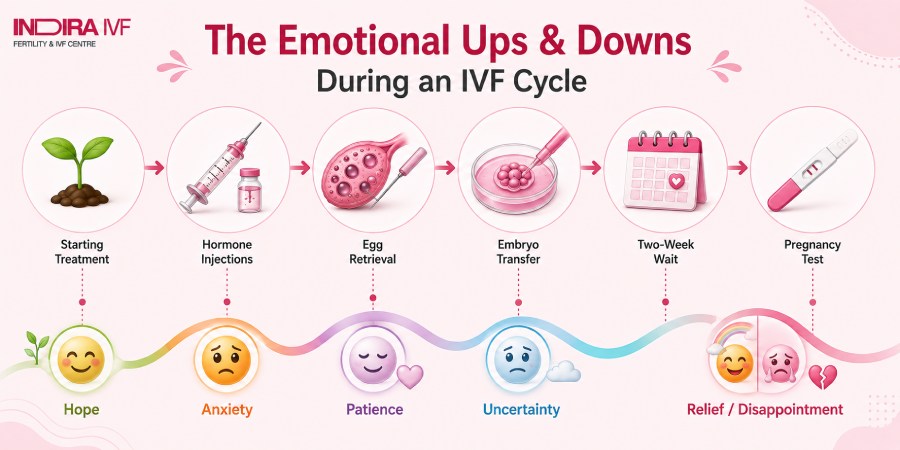
The emotional weight of IVF changes with each stage of treatment.
Before Treatment
Deciding to start IVF often brings relief and anxiety together. You may feel relieved to have a plan, and anxious about what lies ahead.
Hormonal Stimulation
Fertility medications that are used at this stage stimulate the ovaries to produce multiple eggs. These can cause mood swings similar to premenstrual symptoms, on top of the emotional load of the treatment.
Egg Retrieval
It is normal to feel nervous about the outcome of the retrieval procedure, done under sedation. You may wonder how many eggs will be collected and how they will develop.
The Two-Week Wait
The gap between embryo transfer and the pregnancy test, commonly called the two-week wait, is usually the hardest part of a cycle. Since there’s no way to know the result early, you may find yourself looking for signs, second-guessing every symptom, or trying not to read too much into how you feel.
Pregnancy Test Day
Test day brings its own pressure, no matter the outcome. A positive result can sometimes be a cautious relief instead of an immediate celebration. A negative one calls for space to grieve before even thinking about the next steps.
Healthy Ways to Take Care of Yourself During IVF
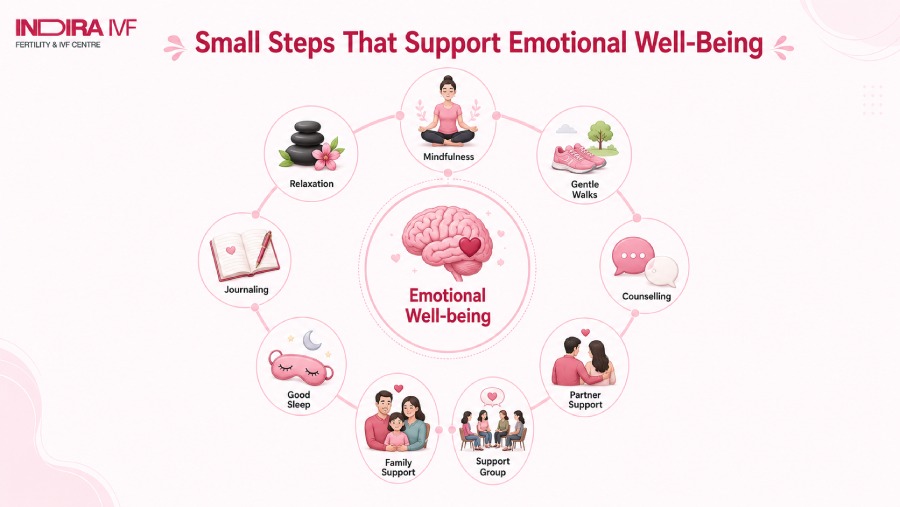
There isn't a single right way to manage the emotional side effects of IVF. What helps one person may not help another, but these approaches help many patients:
- Consider professional counselling: A therapist experienced in fertility issues can help you manage anxiety and grief as they come up.
- Join a support group: Talking to others who are in the same boat can ease the sense of isolation that often comes with the process.
- Practice mindfulness: Simple breathing exercises or short meditation sessions can help you feel less anxious before appointments or during the two-week wait.
- Stay physically active: Light movement, such as walking, can support mood during the stimulation phase, as long as it is approved by your fertility specialist.
- Set realistic expectations: Understanding that a cycle may not work the first time can soften the impact of a difficult result.
Lean on trusted family and friends: Sharing what you're going through with people who listen without judgment can ease the isolation IVF sometimes brings.
A Message to Couples Going Through IVF
This stage of life can feel extremely difficult. It is normal to need help, whether through counselling, a support group or an honest conversation with your partner. These are practical steps, and not a sign of weakness. Every fertility treatment journey moves at its own pace, and comparing your timeline to someone else’s is not the best approach. Have compassion and patience for both yourself and your partner throughout this process. Some days will feel hopeful, while others may leave you questioning everything. Neither defines your journey, and neither means you’re handling it the wrong way.
Conclusion
IVF asks a lot of the people going through it, physically and emotionally. The medical side of treatment tends to get most of the attention, but the emotional side is just as demanding, if not more. It is thus worth preparing for. Resilience, support and hope help couples undergo this process as much as any protocol or procedure does. Looking after your emotional well-being should not be separate from IVF treatment but simply a part of getting through it. Whatever stage of the journey you're at, you don't have to carry the emotional weight of it alone.