
Overview
Getting two semen analysis reports with different numbers can be unsettling, especially if you were already anxious about the first result. No need to worry, as this is more common than most people expect, and it usually has a straightforward explanation. Sperm production isn't a fixed, one-time measurement. It's an ongoing process that responds to your body's daily condition, and it can shift from one test to the next even in healthy men. This article covers why sperm count can fluctuate naturally, which parameters change most, what influences a single report and how doctors read results that vary.
Table of Contents
- Why Can Two Semen Analysis Reports Be Different?
- Which Parameters Can Change Between Two Semen Analysis Reports?
- What Can Affect the Results of a Semen Analysis?
- How Should You Compare Two Semen Analysis Reports?
- When Should a Semen Analysis Be Repeated?
- What Does a Changing Semen Analysis Report Mean for Fertility?
- How Can Men Prepare for a More Reliable Semen Analysis?
- When Should You Consult a Fertility Specialist?
- Key Takeaways
Why Can Two Semen Analysis Reports Be Different?
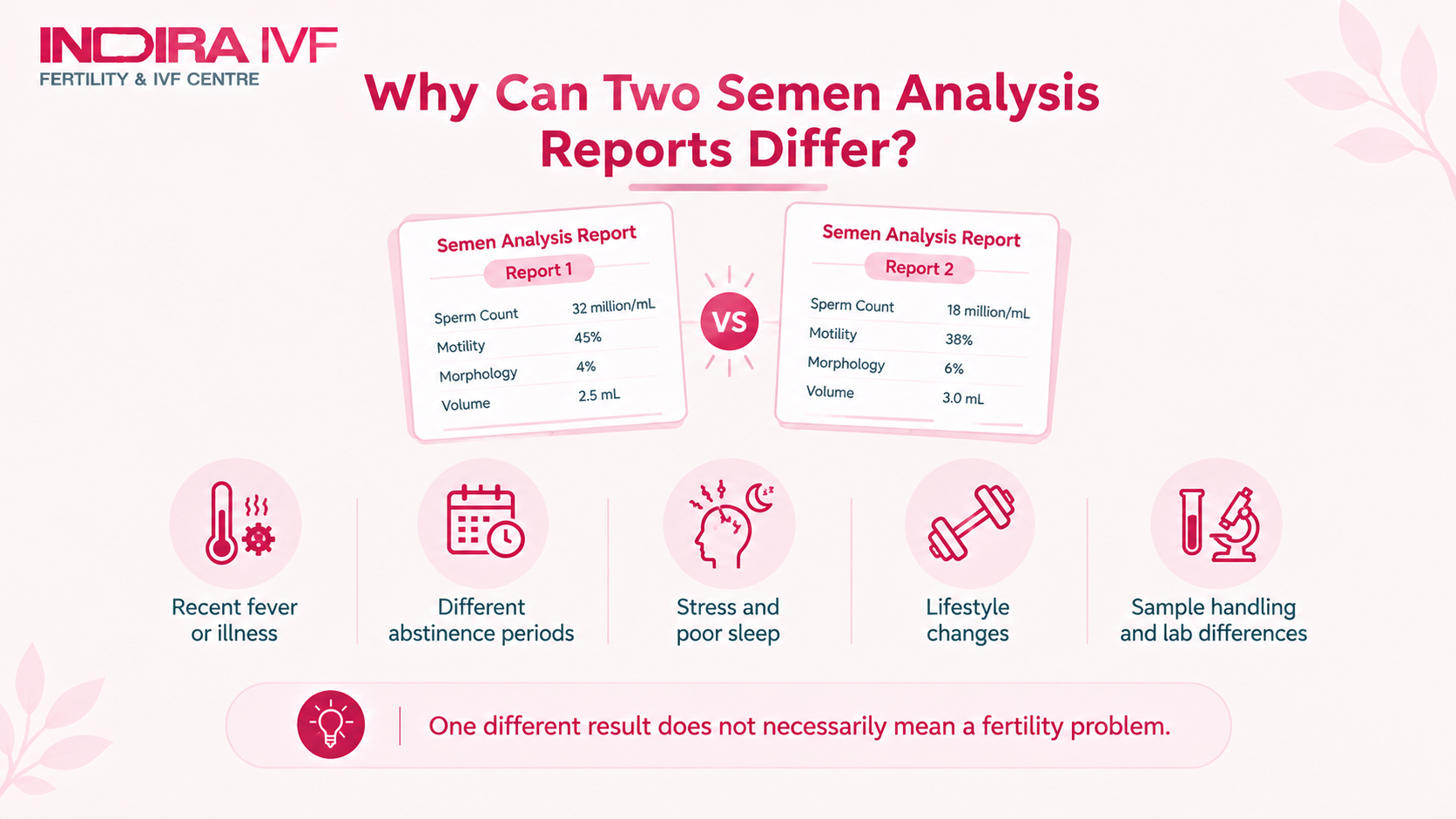
Two semen analysis results can look different even when they come from the same man. Sperm production does not stay the same from one day to the next, and several factors can influence the sample. A 2015 study published on Unexplained Fertility notes that sperm takes about 64 days to develop, plus about 14 more days to mature in the epididymis, the coiled tube where sperm are stored. So, illness, stress, or lifestyle changes during this time may affect a later semen sample. As a result, sperm count can go up or down naturally, and one lower result does not necessarily mean there is an underlying fertility problem.
Which Parameters Can Change Between Two Semen Analysis Reports?
A semen analysis report measures several separate parameters, and each can move independently between two tests, for its own reasons.
Sperm Count and Concentration
Sperm concentration refers to how many sperm are present in each millilitre of semen . It is also one of the numbers that can change quite a bit between semen tests. A 2022 review published in Andrology states that the World Health Organization's sixth edition manual, published in 2021, gives 16 million sperm per millilitre as the lower reference limit. For the total sperm count in one ejaculate, the lower reference limit is 39 million. These figures are based on population data rather than a fixed measure of fertility. A man's result can therefore be higher or lower than his usual level when he has another test.
Sperm Motility
Motility describes how well sperm can move. This is important because sperm need to travel through the reproductive tract to reach and fertilise an egg. The WHO 2021 reference gives 30% as the lower reference limit for progressive motility, which refers to sperm that move forward rather than simply moving around without making much progress. The result can also be affected by how quickly the semen sample gets to the lab. If there is a difference in the time between collection and testing on two separate visits, the motility result can change as well.
Sperm Morphology
Morphology refers to the size and shape of sperm. The WHO 2021 reference gives 4% normal forms as the lower reference limit. Morphology involves looking at individual sperm under a microscope and deciding whether their shape and structure look normal. This assessment depends partly on the person examining the sample, meaning two reports can sometimes show different results even when there has not been a major change in the man's actual sperm quality.
Semen Volume and Other Parameters
The report also includes details such as semen volume, pH, and liquefaction time (the time it takes for semen to change from a gel-like consistency to a liquid). The WHO 2021 reference sets 1.4 ml as the lower limit for semen volume. The amount produced can also vary depending on how long it has been since the last ejaculation, so this can contribute to differences between two tests.
What Can Affect the Results of a Semen Analysis?
Several everyday and biological factors can affect a semen analysis without you realising it at the time.
Recent illness with a fever is one of the strongest influences. A 2007 study published in Fertility and Sterility found that men who'd had a fever in the weeks before testing showed a marked, though individually variable, drop in sperm concentration and a rise in immotile (non-moving) sperm, worsening with each additional day of fever. Because affected sperm take weeks to appear in a sample, an illness from two months ago can still be reflected in today's report.
There are several other factors too which can influence the outcome, like days since your last ejaculation, heat exposure, recent surgery or new medication, high stress, poor sleep, and smoking or heavy alcohol use. They do not indicate that something is permanently wrong. The test is just a snapshot of one window in an ongoing process.
How Should You Compare Two Semen Analysis Reports?
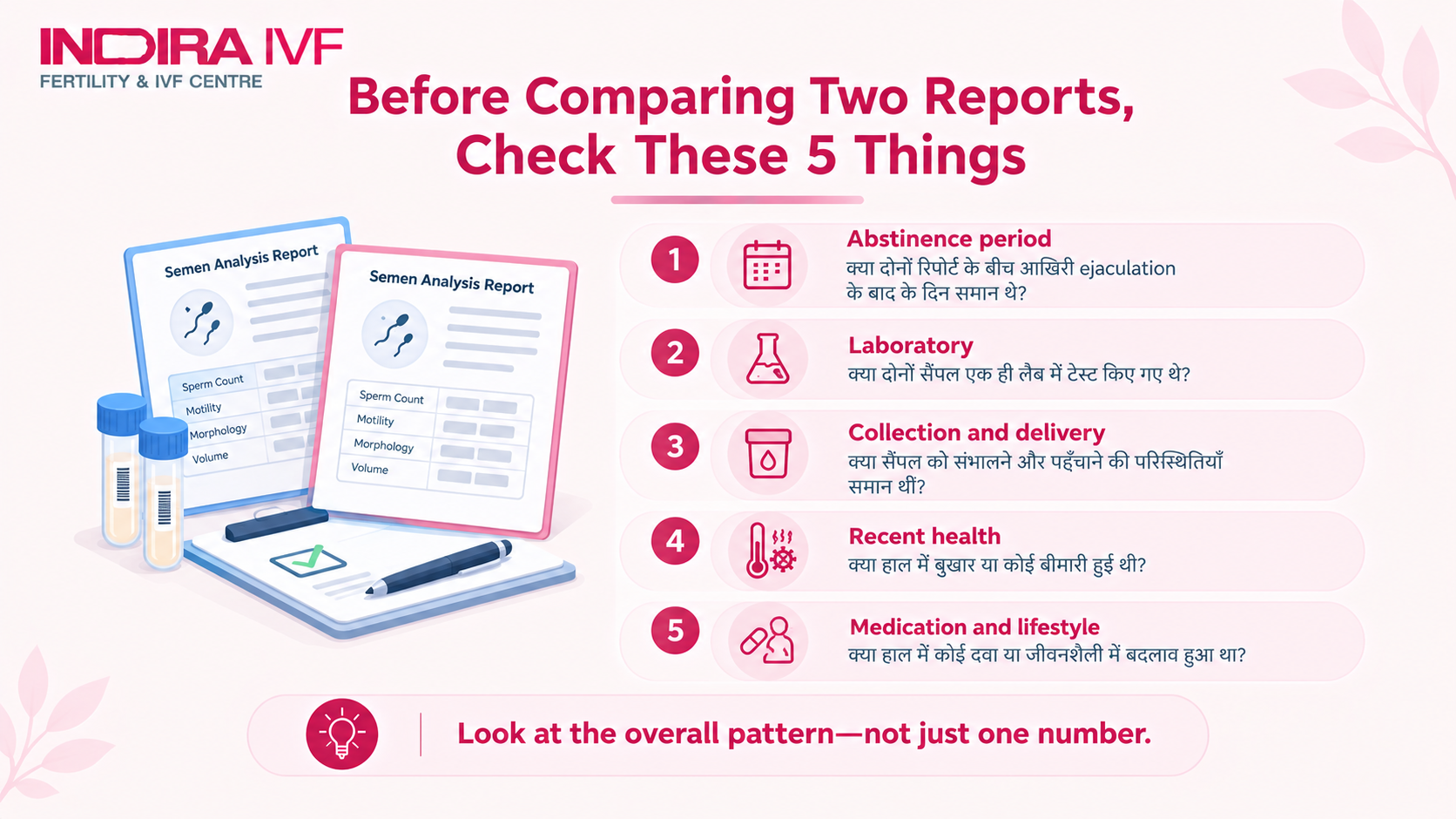
Compare two semen analysis reports by checking the collection conditions rather than just the final numbers. Check if the abstinence period (days since the last ejaculation) was similar for both, whether the same lab and method were used, and whether you were unwell, stressed, or on new medication beforehand. A single low reading, with unmatched conditions, is far less meaningful than a consistent pattern across two or three tests. Fertility specialists review the overall trend and the full set of parameters together.
When Should a Semen Analysis Be Repeated?
A semen analysis is usually repeated a few weeks after the first test if the result was unclear or lower than expected. Sperm counts vary day to day. This is why doctors often ask for a second sample under conditions as close as possible to the first. Repeating too soon adds little useful information because a fresh batch of sperm does not get time to develop. Your fertility specialist will guide the exact timing for your case.
What Does a Changing Semen Analysis Report Mean for Fertility?
If your semen analysis report changes between two tests, it doesn't mean your fertility has worsened. It usually reflects the natural variability of sperm production and temporary factors like illness, stress, or timing. The pattern across multiple tests is more important, combined with your medical history and your partner's evaluation. A single changed number is a data point, not a complete diagnosis.
How Can Men Prepare for a More Reliable Semen Analysis?
Keep the conditions around the test consistent. Follow the abstinence period your clinic recommends so volume and count stay comparable across repeat samples. Avoid heavy alcohol, smoking, and recreational drugs beforehand. Get adequate sleep and reschedule if you've had a fever or significant illness in the past two to three months. Deliver the sample within your clinic's specified window and mention any new medications. It can lower the chance of a result being skewed by something unrelated to your underlying fertility.
When Should You Consult a Fertility Specialist?
It may be a good idea to see a fertility specialist if two or more semen tests, done a few weeks apart under similar conditions, keep showing results below the reference range. You should also consider seeing a specialist if you and your partner have been trying to have a baby for 12 months without success, or for six months if your partner is over 35. A specialist can look at your test results along with your medical history and lifestyle to see whether the results point to a fertility issue or are simply part of the normal changes that can happen over time.
Key Takeaways
A semen analysis provides just a snapshot of what is happening at that time. Sperm numbers and quality can change from day to day and month to month. This means it is normal for two reports to show different results. One different result does not always mean that something has gone wrong. Looking at the results from two or three tests, especially when they are done under similar conditions, provides a clearer picture. This can help you and your fertility specialist understand the results better and decide what to do next.