Overview
This article highlights the detailed understanding of secondary infertility, where you face infertility after you have already got pregnant or have given birth. Let’s outline the difference between primary and secondary infertility, its causes in females & males, symptoms, and possible treatment options. According to the latest NFHS-5 data for India, secondary infertility prevalence has risen to approximately 28% among women of reproductive age. Below, we outline the difference between primary and secondary infertility, its causes in females and males, and the latest treatment protocols.
Table of Contents
- What is Secondary Infertility?
- Who Is at Risk of Secondary Infertility?
- Primary Infertility vs Secondary Infertility:
- Causes of Secondary Infertility in Females:
- Causes of Secondary Infertility in Males:
- Secondary Infertility Symptoms:
- Diagnosis of Secondary Infertility
- Can Secondary Infertility Be Prevented?
- Secondary Infertility Treatment Options
- Conclusion
What is Secondary Infertility?
Secondary infertility is when you can’t get pregnant after having a successful pregnancy. This is a type of infertility where a couple who have naturally conceived before find it difficult to conceive again.
Secondary infertility ICD-10 has been divided into general infertility codes for clinical use. That is, the most common ICD-10 code for secondary infertility includes N97.9 for unexplained female infertility. The ICD-10 code for secondary female infertility due to tubal factors is N97.1, and ovulatory infertility is N97.0.
Who Is at Risk of Secondary Infertility?
Secondary infertility may be experienced by couples at various stages of their reproductive journey. Some changes that happen after a previous pregnancy may increase the risk.
- Older age: Fertility declines with age, particularly due to the decrease in the number and quality of eggs as you age.
- Ovulation changes: PCOS, thyroid disorders, and other hormonal changes can interfere with regular ovulation.
- Previous pelvic or uterine problems: Fibroids, endometriosis, pelvic infections, polyps or scar tissue can all affect conception.
- Sperm health changes: Age, illness, certain medicines, smoking, alcohol and other lifestyle factors can all affect the sperm count or how it moves.
- Weight changes: Too much weight gain or loss can affect ovulation and fertility.
- Previous pregnancy problems: Sometimes certain complications or procedures can cause fertility problems later on.
Just because you’ve had one successful pregnancy doesnt mean your fertility won't change. Over time, new health or reproductive factors can develop.
Primary Infertility vs Secondary Infertility:
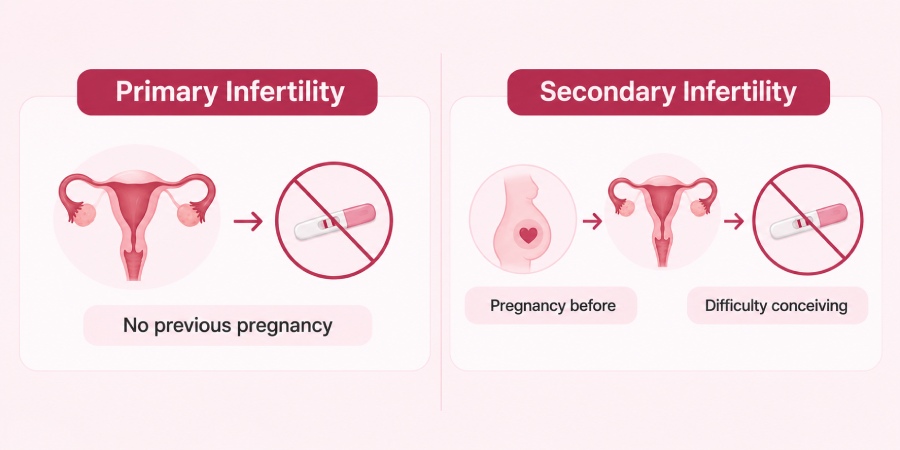
To understand the difference between primary and secondary infertility, let’s understand both of their definitions:
- Primary infertility is defined as when a couple has never been able to achieve a successful pregnancy.
- Secondary infertility is referred to as when a couple struggles to conceive after already having had a successful pregnancy.
Key Differences:
When understanding the actual primary vs secondary infertility, getting the knowledge of the reproductive history of a couple is more important:
- Ovulation induction: Medicines can help the ovaries release eggs at the right time.
- Emotional: Unlike primary infertility, secondary infertility can be more emotionally surprising and frustrating because the first pregnancy happened quite smoothly.
- Biological: While primary infertility happens due to various biological factors, secondary infertility can happen due to increasing age, hormonal shifts, and other medical conditions that may have developed after the first pregnancy.
- Treatment: The diagnosis for both types of infertility is the same. However, the treatment for secondary infertility largely focuses on new issues that have emerged since the previous pregnancy.
Causes of Secondary Infertility in Females:
Secondary infertility can result from a wide range of both common and rare causes, with the following being among the most common secondary infertility causes:
Age-Related Decline in Egg Quality:
One of the most prevalent reasons for an increase in secondary infertility is the decline in egg quality due to advancing age. From the age of 35 onward, many women experience a decrease in the likelihood of successful fertilisation and embryo development.
Hormonal Imbalances and PCOS:
- PCOS and sometimes even thyroid and prolactin disorders tend to be more pronounced or develop in the period following the birth of your first child.
- Hormonal imbalances can disrupt your normal ovulation pattern, making it challenging to conceive naturally or regularly.
Uterine or Tubal Blockages:
Types of disorders that alter the physical characteristics of the fallopian tubes that can cause secondary infertility in women include Fibroids, Endometriosis, Pelvic Infections, Scar Tissue from C-Section and Polyps.
Lifestyle and Weight Factors:
Lifestyle changes after the first pregnancy are common, as is weight gain. However, being overweight or obese can lead to secondary infertility as well.
Causes of Secondary Infertility in Males:
Interestingly, male factor issues account for nearly 30-50% of secondary infertility cases.Several different reasons generally cause secondary infertility in males, some common ones include:
Low Sperm Count or Poor Motility:
One of the most common secondary male infertility causes is sperm related issues, such as low sperm count and poor motility. Interestingly, even if the semen quality was normal in the first pregnancy, ageing or exposure to other medical issues can lead to infertility.
Hormonal or Testicular Disorders:
Low testosterone levels or other hormonal issues can significantly affect sperm production. Varicoceles and different types of testicular injury can contribute to secondary infertility in males.
The male lifestyle factors can affect sperm quantity and quality just like in women, including smoking, drinking, occupation, and exposure to heat or radiation.
Secondary Infertility Symptoms:
Symptoms of secondary infertility include:
- A history of irregular or missed menstrual cycles
- Evidence of hormonal imbalance, such as acne, excessive hair growth, or sudden weight gain.
- Difficulty conceiving a child for over a year or six months if you are over 35.
With infertility, the body shows a wide range of symptoms. Still, there are some cases which don’t leave any signs, such as unexplained secondary infertility.
Diagnosis of Secondary Infertility:
The diagnosis methods for secondary infertility for both women and men are different, which include:
Fertility Evaluation for Women:
- The diagnosis for females generally begins with discussions of medical and family history.
- Then come the hormonal blood tests, such as evaluation of AMH, FSH, LH, thyroid profile, and prolactin levels.
- Additionally, Hysterosalpingography test can be used to assess whether the fallopian tubes are open or closed.
Fertility Evaluation for Men:
- As per the secondary infertility ICD-10 male codes, the diagnosis is linked with the overall sperm profile.
- This includes analysis of sperm count, their motility, morphology, and overall sperm quality.
- Apart from the sperm profile, testosterone, FSH, LH, and other endocrine markers are also checked.
Can Secondary Infertility Be Prevented?
There is no guaranteed way to prevent secondary infertility, as some causes, including age-related changes and certain medical conditions, cannot be controlled. However, maintaining a healthy weight, avoiding smoking, limiting alcohol, treating infections promptly, and managing conditions such as PCOS or thyroid disorders can support reproductive health. Couples should also seek medical advice when conception takes longer than expected rather than delaying evaluation simply because they conceived successfully in the past.
Secondary Infertility Treatment Options
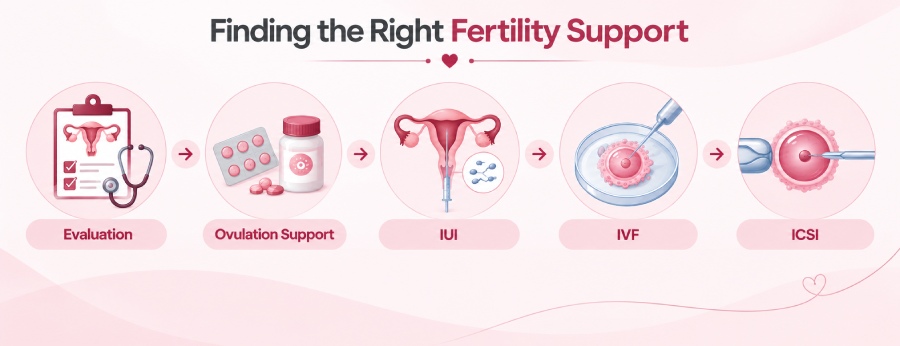
So, can secondary infertility be treated? Absolutely, in fact, it can be treated with various options, which include:
Clomid for Secondary Infertility:
In cases of women suffering from irregular or absence of ovulation, treatment with clomid for secondary infertility is used.
Assisted Reproductive Techniques (ART):
Assisted Reproductive Techniques, such as IVF, IUI, and ICSI, are used when natural methods fail to treat secondary infertility.
Conclusion
Simply, we can say that infertility after a previous successful pregnancy is possible, but the treatment of infertility is even more possible. To know the exact cause of infertility, get in touch with fertility specialists, by identifying and evaluating your symptoms and medical reports. Now, with the help of the latest medical technology like IVF and ICSI, there is a new ray of hope for many couples who are hoping for another child and expanding their family.
Common Questions Asked
What distinguishes primary from secondary infertility?
Primary infertility is when a couple has never achieved a pregnancy; however, secondary infertility is when a couple has successfully conceived before and is now unable to conceive again.
Is it possible to treat secondary infertility by natural means?
Many couples attempting to treat infertility using natural methods may benefit from lifestyle changes.
What is the most common reason for secondary infertility in women?
Some of the most common reasons are age, ovulation disorders, PCOS, tubal obstruction, endometriosis, and hormonal imbalances.
When is IVF the best option for treating secondary infertility?
IVF has above-average success rates in women younger than 38 years old, as long as there are no issues with the sperm.
Does increasing a woman's age increase her chances of suffering from secondary infertility?
Fertility begins to decline after 35 years of age because of lower-quality eggs and changing hormonal levels.
Is it possible to have secondary infertility after a normal first pregnancy?
Yep. A past history of a healthy pregnancy does not exclude fertility problems later on. Future conception can be affected by age, changes in ovulation, sperm health, tubal problems, and other conditions.
When is secondary infertility a worry?
As women get older, the risk of fertility problems increases, especially after age 35, when the number and quality of eggs gradually decline. Individual fertility can still vary quite a bit.