
Overview
IVF is not a mere medical procedure; it is an emotional process. When a person undergoes IVF, it can bring hope as well as uncertainty. Concerns can include injections, medical procedures, treatment costs, possible side effects, and treatment outcomes. For some patients, these may lead to anxiety even before treatment begins.
The best approach is to understand how to overcome IVF fear. That doesn't mean expecting a patient to feel calm throughout the entire process. It means understanding what to expect, what to ask, having appropriate support, and knowing when professional emotional support may be useful. IVF journey is different for every woman. A certified IVF doctor can explain the treatment plan and address concerns according to a patient's medical circumstances.
Table of Contents
- Common Fears and Concerns Before IVF
- Why Does IVF Feel Emotionally Difficult?
- How to Overcome IVF Fear Before Treatment?
- IVF Anxiety: 8 Ways to Manage Worry and Stress During IVF
- How to Handle Fear During IVF Treatment?
- Does Stress Affect IVF Success?
- Emotional Side Effects of IVF
- Everyday Concerns During IVF
- When Should You Seek Emotional Support During IVF?
- How Fertility Counselling Can Help During IVF
- Building a Personal Plan to Manage IVF Fear
- Conclusion
Common Fears and Concerns Before IVF
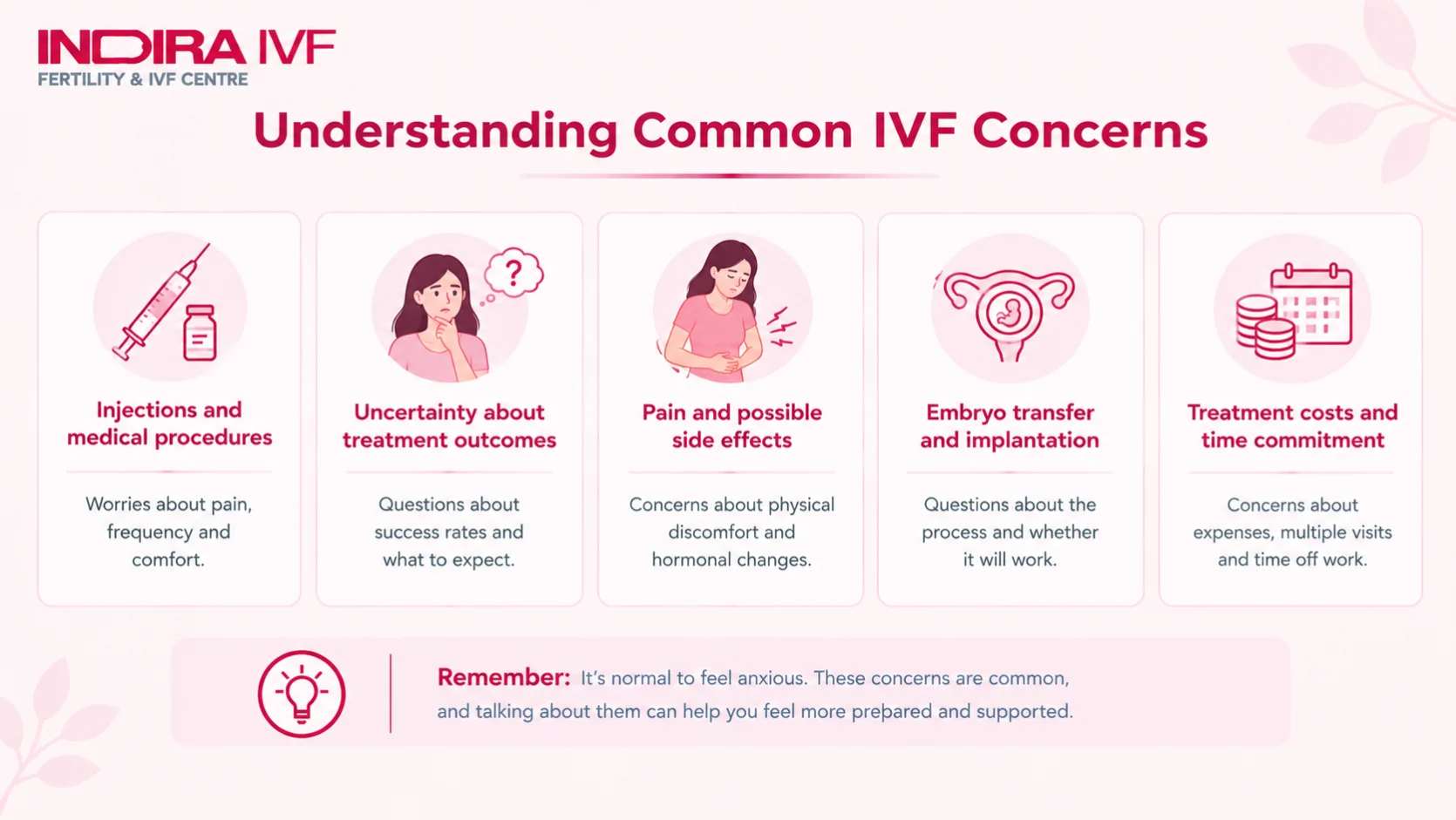
IVF involves several stages, and each stage can bring different concerns. These fears are easier to address when patients feel comfortable talking about them instead of keeping them to themselves. So, here are some common fears and concerns women usually experience before IVF:
Fear of Injections and Medical Procedures
Injections, blood tests, ultrasound scans and other procedures can feel unfamiliar, particularly for someone who has not undergone fertility treatment before. Patients who are worried about injections can ask the clinic team to explain what each medicine is for and how it is administered. Knowing what to expect can reduce uncertainty and make the process feel more manageable.
Fear of IVF Failure
One of the most common challenges an IVF woman has is “quiet apprehension.” They may feel scared about what lies ahead while still trying to stay calm and believe that things will be okay. The possibility of an unsuccessful cycle can be emotionally difficult, especially after investing considerable time, hope, and energy in treatment.
IVF cannot always guarantee pregnancy or a live birth. Results vary depending on factors such as age, medical history, fertility diagnosis, ovarian reserve, and embryo-related factors.
Fear of Pain and Physical Side Effects
The worry about pain or side effects from fertility medicines and procedures can also cause anxiety during IVF treatment. Some stages of IVF can cause temporary discomfort, while medicines may have side effects.
Patients should discuss expected effects and warning signs with their IVF doctor before treatment. Reliable medical information is better than frightening or unverified stories found online.
Fear of Embryo Transfer and Implantation
Embryo transfer can feel challenging. Patients may worry that normal movements, coughing, or crying could affect implantation. During embryo transfer, the embryo is placed gently into the uterus using a thin catheter. Patients should follow the individual instructions provided by their IVF Doctor rather than adopting unnecessary restrictions.Implantation depends on several biological factors and is not something a patient can control through emotional behaviour.
Fear of the Cost and Treatment Commitment
The financial, time, and emotional commitments involved in IVF can contribute to anxiety during IVF treatment. Repeated appointments, investigations, medicines and time away from work may also require practical planning.
Discussing the treatment plan and expected costs with the clinic team can give patients a clearer understanding of what lies ahead. Address questions about medicines, procedures, and possible additional expenses before treatment, where possible.
Why Does IVF Feel Emotionally Difficult?
IVF can feel emotionally difficult because it may involve uncertainty about an outcome. A couple invests hope and emotional energy in treatment while also knowing there is no guaranteed success. Anxiety may arise before appointments, while waiting for test results, or during the period following embryo transfer. Patients may also experience frustration, sadness, or emotional fatigue when treatment becomes a regular part of everyday life.
Emotional responses vary, and patients should not feel pressured to remain positive throughout treatment. It is okay to feel concerned, but if worry becomes a part of life, it is important to consult a certified IVF counsellor.
How to Overcome IVF Fear Before Treatment?
Learning how to manage fear before IVF starts with reliable information and realistic expectations. Patients can:
- Ask the IVF Doctor to explain each stage in simple language.
- Write down questions before appointments.
- Discuss injections, procedures, and possible side effects.
- Understand the individual treatment schedule.
- Plan practical support for appointments.
- Limit repeated searches for frightening or unverified fertility stories.
- Identify a trusted person for emotional support.
- Consider fertility counselling if anxiety becomes difficult to manage.
Understanding that the process involves some fear and anxiety can give patients a clearer sense of what to expect. Instead of thinking of it as “what if it fails?” consider thinking “it’ll be fine.”
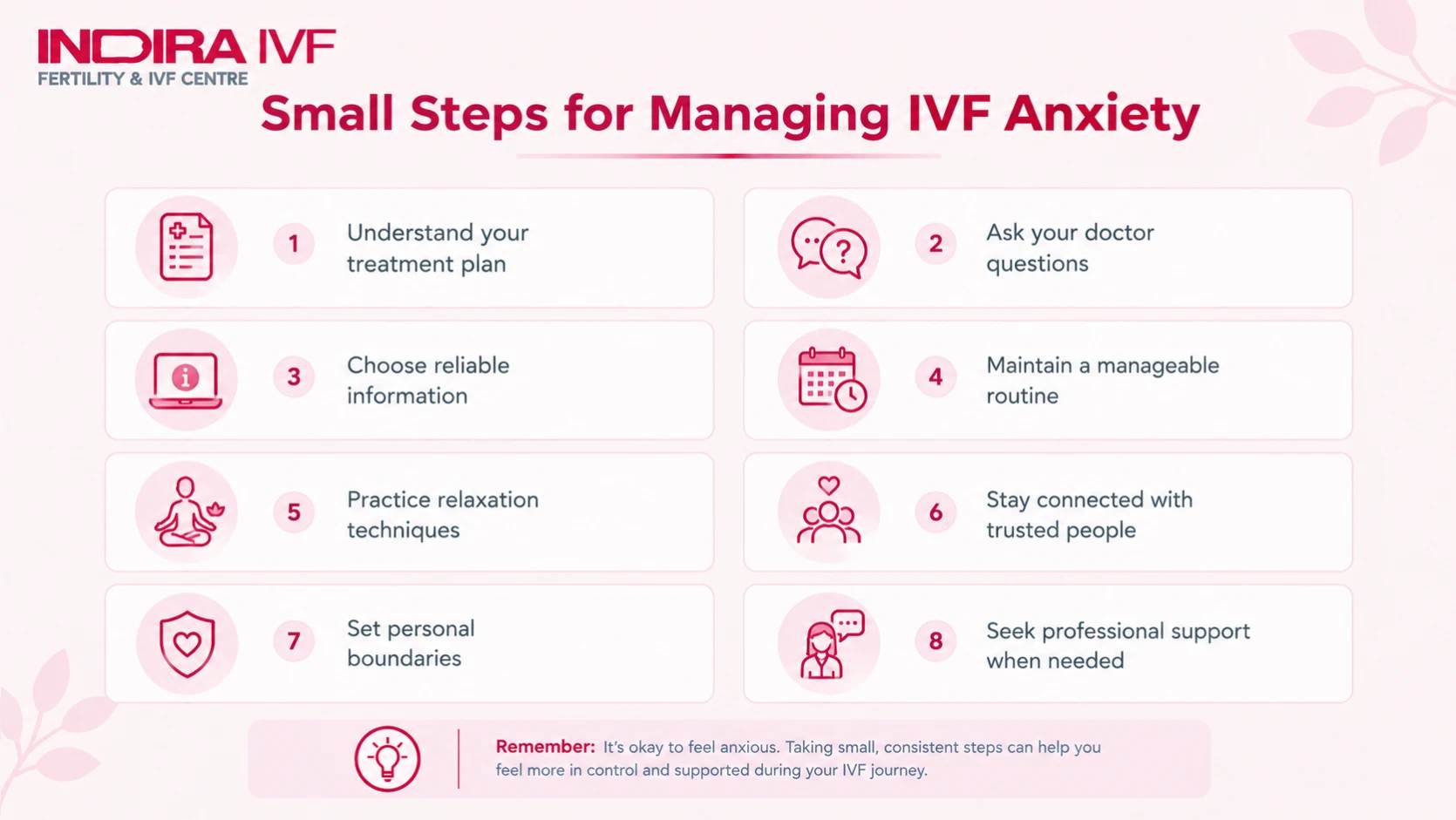
IVF Anxiety: 8 Ways to Manage Worry and Stress During IVF
- Understand the Treatment Plan: Knowing the next step can reduce uncertainty.
- Ask Questions: Discuss concerns about medicines, procedures, or results with the IVF Doctor.
- Use Reliable Information: Patients can rely on their healthcare team and credible medical sources rather than unverified online claims. It is best to read science-backed data or directly talk to the fertility specialist or a counsellor.
- Maintain a Manageable Routine: Don’t overthink and sulk; consider doing certain activities every day to distract yourself from frightening thoughts about IVF failure.
- Practice Relaxation Techniques: Slow breathing, mindfulness, gentle movement or journaling may support emotional wellbeing.
- Stay Connected: A trusted partner, friend, or family member can provide emotional support.
- Set Boundaries: Patients can decide how much fertility-related information they wish to discuss with others.
Seek Professional Support: Fertility counselling or psychological support may be appropriate when distress becomes difficult to manage.
How to Handle Fear During IVF Treatment?
Fear may change as treatment progresses. Instead of trying to eliminate every anxious thought, patients can focus on understanding the current stage and seeking support when needed.
Managing Anxiety Around Injections and Procedures
Patients who feel anxious about needles or procedures can inform the clinic team before treatment. Understanding the purpose of each step and knowing what will happen next can make unfamiliar procedures easier to approach.
Coping With the Two-Week Wait
The two-week waiting period after embryo transfer can bring considerable uncertainty. Patients may become highly aware of physical sensations and wonder whether they indicate implantation or treatment failure.
Physical symptoms alone cannot reliably confirm the outcome. Following the clinic's medication and pregnancy-testing instructions is more useful than repeatedly checking for signs. Also, maintaining a daily routine and limiting excessive online symptom searches may support emotional wellbeing.
Handling Repeated Appointments and Tests
Frequent appointments and tests can become tiring. Patients may find it useful to organise appointments in advance, plan transport and communicate practical needs to partners, family members or employers.
If required, share responsibilities, as it can reduce the feeling that one person has to manage every aspect of treatment alone.
Does Stress Affect IVF Success?
Stress is common during fertility treatment, but it should not be presented as a direct cause of IVF failure. The relationship between stress and fertility outcomes is complex, and current evidence does not establish that a patient's anxiety alone determines whether IVF will succeed.
Managing stress remains important because emotional wellbeing and quality of life matter throughout treatment.
Emotional Side Effects of IVF
IVF can be emotionally demanding as patients navigate treatment decisions, changing expectations and uncertainty about the outcome. Alongside the physical aspects of treatment, it is possible to experience changes in mood, anxiety, sadness, or emotional fatigue. These feelings may differ throughout the IVF journey and can also affect relationships and everyday social interactions.
Mood Changes and Irritability
Patients may experience mood changes or irritability during IVF. Emotional pressure, uncertainty, changes in routine, and fertility medicines may contribute to these experiences. Occasional mood changes can occur during a demanding treatment period. Discuss persistent or severe emotional difficulties with an appropriate healthcare professional. Remember, talking about something can help reduce the emotional baggage.
Anxiety, Sadness and Emotional Fatigue
Anxiety, sadness and emotional fatigue can occur before, during or after an IVF cycle. The intensity of these feelings can vary from one patient to another. Patients who find these emotions difficult to manage can consider fertility counselling or psychological support. Seeking support is a form of self-care, not a sign that someone is failing to cope.
Relationship and Social Challenges
IVF can affect relationships and social interactions. Partners may respond differently to treatment, while questions from relatives or friends may sometimes feel intrusive. Open communication can help partners understand each other's concerns. Patients can also set boundaries around conversations they aren't ready to have.
Everyday Concerns During IVF
Alongside treatment-related concerns, patients may have questions about everyday activities.
Is Hair Dye Safe During IVF?
Evidence on hair treatments mainly relates to pregnancy, not IVF itself. Many studies report that when hair dye is used as directed on healthy, unbroken skin, only a small amount is expected to be absorbed through the scalp. Patients undergoing IVF should discuss specific hair products or chemical treatments with their IVF Doctor, especially if they have individual medical considerations.
Can Crying Affect Embryo Transfer?
Crying does not mean that an embryo will be displaced after embryo transfer. Patients should not blame themselves for crying or experiencing strong emotions during treatment. After transfer, following the IVF doctor's instructions about medicines, activities, and follow-up is more important than trying to control normal emotional reactions. Also, it is advised not to stress yourself over worries about embryo implantation.
Should You Change Your Normal Routine During IVF?
A complete change in routine isn't necessary for every patient. The appropriate level of exercise, work, travel, and other activities can vary by treatment stage and individual medical circumstances. Patients should discuss specific activities with their IVF doctor and follow personalised recommendations.
When Should You Seek Emotional Support During IVF?
Emotional support can be useful at any stage of IVF. Professional support may be appropriate when anxiety, sadness, or worry begins interfering with sleep, work, relationships, or everyday activities. Don't ignore persistent or overwhelming distress. Fertility counselling or mental health support can provide a confidential setting for discussing difficult emotions and developing coping strategies.
How Fertility Counselling Can Help During IVF
Fertility counselling provides a space for patients to discuss concerns related to infertility and treatment. A counsellor familiar with fertility care can support patients dealing with anxiety, uncertainty, relationship concerns, and difficult emotions. Counselling can also help patients prepare for different treatment outcomes and identify practical ways to cope with stressful stages. It works alongside medical care and does not replace advice from an IVF Doctor about treatment decisions.
Building a Personal Plan to Manage IVF Fear
A personal plan can focus on the concerns that feel most difficult for a patient. It may include:
- Identifying specific fears, such as injections, pain, cost, or treatment failure.
- Planning practical support for appointments and daily responsibilities.
- Choosing a trusted person for emotional support.
- Maintaining suitable everyday activities and routines.
- Setting boundaries around fertility-related conversations.
- Considering fertility counselling when needed.
- Focusing on the next treatment step rather than trying to predict the entire journey.
The goal is not to remove every feeling of fear. It is to ensure that patients have reliable information, appropriate medical guidance, and emotional support throughout treatment. For the best plan, consult your IVF doctor.
Conclusion
Feeling a little bit scared about IVF is normal; patients do not have to go through these emotions alone. Every fertility journey is unique, and having the right information, medical guidance, and emotional support can make the process feel more manageable.
You can take one step at a time and seek support whenever you need it; with appropriate treatment and care, many couples go on to conceive. Even when the journey takes longer than expected. Hence, compassionate support can help patients move through each stage with greater confidence and hope. You don't need to figure it all out or calm down at once; take time to understand the process, manage expectations, and go with the flow.