
Overview
If you have started IVF and now find yourself dealing with bloating and constipation, know that this is one of the most commonly reported discomforts during treatment. It does not mean that anything is wrong with your cycle. Constipation during IVF often happens because of the hormone medicines used during treatment, along with changes in diet, activity, and daily routine. This guide explains why constipation happens during fertility treatment, which foods may help relieve it, how much fibre you actually need, which fruits are especially helpful, why hydration matters, and which foods or habits can make things worse. It also covers simple, natural ways to manage constipation through your cycle.
Table of Contents
- Why Can Constipation Happen During IVF?
- What Foods May Help Relieve Constipation During IVF?
- How Much Fibre Do You Need During IVF?
- What Fruits Can Help With Constipation During IVF?
- Why Is Hydration Important for Constipation During IVF?
- What Foods and Habits May Make Constipation Worse?
- How Can You Manage Constipation During IVF Naturally?
- Conclusion
Why Can Constipation Happen During IVF?
Constipation during IVF usually comes from a combination of hormonal, medical, and lifestyle factors working together.
Hormonal Changes During IVF
Progesterone, a hormone used during IVF to support the uterine lining after embryo transfer, relaxes the muscles of the intestines. This slows digestion, so stool stays in the bowel longer and becomes harder to pass.
IVF Medications and Constipation
Constipation after IVF injections can also happen because of the hormone injections used for ovarian stimulation, which can cause bloating as the ovaries enlarge to grow multiple eggs. Iron supplements, often prescribed during treatment, can add to this.
Changes in Diet, Activity and Daily Routine
Constipation after embryo transfer is also common simply because many women reduce their physical activity out of caution during this time, and appetite or eating patterns can shift due to stress or medication side effects. Lower activity and irregular meals can both slow digestion further.
What Foods May Help Relieve Constipation During IVF?
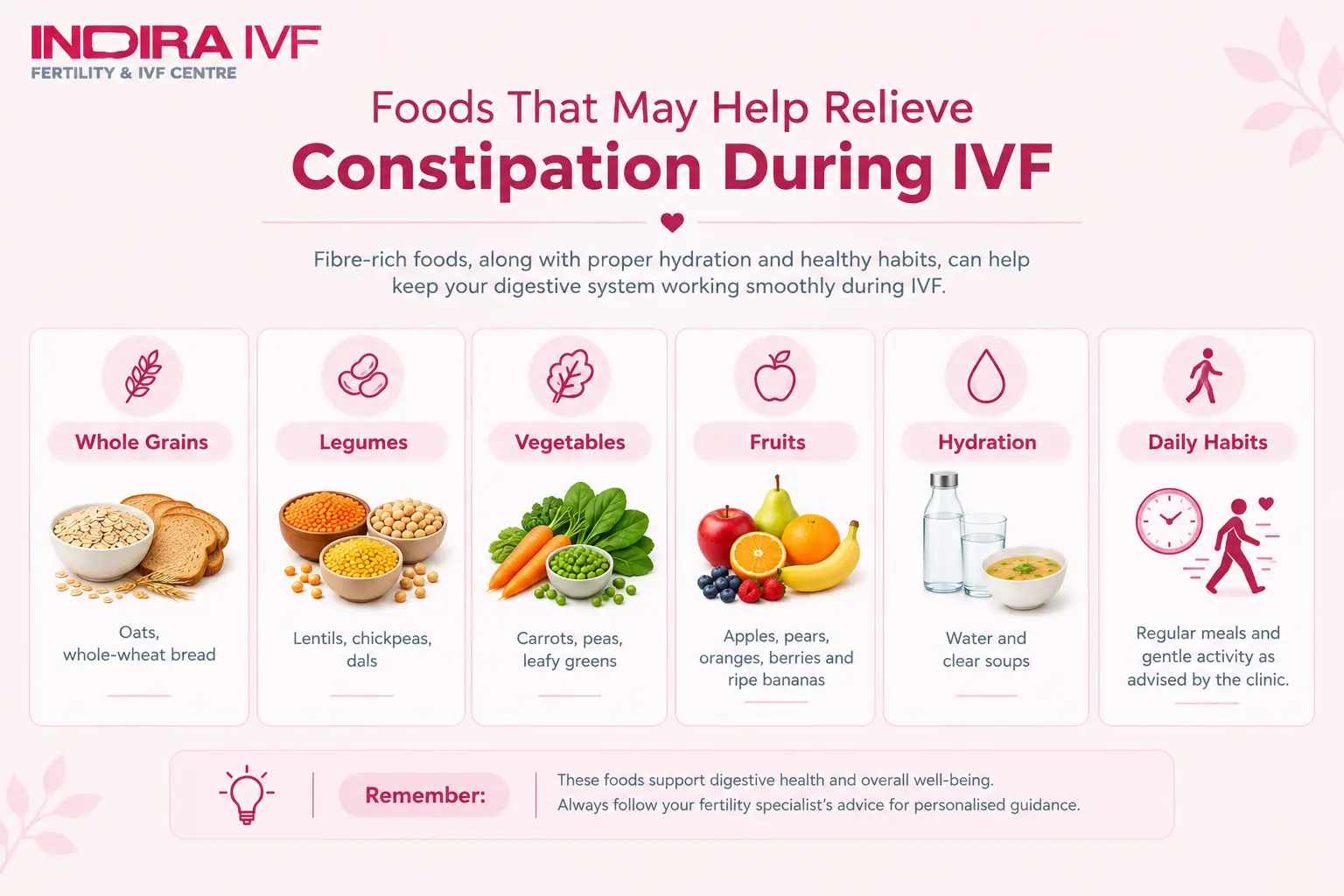
Foods for constipation during IVF are largely the same fibre-rich foods recommended for constipation generally. As per the National Institute of Diabetes and Digestive and Kidney Diseases (NIDDK), whole grains such as oats and whole wheat bread, legumes such as lentils and chickpeas (common in Indian dals), and vegetables like carrots and peas can all help move stool through the bowel more easily.
How Much Fibre Do You Need During IVF?
According to the NIDDK, most adults need between 22 and 34 grams of fibre a day. 25 to 30 grams a day are recommended for pregnancy-related constipation, which applies just as well during IVF. It is best to increase fibre gradually, since a sudden jump can add to bloating.
What Fruits Can Help With Constipation During IVF?
What to eat for constipation during IVF often starts with fruit, since many fruits combine fibre with high water content. Apples, pears, oranges, and berries are good options, and ripe bananas are also reasonable, though very unripe, green bananas contain a starch that can have the opposite, binding effect.
Why Is Hydration Important for Constipation During IVF?
Fibre needs enough fluid to work properly, since it absorbs water in the bowel to soften stool. As per the NIDDK, water and other fluids such as diluted fruit juices and clear soups support this process. During pregnancy-related constipation, women are often advised to drink more than the usual recommended amount of water each day.
What Foods and Habits May Make Constipation Worse?
A few common foods and habits can work against relief, even while you are eating some fibre-rich foods:
- Highly processed, fried and fast foods
- Skipping meals or eating irregularly
- Very low fluid intake
- Staying inactive well beyond what your doctor has advised
How Can You Manage Constipation During IVF Naturally?
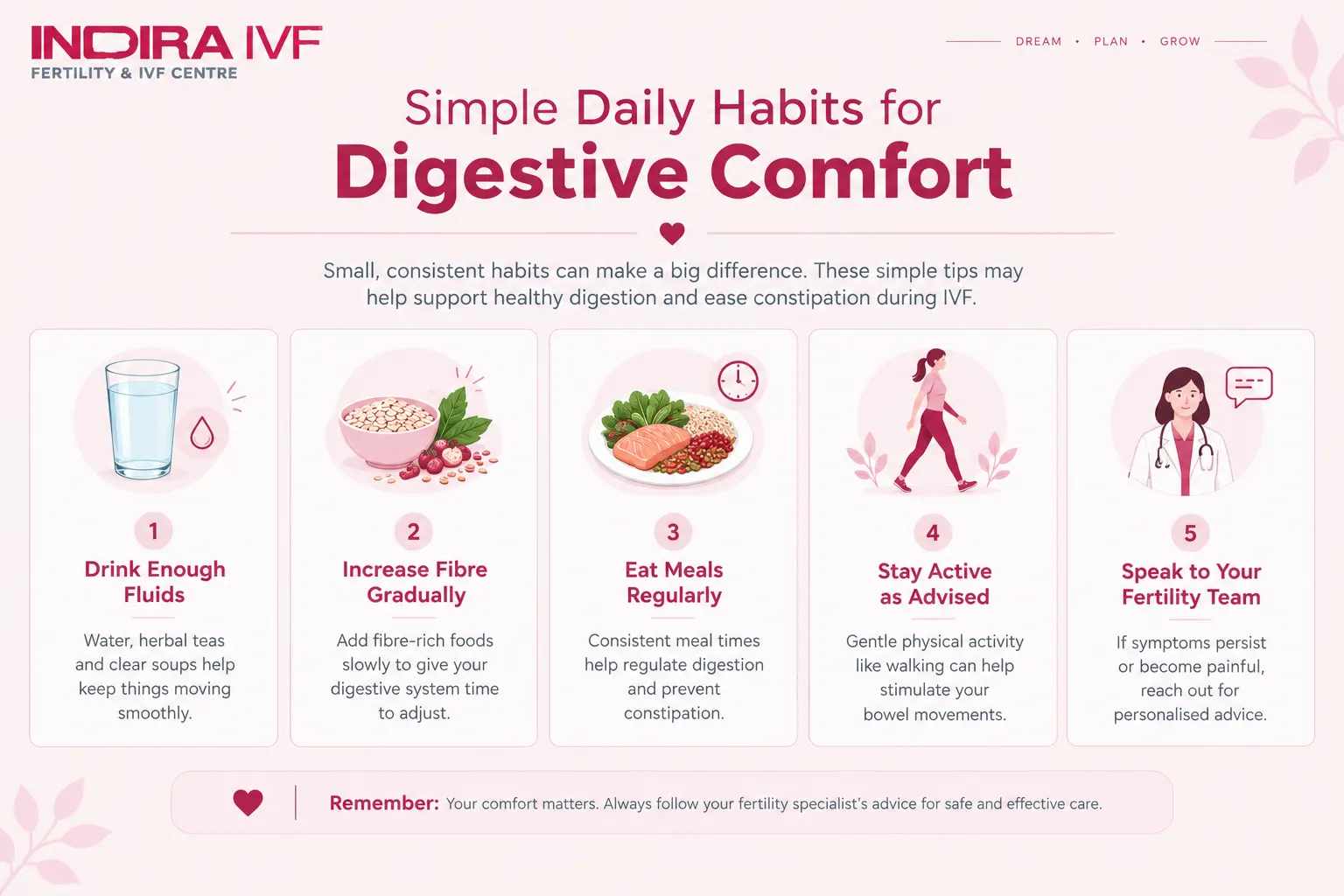
Managing constipation during IVF naturally usually means combining the approaches already discussed, rather than relying on any single change. Gradually increasing fibre, drinking enough fluids through the day, staying as physically active as your clinic allows, and eating meals at regular times all work together. If constipation continues despite these changes, or becomes painful, it is worth mentioning to your fertility team rather than adding a laxative on your own, since some are better suited to pregnancy or IVF than others.
Conclusion
Constipation during IVF is common, usually temporary and closely linked to the hormone medicines used in treatment rather than anything going wrong with your cycle. A fibre-rich diet, adequate fluids and gentle, regular activity address most of what causes it. Persistent or painful symptoms are worth discussing with your fertility team, who can suggest options that are safe alongside your specific treatment plan.