
Overview
When you start an IVF cycle, most of your attention goes to injections, scans, and appointments. But after your eggs are fertilised, much of the work moves to a place you cannot see: the IVF laboratory. This is where your embryos spend their first few days, growing cell by cell under careful observation. Embryo monitoring is the ongoing work that helps the laboratory team keep track of this development and maintain the right conditions. Here is what it involves, why it matters, and what you can expect from a modern fertility lab.
Table of Contents
- What Is Embryo Monitoring in IVF?
- Why Continuous Embryo Monitoring Matters
- What Happens to Embryos in an IVF Laboratory?
- How Are Embryos Monitored Around the Clock?
- What Is Time-Lapse Embryo Monitoring?
- How Continuous Monitoring Helps Protect Embryos
- What Does an Embryologist Look for During Embryo Monitoring?
- Does Embryo Monitoring Improve IVF Success Rates?
- What Happens If an IVF Laboratory Alert Occurs?
- The Role of Technology in Modern IVF Laboratories
- What Patients Should Know About Embryo Monitoring
- Conclusion
What Is Embryo Monitoring in IVF?
Embryo monitoring means tracking how embryos develop after fertilisation, from the first cell divisions until transfer or freezing. It also involves monitoring the incubator conditions like temperature, gas levels, and humidity. Embryos develop continuously, which means monitoring should be carried out throughout the process rather than as a one-time check.
Why Continuous Embryo Monitoring Matters
Embryos are sensitive during the first few days of development. This is why keeping their environment stable and limiting unnecessary handling is important.
Keeping Laboratory Conditions Stable
The body provides a warm and stable environment for a developing embryo. IVF laboratories aim to maintain similar conditions inside the incubator. This is why temperature, gas levels, and humidity are carefully controlled so that changes do not affect embryo development.
Minimising Unnecessary Handling
Embryos are very small and sensitive in the early days after fertilisation. Traditional checks require them to be removed from the incubator. However, this can expose them briefly to changes in temperature and light. Continuous monitoring allows labs to observe development without repeatedly removing the embryos. It helps keep their environment as stable as possible.
What Happens to Embryos in an IVF Laboratory?
Once fertilisation takes place, embryos are carefully cultured and monitored in the laboratory until they are ready for transfer or freezing.
From Fertilisation to Embryo Development
After egg collection, fertilisation is done using conventional IVF or ICSI. Fertilisation is usually checked the next morning. The embryo then begins dividing from two cells to four, eight, and eventually a blastocyst around day five or six.
How Embryos Are Stored and Cultured
Embryos are placed in dishes that contain a nutrient-rich culture medium and kept in specialised incubators. These maintain stable temperature and gas levels similar to body conditions. Embryos may remain in culture for two to six days depending on the treatment plan.
How Embryologists Assess Embryo Development
Embryologists traditionally remove embryos briefly for microscope checks, looking at cell division and overall appearance. However, these checks provide only a snapshot. With continuous embryo development monitoring in IVF, development can be followed more closely without repeatedly removing embryos from the incubator.
How Are Embryos Monitored Around the Clock?
Embryo monitoring also means keeping a close watch on the laboratory environment throughout the day and night.
Monitoring Incubator Conditions
Modern IVF incubators use sensors to continuously monitor internal conditions. Laboratory staff can check these readings at any time and receive alerts if something changes.
Tracking Temperature, Gas Levels and Humidity
Temperature, carbon dioxide, oxygen, and humidity are monitored continuously. Any significant change can be detected and addressed quickly.
Alerts and Backup Systems
IVF labs use alarms and backup systems to protect embryos if equipment fails. Alerts can notify embryologists when readings move outside the set range. Backup power and gas supplies help maintain stable conditions.
Responding to Changes Quickly
Continuous monitoring allows staff to identify problems early and act without any delay. This is an important part of IVF embryo safety and laboratory monitoring.
What Is Time-Lapse Embryo Monitoring?
Time-lapse monitoring lets embryologists follow embryo development without repeatedly taking embryos out of the incubator.
How Time-Lapse Imaging Works
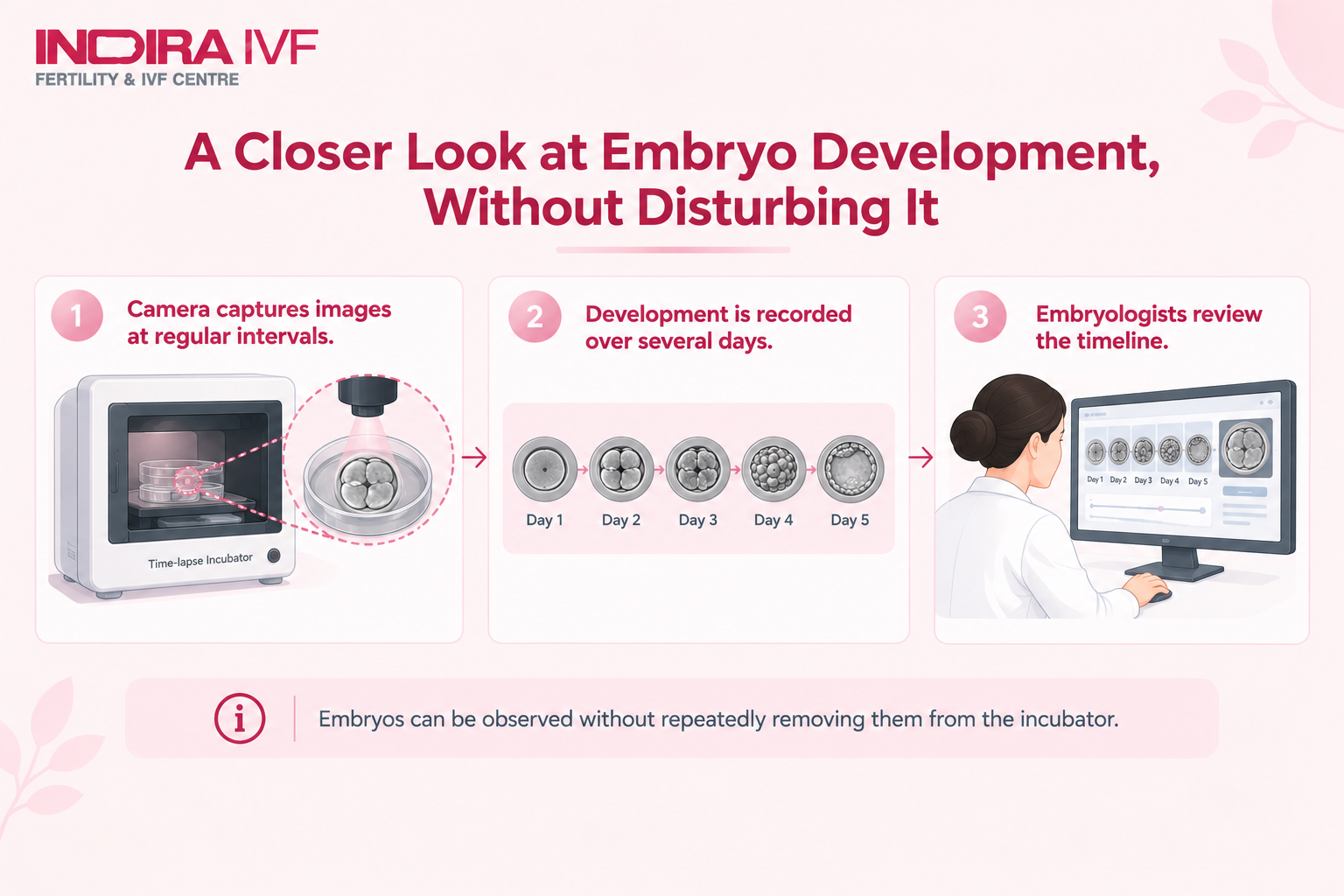
Time-lapse embryo monitoring technology uses a camera inside the incubator to take regular images of each embryo. These images are then combined to create a record of its development while the incubator remains closed.
Following Embryo Development
Instead of relying on occasional checks, embryologists can review how an embryo develops over several days. This shows when cell divisions occur and how the embryo progresses towards the blastocyst stage.
Time-Lapse vs Conventional Assessment
Conventional assessment involves briefly removing embryos for microscope checks. Time-lapse monitoring allows them to remain in stable conditions while providing a more detailed view of their development. Research published in the Journal of Assisted Reproduction and Genetics has highlighted the importance of stable, undisturbed culture conditions in IVF laboratories.
How Continuous Monitoring Helps Protect Embryos
Continuous monitoring helps labs prevent unnecessary handling and keep embryos in stable conditions throughout culture.
Reducing Exposure to External Conditions
Each time an embryo is removed from the incubator, it is briefly exposed to light and changes in temperature and air. Continuous monitoring means the need for such interruptions is reduced.
Keeping Culture Conditions Stable
Real-time monitoring helps staff spot changes in temperature, gas levels and other conditions quickly. This allows them to make adjustments when needed.
Allowing Quick Laboratory Response
If a problem occurs, an alert can help the laboratory team identify it early and take action before it has a significant effect on embryo development.
What Does an Embryologist Look for During Embryo Monitoring?
Embryologists look for some important factors during embryo monitoring:
Cell Division and Developmental Progress
Embryologists track how many cells an embryo has at each stage, and how quickly it is dividing compared with typical timelines.
Embryo Morphology
They also assess physical appearance to see how even the cells are, whether there are any fragments and how the embryo is organising itself as it grows.
Developmental Patterns That May Be Relevant
With time-lapse systems, embryologists can also note patterns in the timing of cell divisions. These, alongside standard morphology, help build a fuller picture. However, they form one part of an overall assessment, not a decision on their own.
Does Embryo Monitoring Improve IVF Success Rates?
Monitoring can provide useful information about embryo development, but it is only one part of an IVF cycle.
What Embryo Monitoring Can Tell Doctors
Monitoring shows how embryos develop over time, giving embryologists more information when assessing their progress and deciding which embryo may be suitable for transfer.
What Affects IVF Outcomes?
IVF success depends on several factors, including egg and sperm quality, uterine health, and how the body responds to treatment. Embryo monitoring is just one part of this process.
Why Monitoring Does Not Guarantee Pregnancy
Embryo monitoring can provide more information and help maintain stable laboratory conditions, but it cannot guarantee pregnancy. A 2019 Cochrane review found insufficient evidence to confirm that time-lapse systems improve pregnancy or live birth rates compared with standard incubation. Monitoring is therefore best viewed as a tool for observing embryo development and not as a guarantee of IVF success.
What Happens If an IVF Laboratory Alert Occurs?
An alert allows the laboratory team to identify a problem quickly and take the appropriate steps to protect the embryos.
Identifying the Problem
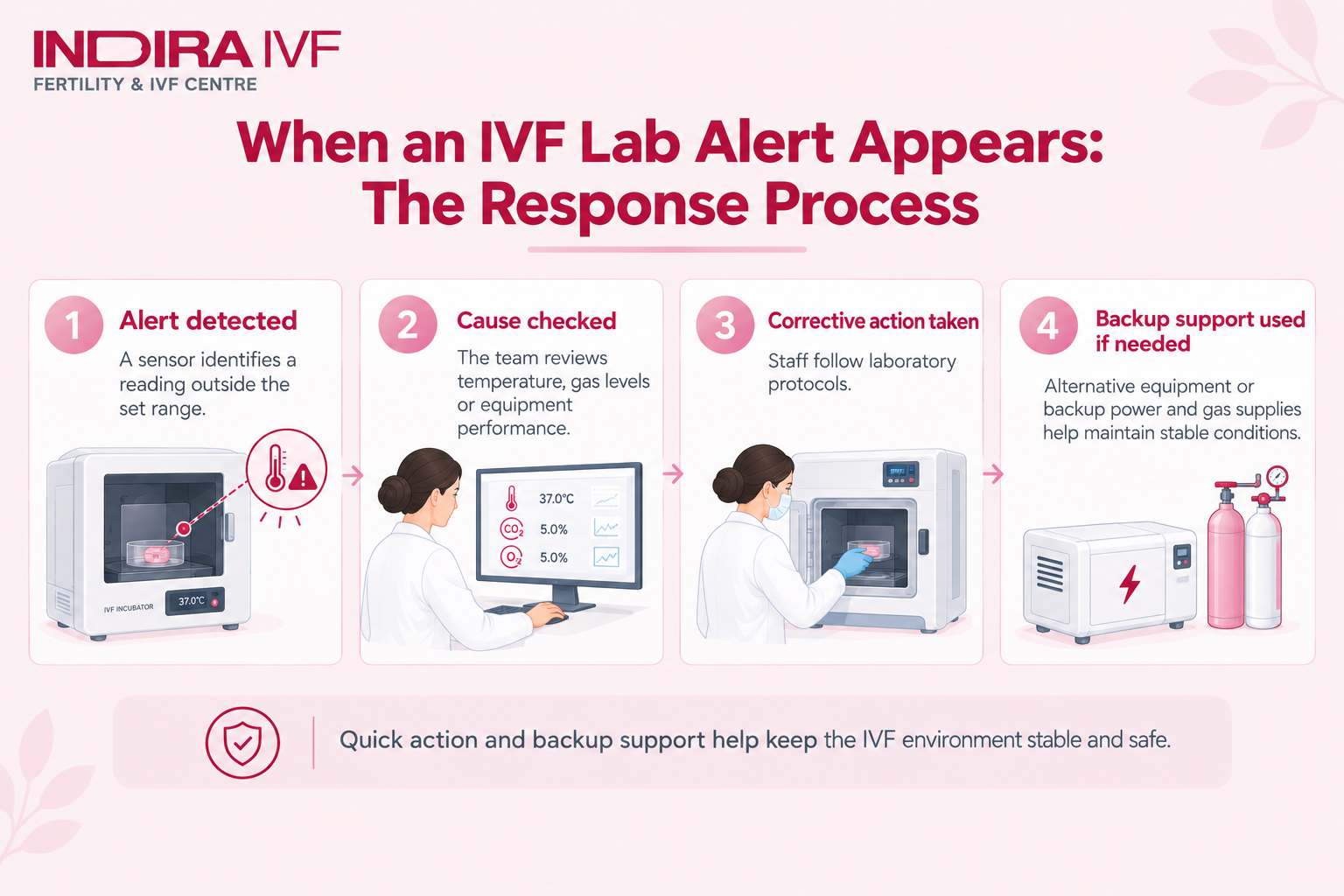
Staff first check what triggered the alert, such as a change in temperature, gas levels, or equipment performance. This helps them address the specific issue.
Taking Immediate Action
Embryologists follow established protocols based on the problem. They may adjust the equipment, check the power or gas supply, or move embryos to a backup incubator if needed.
Keeping Embryos Safe During Changes
The aim is to minimise disruption and maintain stable culture conditions. Backup equipment also provides an additional safeguard if an incubator develops a serious fault.
The Role of Technology in Modern IVF Laboratories
Technology helps IVF laboratories monitor conditions closely, record changes, and respond quickly when something goes wrong.
Automated Monitoring Systems
Automated systems check incubator conditions continuously, reducing the need for manual checks and helping staff spot changes early.
Continuous Data Recording
Readings are recorded over time, giving the laboratory a clear history of incubator conditions. Time-lapse systems can also record embryo development for later review.
Equipment and Power Backup
Labs use backup power, gas supplies, and equipment to maintain stable conditions during a power cut or equipment failure.
Quality Control and Laboratory Protocols
Technology is only one part of laboratory safety. Regular equipment checks, servicing and clear protocols also help maintain consistent conditions. Research published in the Laboratories journal has linked stable temperature and gas levels, along with good quality-control practices, with healthy embryo development in the laboratory.
What Patients Should Know About Embryo Monitoring
Understanding how embryos are monitored can help you know what happens to them between fertilisation and transfer or freezing.
How Embryos Are Cared for After Fertilisation
After fertilisation, embryos are kept in controlled incubators where temperature, gas levels and other conditions are closely monitored. The aim is to support development while limiting unnecessary disturbance.
How Monitoring Supports IVF Treatment
Most of this work happens behind the scenes. Monitoring gives embryologists information about embryo development, which can support discussions about treatment and embryo transfer.
Questions to Ask Your Fertility Clinic
You can ask your clinic what type of incubators it uses, whether it offers time-lapse embryo monitoring technology and what procedures are followed if an equipment alert occurs. These questions can help you understand how your embryos are cared for in the laboratory.
Conclusion
Embryo monitoring may not be discussed as often as other parts of IVF, but it plays an important role. Embryos are kept in stable conditions and monitored around the clock. Time-lapse cameras can also track their development without disturbing them.
Monitoring cannot guarantee a successful IVF outcome. It helps the laboratory team keep a close watch on your embryos and respond quickly if something changes.