
Empty Follicle Syndrome in IVF: What Does It Mean When No Egg Is Retrieve
Reviewed By Dr. Mohip Sahu
Gynaecologist & IVF Specialist
10+ years of experience
Overview
During an IVF cycle, ultrasound may show several mature follicles ready for egg retrieval. Yet, sometimes, when these follicles are aspirated, no egg is found in the collected fluid. This unexpected situation is known as empty follicle syndrome (EFS).
Empty Follicle Syndrome (EFS) is an uncommon IVF problem in which no oocytes are retrieved from apparently mature follicles. The name does not necessarily mean that the follicles were literally empty in any individual patient or treatment cycle. When doctors fail to recover an egg, several factors may explain it. Patients must know that an unsuccessful retrieval does not mean future IVF will fail. The fertility team can review the cycle to determine what may have contributed and whether changes could help.
Table of Contents
- What Is Empty Follicle Syndrome in IVF?
- What Are the Possible Causes of Empty Follicle Syndrome?
- What Happens If No Eggs Are Retrieved During IVF?
- How Common Is Empty Follicle Syndrome in IVF?
- How Is Empty Follicle Syndrome Diagnosed?
- How Is Empty Follicle Syndrome Treated or Managed?
- Can Empty Follicle Syndrome Be Prevented?
- Can Empty Follicle Syndrome Happen Again?
- Key Takeaways
- References
What Is Empty Follicle Syndrome in IVF?
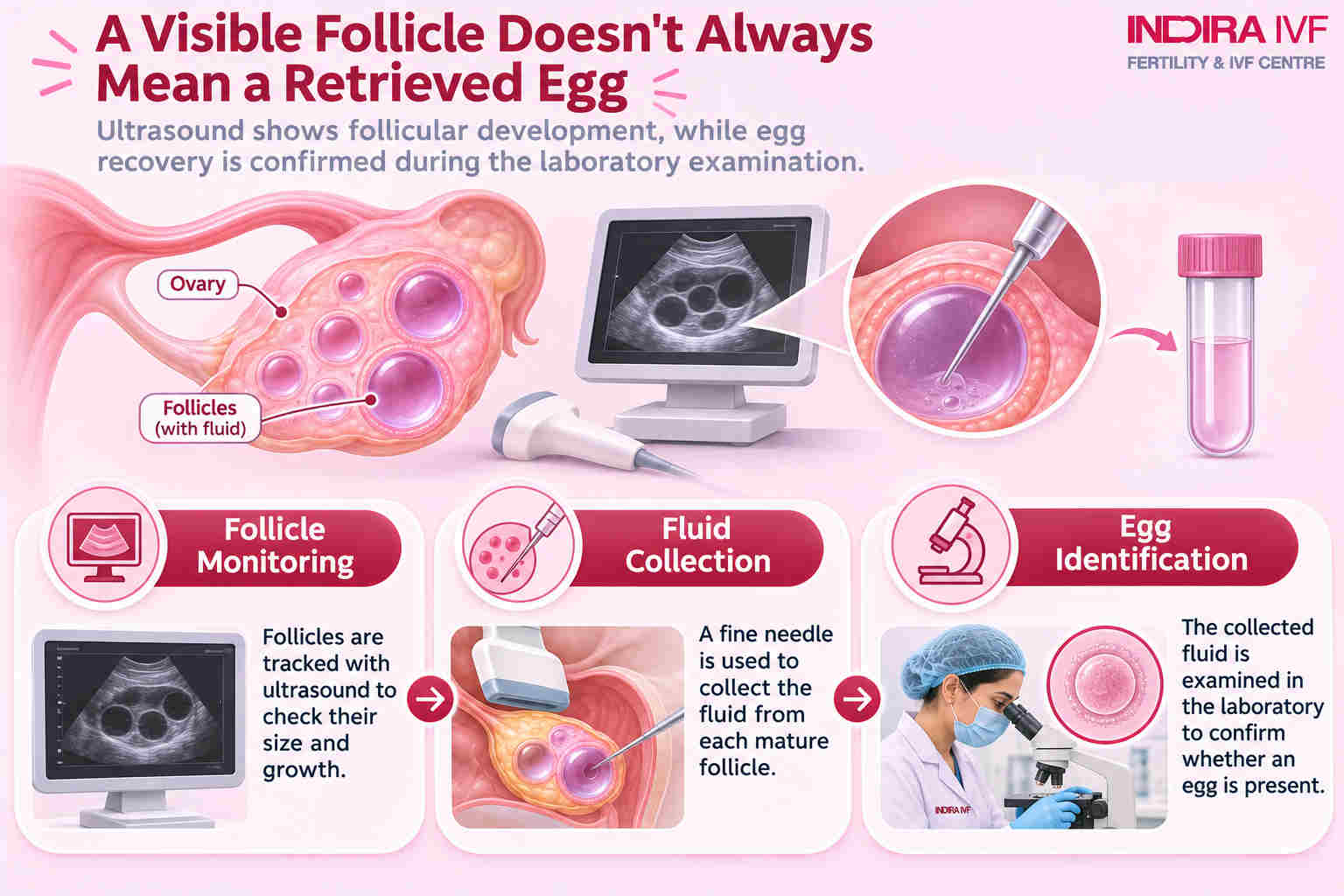
What is Empty Follicle Syndrome? It is a clinical term used when no oocytes are recovered from apparently mature follicles after ovarian stimulation for IVF.
- During IVF, gonadotropins are injected to stimulate follicles to grow.
- The development is then monitored by ultrasound and other tests.
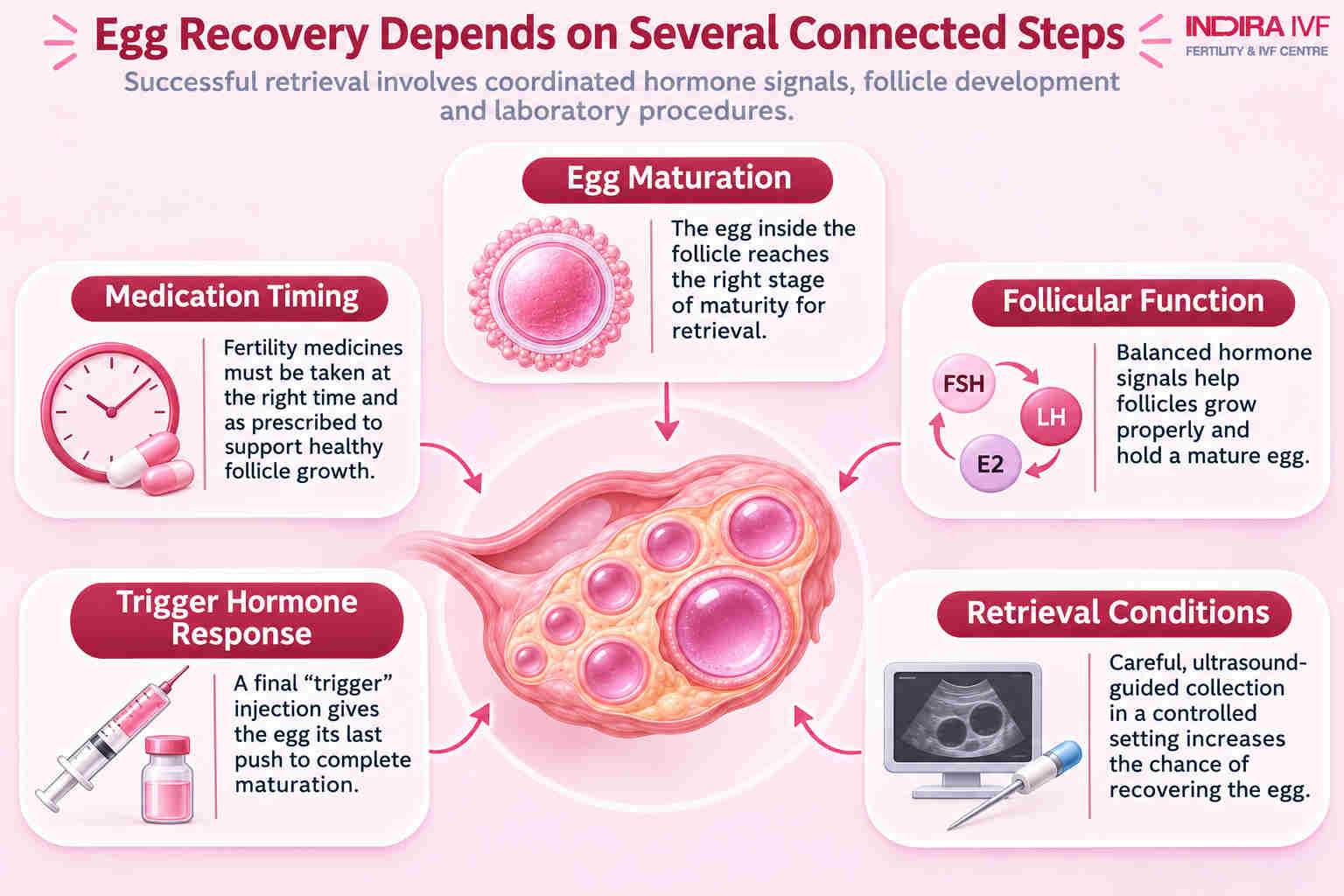
- When the follicles are considered ready, a medication called a trigger is given to initiate final oocyte maturation.
- Egg retrieval is then scheduled within a specific interval after the trigger.
Before egg retrieval, a trigger injection helps the eggs complete final maturation. The type of trigger depends on the IVF protocol and may include hCG or a GnRH agonist. Current guidance recommends choosing the trigger according to the treatment protocol and the patient's circumstances, rather than using one approach for everyone.
The empty follicle syndrome meaning is therefore broader than simply finding an empty follicle. Traditionally, EFS has been divided into false and genuine forms, such as:
- False EFS: Inadequate exposure to the trigger, particularly hCG.
Genuine EFS: Expected trigger exposure appears adequate, but no oocyte is retrieved.
Beyond the empty follicle : decoding the causes, diagnosis and management of EFS
- DR. KAMALAPURAM BHAVISHYA
Recent research has also proposed a borderline form in which oocyte recovery is markedly lower than expected rather than completely absent. These classifications reflect different possible causes.
What Are the Possible Causes of Empty Follicle Syndrome?
The empty follicle syndrome causes are not identical in every patient. Some involve factors that may be corrected, while others involve biological processes that are not yet fully understood.
Problems with Trigger Injection or Timing
The trigger is essential because it initiates the final stages of oocyte maturation before retrieval. If an hCG trigger is not administered correctly, the complete dose is not delivered, or the medication is given at an inappropriate time, the expected hormonal response may not occur.
Older research has found that administration errors and inadequate hCG exposure accounted for a substantial proportion of reported EFS cases. A systematic review found that many cases classified as EFS may be linked to human or pharmaceutical factors rather than a confirmed absence of oocytes.
The interval between the trigger and egg retrieval also matters. Retrieval is planned around the expected maturation process, so a significant timing error can interfere with successful recovery. Clinics therefore usually document the exact time of trigger administration and retrieval.
Do not automatically attribute an unsuccessful retrieval to patient error. If a trigger problem is suspected, the clinic can review its prescription, preparation, administration, and timing.
Follicle Development and Ovarian Response
A follicle that appears mature on ultrasound does not guarantee that a mature oocyte will be recovered.
Follicular development depends on coordinated interactions between the oocyte, granulosa cells, cumulus cells, and reproductive hormones. If final maturation does not occur normally, an oocyte may not be retrieved even when the follicle appears appropriately developed.
EFS does not always mean that a woman has low ovarian reserve. Ovarian reserve, how the follicles respond, and whether an egg is retrieved are three different things.
Recent research has looked closely at whether signals from LH or hCG aren't working properly at the receptor level. They are also studying whether the egg itself may have problems maturing or responding normally.
The egg communicates with the surrounding cumulus cells, which support its development and maturation. When there’s any problem with this communication, it may affect the egg's ability to mature and be retrieved.
Difficulty During the Egg Retrieval Procedure
The retrieval procedure can also affect whether an oocyte is recovered. During retrieval, an ultrasound-guided needle enters the follicles, and their fluid is aspirated. The embryology laboratory examines the collected fluid for oocytes. Follicle position, ovarian access, aspiration, and other technical factors can influence recovery.
If no oocyte is found, the clinical team may reassess the follicles and the amount of fluid obtained. Depending on the circumstances, the team may consider additional aspiration or other procedural measures.
Any sort of difficulty is not assumed to be the explanation. Every finding is interpreted with the ultrasound assessment, trigger information, hormone results, and laboratory observations.
Other Factors That May Contribute to EFS
Other proposed contributors include premature ovulation, an inadequate biological response to the trigger, impaired final oocyte maturation, and abnormalities in follicular function.
Research has also examined genetic or molecular abnormalities in patients with genuine or recurrent EFS. Because several mechanisms can produce the same outcome, identifying the cause usually requires reviewing the complete IVF cycle.
What Happens If No Eggs Are Retrieved During IVF?
Why are no eggs retrieved during IVF? Well, there can be more than one explanation. The fertility team may consider inadequate trigger exposure, timing problems, impaired final maturation, premature ovulation, follicular factors, or technical aspects of retrieval.
If no oocyte is recovered, the cycle generally cannot proceed to fertilisation or embryo creation because no egg is available for conventional IVF or ICSI. The fertility team may review the trigger, follicle development, retrieval findings, and hormone results.
In certain circumstances, the team may consider a rescue approach. However, such approaches are individualised and cannot guarantee egg recovery. For a future cycle, the fertility specialist may modify the trigger, monitoring plan, stimulation protocol, or timing of retrieval according to the suspected cause.
How Common Is Empty Follicle Syndrome in IVF?
EFS is considered uncommon, but reported rates vary widely. Differences in study populations and definitions make it difficult to give one universal figure.
Studies suggest that empty follicle syndrome occurs in around 0.045% to 3.45% of IVF cases. The broader figures include different forms of EFS and may reflect differences in how unsuccessful oocyte retrieval was classified. Genuine EFS is considered much rarer than the broader group of cases described as EFS.
Older studies have produced different estimates, so do not interpret a single percentage as an individual risk.
There is also no accurate Empty Follicle Syndrome success rate that can predict what will happen after a failed retrieval. Another cycle's outcome depends on the suspected cause, age, ovarian response, trigger strategy, and other characteristics.
How Is Empty Follicle Syndrome Diagnosed?
EFS is generally considered after no oocytes are identified during retrieval despite follicles that appeared mature or appropriately developed.
The fertility team may review:
- The number and size of follicles before retrieval
- The stimulation protocol
- The trigger medication, dose, and administration
- The exact interval between trigger and retrieval
- Hormone measurements when clinically appropriate
- Findings during follicular aspiration
- Embryology laboratory observations
When an hCG trigger is used, measuring serum Beta-hCG around retrieval may help determine whether adequate exposure occurred. However, studies have used different thresholds, and no universally accepted cutoff defines genuine EFS.
Diagnosis can also be more difficult after a GnRH agonist trigger because there are no standardised hormone levels to confirm the condition. For this reason, mature follicles on ultrasound alone do not establish why an egg was not recovered.
How Is Empty Follicle Syndrome Treated or Managed?
Empty follicle syndrome treatment depends on the suspected cause and is personalised for every patient.
- If inadequate trigger exposure is suspected, the fertility specialist may consider a rescue strategy in selected circumstances. The medical literature describes repeat triggering followed by delayed retrieval, although evidence is limited and outcomes vary.
- For a subsequent IVF cycle, possible changes may include reviewing the trigger medication and administration, adjusting its timing, modifying stimulation, or increasing monitoring around final oocyte maturation.
- Current IVF guidance supports individualised trigger selection. hCG and GnRH agonists have different roles depending on the stimulation protocol, ovarian response, and risk of ovarian hyperstimulation syndrome.
- In patients at increased risk of OHSS, a GnRH agonist trigger may be used in appropriate protocols to reduce that risk.
Fertility medication should not be repeated, changed, or delayed without instructions from the treating team.
Can Empty Follicle Syndrome Be Prevented?
There is no guaranteed way to prevent every episode because the mechanisms behind genuine EFS are not completely understood.
Some potentially avoidable factors can be addressed. Patients should follow the clinic's instructions carefully regarding medication dose, injection technique, storage, and exact timing. Doctors thoroughly review the previous cycle before planning another attempt.
The team may adjust the trigger strategy, stimulation protocol, monitoring, or retrieval timing.
So, can empty follicle syndrome be prevented? While some trigger-related problems may be preventable, there is no method that can completely guarantee the prevention of genuine EFS.
Can Empty Follicle Syndrome Happen Again?
Yes, recurrence is possible, but it is difficult to predict an individual patient's risk. Studies have reported different recurrence rates because they included different patient groups and used different definitions of EFS. Having EFS in one cycle does not mean it will happen again.
The fertility specialist may review the previous egg retrieval and check if changes are needed in the trigger, stimulation protocol, monitoring, or timing of retrieval. If a possible cause can be identified and corrected, it may help guide the next cycle.
Consider a previous EFS episode as part of the overall treatment history, not as a sign that the next cycle will also fail.
Key Takeaways
Being told that no egg was retrieved after weeks of ovarian stimulation and IVF preparation can be very upsetting. However, one unsuccessful egg retrieval does not automatically mean that future treatment will fail.
EFS can happen for different reasons, and some of these may be correctable. The fertility specialist may review the trigger medication, its timing, follicle development, hormone levels, and the egg retrieval procedure to understand what happened and decide if any changes are needed.
Genuine EFS is uncommon, and researchers are still studying why it happens and how to manage it. Every fertility journey is different. A detailed review of the previous cycle and an individualised treatment plan may help provide another opportunity to retrieve eggs and continue with treatment toward pregnancy.
References
- Stavros, S., Zikopoulos, A., Dafopoulos, S., Zagorianakou, N., Moustakli, E., Potiris, A., Anagnostaki, I., Karampitsakos, T., Dafopoulos, K., & Drakakis, P. (2026). Empty Follicle Syndrome: Current Therapeutic Approaches and the Role of Triggering Agents in Assisted Reproductive Technology. Medical Sciences, 14(3), 369.
https://pubmed.ncbi.nlm.nih.gov/42506338/ - Chen, X., Yang, P., Wang, Y., Chen, Z.-J., & Zhao, H. (2026). Empty follicle syndrome: Underlying etiology and precise treatment. Trends in Molecular Medicine, 32(3), 295–312.
https://pubmed.ncbi.nlm.nih.gov/41033872/ - Stevenson, T. L., & Lashen, H. (2008). Empty follicle syndrome: The reality of a controversial syndrome, a systematic review. Fertility and Sterility, 90(3), 691–698.
https://pubmed.ncbi.nlm.nih.gov/18023430/ - Castillo, J. C., Garcia-Velasco, J., & Humaidan, P. (2012). Empty follicle syndrome after GnRHa triggering versus hCG triggering in COS. Journal of Assisted Reproduction and Genetics, 29(3), 249–253.
https://pubmed.ncbi.nlm.nih.gov/22237554/ - Revelli, A., Carosso, A., Grassi, G., Gennarelli, G., Canosa, S., & Benedetto, C. (2017). Empty follicle syndrome revisited: Definition, incidence, aetiology, early diagnosis and treatment. Reproductive BioMedicine Online, 35(2), 132–138.
https://pubmed.ncbi.nlm.nih.gov/28596003/ - European Society of Human Reproduction and Embryology (ESHRE). (2025). Guideline on Ovarian Stimulation for IVF/ICSI.
https://www.eshre.eu/OSguide - American Society for Reproductive Medicine (ASRM). (2023). Prevention of moderate and severe ovarian hyperstimulation syndrome: A guideline. Fertility and Sterility, 121, 230–245.
https://www.asrm.org/practice-guidance/practice-committee-documents/prevention-of-moderate-and-severe-ovarian-hyperstimulation-syndrome-a-guideline-2023/