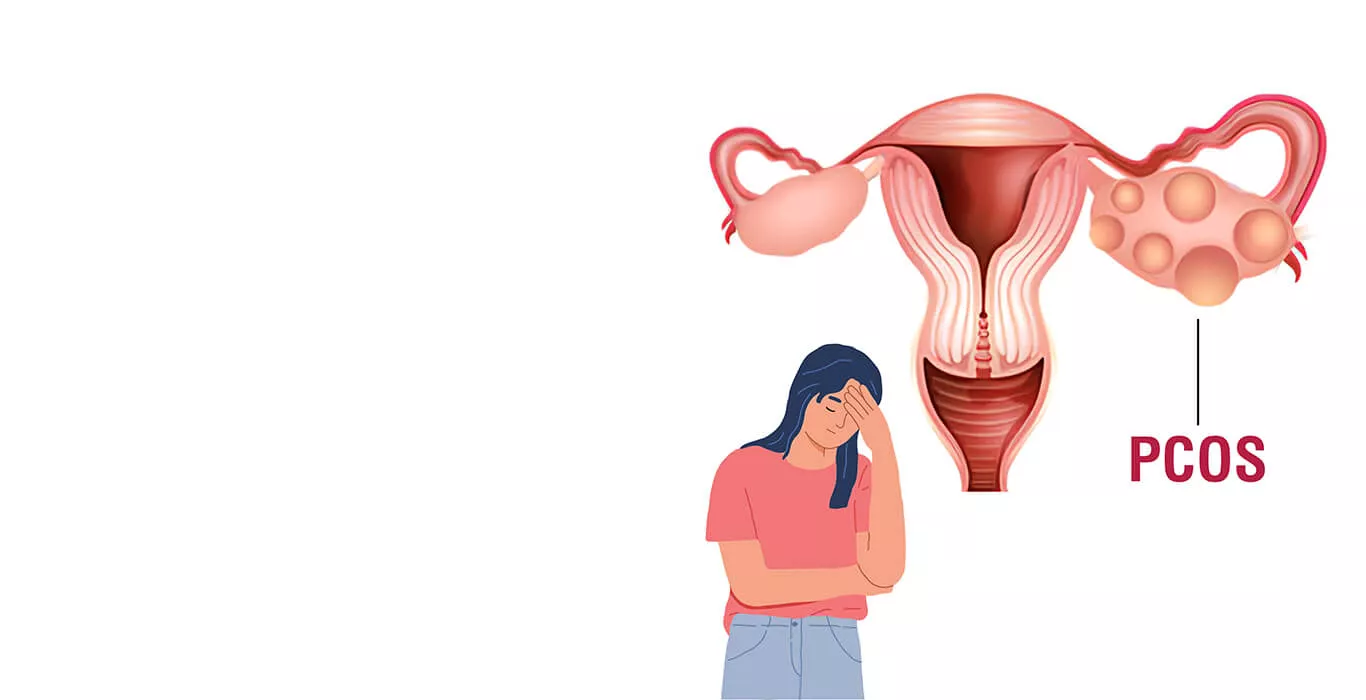
What is PMOS (Previously Called PCOS)?
Polyendocrine Metabolic Ovarian Syndrome (PMOS) is a common hormonal and metabolic condition that affects women of reproductive age. Until May 2026, it was known as Polycystic Ovary Syndrome (PCOS).
In May 2026, the condition was officially renamed Polyendocrine Metabolic Ovarian Syndrome (PMOS) following an international consensus process involving healthcare professionals, researchers, professional organisations and women living with the condition.
The new name better reflects the condition because PMOS is not simply a problem of the ovaries and does not necessarily involve ovarian “cysts”. It can affect several aspects of health, including:
- Hormonal or endocrine function
- Ovulation and menstrual cycles
- Metabolic health
- Insulin and glucose regulation
- Skin and hair
- Fertility
- Psychological wellbeing
- Long-term health
You may therefore continue to see the terms PCOS, PMOS, or PMOS/PCOS used while healthcare systems transition to the new terminology.
Importantly, the name change does not mean that the condition itself or its diagnostic criteria suddenly changed. Current management continues to follow the International Evidence-based Guideline for the Assessment and Management of PMOS/PCOS.
What Causes PMOS/PCOS?
There is no single known cause of PMOS. It is considered a complex condition influenced by a combination of genetic, hormonal, metabolic and environmental factors.
Factors associated with PMOS include:
1. Increased Androgen Levels
Women naturally produce small amounts of androgens, sometimes referred to as male-type hormones. In PMOS, androgen levels or androgen activity may be higher than usual.
This can interfere with ovulation and may contribute to symptoms such as:
- Excess facial or body hair
- Acne
- Scalp hair thinning
- Irregular menstrual cycles
2. Insulin Resistance
Insulin helps the body use glucose for energy. Some women with PMOS have reduced sensitivity to insulin, meaning the body needs to produce more insulin to maintain normal blood glucose levels.
Higher insulin levels can influence ovarian hormone production and may contribute to increased androgen production.
However, insulin resistance is a feature associated with PMOS and not a separate “type” of PMOS.
3. Genetic Factors
PMOS tends to run in families. Having a mother, sister or other close relative with PMOS may increase the likelihood of developing the condition.
The genetics are complex, however, and no single gene is responsible for all cases.
Are There Different Types of PCOS or PMOS?
You may come across terms online such as:
- Insulin-resistant PCOS
- Inflammatory PCOS
- Adrenal PCOS
- Post-pill PCOS
These are commonly used descriptions on websites and social media, but they are not recognised as official diagnostic categories in the current international PMOS/PCOS guideline.
PMOS can present differently from one woman to another. A doctor therefore evaluates the individual's symptoms, menstrual pattern, androgen levels, metabolic health, fertility goals and other medical factors rather than assigning one of these informal “types”.
What Are the Symptoms of PMOS/PCOS?
Symptoms can vary considerably between women. Some women have only a few symptoms, while others experience multiple reproductive, hormonal or metabolic concerns.
Common symptoms include:
- Irregular menstrual periods
- Infrequent or absent periods
- Difficulty predicting ovulation
- Difficulty conceiving due to irregular or absent ovulation
- Excess facial or body hair
- Acne or oily skin
- Thinning of scalp hair
- Weight gain or difficulty managing weight in some women
- Darkened areas of skin, particularly around the neck or underarms
- Skin tags in some individuals
Having one of these symptoms does not necessarily mean that you have PMOS. Other hormonal or medical conditions can cause similar symptoms, which is why proper clinical evaluation is important.
Can You Have PMOS Without Ovarian Cysts?
Yes. Despite the older name “polycystic ovary syndrome”, ovarian cysts are not required to diagnose PMOS/PCOS.
What may be seen on an ultrasound are multiple small ovarian follicles rather than the type of ovarian cyst that people commonly associate with the term “cyst”.
Some women with PMOS have polycystic ovarian morphology on ultrasound, while others do not.
This misunderstanding was one of the reasons the condition was renamed Polyendocrine Metabolic Ovarian Syndrome.
How is PMOS/PCOS Diagnosed?
There is no single test that confirms PMOS in every woman.
Diagnosis generally combines a medical history, clinical assessment, laboratory testing and, where appropriate, ultrasound or Anti-Müllerian Hormone (AMH) testing.
Other conditions that can cause similar symptoms should also be considered and excluded by the treating doctor.
Diagnostic Criteria in Adults
Current international guidance builds on the Rotterdam diagnostic framework.
After excluding other relevant causes, an adult generally needs at least two of the following three features:
- Ovulatory dysfunction, such as irregular or absent menstrual cycles
- Clinical or biochemical hyperandrogenism, such as excess hair growth or elevated androgen levels on appropriate testing
- Polycystic ovarian morphology, assessed through ultrasound or, in adults, through AMH according to the diagnostic algorithm
When both irregular menstrual cycles and hyperandrogenism are already present, ultrasound or AMH may not be required to establish the diagnosis.
Medical and Menstrual History
Your doctor may ask about:
- Frequency and regularity of periods
- Changes in menstrual cycles
- Acne
- Excess facial or body hair
- Scalp hair thinning
- Weight changes
- Previous pregnancies
- Difficulty conceiving
- Family history of PMOS/PCOS or metabolic disorders
- Medicines and hormonal treatments
Blood Tests
Depending on the symptoms and medical history, blood tests may be recommended to assess androgen levels and exclude other causes of menstrual or hormonal abnormalities.
Doctors may also assess metabolic health, including glucose status and lipid levels where appropriate.
Testing is personalised, so every woman does not necessarily require the same panel of blood tests.
Pelvic Ultrasound
Ultrasound may be used to assess the ovaries and identify polycystic ovarian morphology (PCOM).
According to current international guidance, when modern ultrasound technology allows accurate follicle counting in adults, a follicle number per ovary of 20 or more in at least one ovary is considered the threshold for polycystic ovarian morphology.
When image quality or technology does not permit accurate total follicle counting, other measures such as ovarian volume may be used by the clinician.
Importantly:
An ultrasound appearance alone does not automatically mean that a woman has PMOS.
Ultrasound results must be interpreted along with symptoms and other diagnostic findings.
Can AMH Be Used to Diagnose PMOS?
In adults, serum Anti-Müllerian Hormone (AMH) may be used as an alternative to ultrasound for identifying polycystic ovarian morphology, when used according to the recommended diagnostic algorithm.
However:
- AMH should not be used as a standalone test to diagnose PMOS.
- AMH and ultrasound do not generally need to be performed together solely to establish polycystic ovarian morphology, as this could increase the risk of overdiagnosis.
- AMH levels can vary based on age, hormonal contraception, body composition, ovarian surgery, laboratory assay and other factors.
- AMH is not currently recommended for diagnosing PMOS in adolescents.
A fertility specialist or gynaecologist should interpret AMH results in the context of the patient's complete clinical picture.
PMOS Diagnosis in Adolescents
Diagnosing PMOS in adolescents requires additional care because irregular periods and acne can also occur normally during puberty.
Current international guidance does not recommend using ovarian ultrasound or AMH to diagnose PMOS in adolescents because these tests have limited specificity in this age group.
Assessment should be undertaken by an appropriately qualified clinician using adolescent-specific diagnostic criteria.
How Does PMOS Affect Fertility?
PMOS is one of the common causes of ovulatory infertility.
Normally, an egg develops and is released from an ovary during ovulation. In women with PMOS, hormonal disturbances can result in irregular or absent ovulation.
This may make it:
- Difficult to predict the fertile window
- Harder to conceive naturally
- Necessary to use medication to induce ovulation in some cases
However, having PMOS does not mean that you cannot become pregnant.
Many women with PMOS conceive naturally or with lifestyle support, ovulation-induction treatment, IUI or IVF depending on their individual circumstances and whether other fertility factors are present.
What Are the Health Risks Associated With PMOS?
PMOS affects more than fertility and menstrual cycles.
Women with the condition may have an increased risk of certain metabolic and other health concerns, including:
- Impaired glucose tolerance
- Type 2 diabetes
- Abnormal lipid levels
- High blood pressure and other cardiovascular risk factors
- Obstructive sleep apnoea
- Endometrial hyperplasia
- Endometrial cancer
- Anxiety and depression
The relative risk of endometrial hyperplasia and endometrial cancer is increased, particularly in some women with prolonged untreated absence of periods. However, the overall chance of developing endometrial cancer remains low, and routine cancer screening is not recommended solely because a woman has PMOS.
Individual risk varies, which is why long-term medical follow-up may be recommended.
How is PMOS/PCOS Treated?
There is no single treatment that is suitable for every woman with PMOS.
Management depends on:
- Symptoms
- Menstrual pattern
- Metabolic health
- Age
- Medical history
- Whether pregnancy is currently desired
- Other fertility factors
Treatment should therefore be personalised.
Lifestyle and Long-Term Health
Healthy eating, physical activity and sustainable lifestyle habits are important components of PMOS management.
Current evidence does not support one specific “PCOS diet” as being superior to all others.
Instead, dietary and physical activity recommendations should be sustainable and personalised according to an individual's health, preferences and goals.
Lifestyle improvements can benefit metabolic health and wellbeing even when they do not result in weight loss.
Managing Irregular Periods and Androgen-Related Symptoms
For women who are not currently trying to conceive, doctors may recommend treatments such as combined oral contraceptive pills to help manage menstrual irregularity and symptoms related to androgen excess.
Treatment should be selected after evaluating individual benefits, risks and contraindications.
Metformin
Metformin may be considered particularly for metabolic features of PMOS in selected patients.
It should not be assumed that every woman with PMOS requires metformin. The decision depends on individual metabolic risk, symptoms and medical assessment.
Fertility Treatment for Women With PMOS
If pregnancy is desired and irregular or absent ovulation is affecting conception, treatment may focus on restoring or inducing ovulation.
Before recommending treatment, fertility specialists may also assess other potential fertility factors involving both partners.
Ovulation Induction
For women with PMOS who have anovulatory infertility and no other infertility factors, letrozole is recommended by the international guideline as the first-line pharmacological treatment for ovulation induction, subject to local regulatory guidance and individual clinical suitability.
Other ovulation-induction medicines may be considered depending on the patient's circumstances and response to treatment.
Treatment should always be taken under medical supervision.
Gonadotrophin Treatment
Injectable gonadotrophins may be considered for selected women, particularly when first-line treatments have not resulted in successful ovulation or pregnancy.
Because women with PMOS may respond strongly to ovarian stimulation, careful monitoring is important.
Laparoscopic Ovarian Surgery
Laparoscopic ovarian surgery, sometimes called ovarian drilling, may be considered as a second-line option in selected women with anovulatory infertility.
It is not routinely required for every patient with PMOS.
IVF for PMOS
In vitro fertilisation (IVF) may be considered when:
- Ovulation-induction treatments have not resulted in pregnancy
- Other infertility factors are present
- IVF is otherwise clinically indicated
Women with PMOS may have a higher risk of excessive ovarian response and ovarian hyperstimulation syndrome (OHSS) during fertility treatment.
Modern stimulation strategies, appropriate medication doses, monitoring and treatment protocols can help reduce this risk.
The IVF protocol should therefore be individualised by the fertility specialist.
When Should You See a Doctor?
Consider consulting a gynaecologist, endocrinologist or fertility specialist if you experience:
- Persistently irregular periods
- Very infrequent or absent periods
- Excess facial or body hair
- Persistent or severe acne
- Significant scalp hair thinning
- Symptoms suggestive of metabolic concerns
- Difficulty conceiving
- Known PMOS/PCOS with plans for pregnancy
Women who are trying to conceive may benefit from earlier assessment when menstrual cycles are irregular or ovulation appears to be absent rather than waiting a fixed number of months.
PMOS and Fertility Care at Indira IVF
PMOS can affect every woman differently. For women experiencing difficulty conceiving, evaluation should look beyond the diagnosis itself and assess ovulation, ovarian function and other possible female and male fertility factors.
At Indira IVF, fertility specialists can evaluate individual reproductive health and recommend an appropriate treatment pathway based on medical history, investigation results and fertility goals.
Treatment may range from monitoring and ovulation management to assisted reproductive treatments such as IUI or IVF when clinically indicated.
Frequently Asked Questions (FAQs)
Is PCOS now called PMOS?
Yes. In May 2026, Polycystic Ovary Syndrome (PCOS) was renamed Polyendocrine Metabolic Ovarian Syndrome (PMOS) following an international consensus process.
The new terminology better reflects the hormonal, metabolic, reproductive and broader health effects of the condition. PCOS is still likely to remain widely used during the transition period, so you may see the terms PMOS, PCOS and PMOS/PCOS used together.
Is PMOS different from PCOS?
No. PMOS is the new name for the condition previously known as PCOS. It is not a new disease.
Does every woman with PMOS have ovarian cysts?
No. Ovarian cysts are not required for diagnosis. Some women have multiple small ovarian follicles visible on ultrasound, but these are not the same as conventional ovarian cysts.
Is PMOS curable?
PMOS is a long-term condition rather than a disease with a single permanent cure. However, symptoms, menstrual irregularities, metabolic risks and fertility problems can often be effectively managed with appropriate care.
Can women with PMOS get pregnant naturally?
Yes. Many women with PMOS conceive naturally. Others may need help with ovulation induction or fertility treatment depending on the frequency of ovulation and whether additional infertility factors are present.
Can PMOS cause infertility?
PMOS can make conception more difficult when it causes irregular or absent ovulation. However, effective fertility treatments are available for women who require assistance.
Can AMH diagnose PMOS?
AMH can be used in adults as an alternative to ultrasound for determining polycystic ovarian morphology as part of the recommended diagnostic pathway. It should not be used as a standalone test for PMOS.
How many follicles indicate polycystic ovaries?
With modern ultrasound technology, the current international guideline uses 20 or more follicles in at least one ovary in adults as the follicle-number threshold for polycystic ovarian morphology.
The ultrasound finding alone does not establish a diagnosis of PMOS.
Does PMOS increase the risk of diabetes?
Women with PMOS have an increased risk of impaired glucose tolerance and type 2 diabetes. Metabolic risk should therefore be assessed based on individual circumstances.
Is there a specific diet for PMOS?
There is no single diet proven to be superior for all women with PMOS. Sustainable healthy eating tailored to the individual's health needs and preferences is recommended.
What is the difference between PCOD and PMOS/PCOS?
“PCOD” is a term still commonly used in India, but major international diagnostic guidelines recognise PMOS, formerly PCOS, as the defined clinical syndrome.
PCOD should not be described as a universally accepted “milder version” of PCOS because this distinction is not part of the international diagnostic criteria.
If you have symptoms such as irregular periods, signs of increased androgen activity or difficulty conceiving, a medical assessment is more useful than trying to determine whether the condition should be labelled PCOD or PMOS/PCOS.
Pregnancy Calculator Tools for Confident and Stress-Free Pregnancy Planning
Get quick understanding of your fertility cycle and accordingly make a schedule to track it
Get a free consultation!