
Euploid vs Aneuploid Embryos: What These Terms Mean During IVF
Reviewed By Dr. Mohip Sahu
Gynaecologist & IVF Specialist
10+ years of experience
Overview
Waiting, hoping and being disappointed during fertility treatment can be very difficult. Treatment methods like IVF can bring a sense of optimism but can also present new terminology and test results. Euploid and aneuploid are two terms that you may come across during embryo selection. These words refer to the number of chromosomes in the embryo and could aid your fertility doctor in determining the suitable embryos to be transferred.
These terms refer to the number of chromosomes in an embryo. Chromosomes contain genetic information that directs the development process. A euploid embryo contains the normal number of sets of chromosomes, and an aneuploid embryo contains an abnormal number of sets.
Understanding this distinction can help you determine which embryos may be better for transfer. But embryo testing is just one aspect of IVF. The success rate of treatments can be influenced by many factors such as egg quality and uterine health, age, egg/sperm quality, and reproductive health.
Table of Contents
- What Is a Euploid Embryo?
- What Is an Aneuploid Embryo?
- Euploid vs Aneuploid Embryos: What Is the Difference?
- How Do Doctors Know if an Embryo Is Euploid?
- What Is the Difference Between Euploid and Embryo Grade?
- Can a Euploid Embryo Still Have Genetic or Chromosomal Problems?
- Can an Aneuploid Embryo Result in a Healthy Baby?
- Which Embryo Has the Highest Chance of IVF Success?
- What Happens After a Euploid or Aneuploid Embryo Result?
- Key Takeaways
What Is a Euploid Embryo?
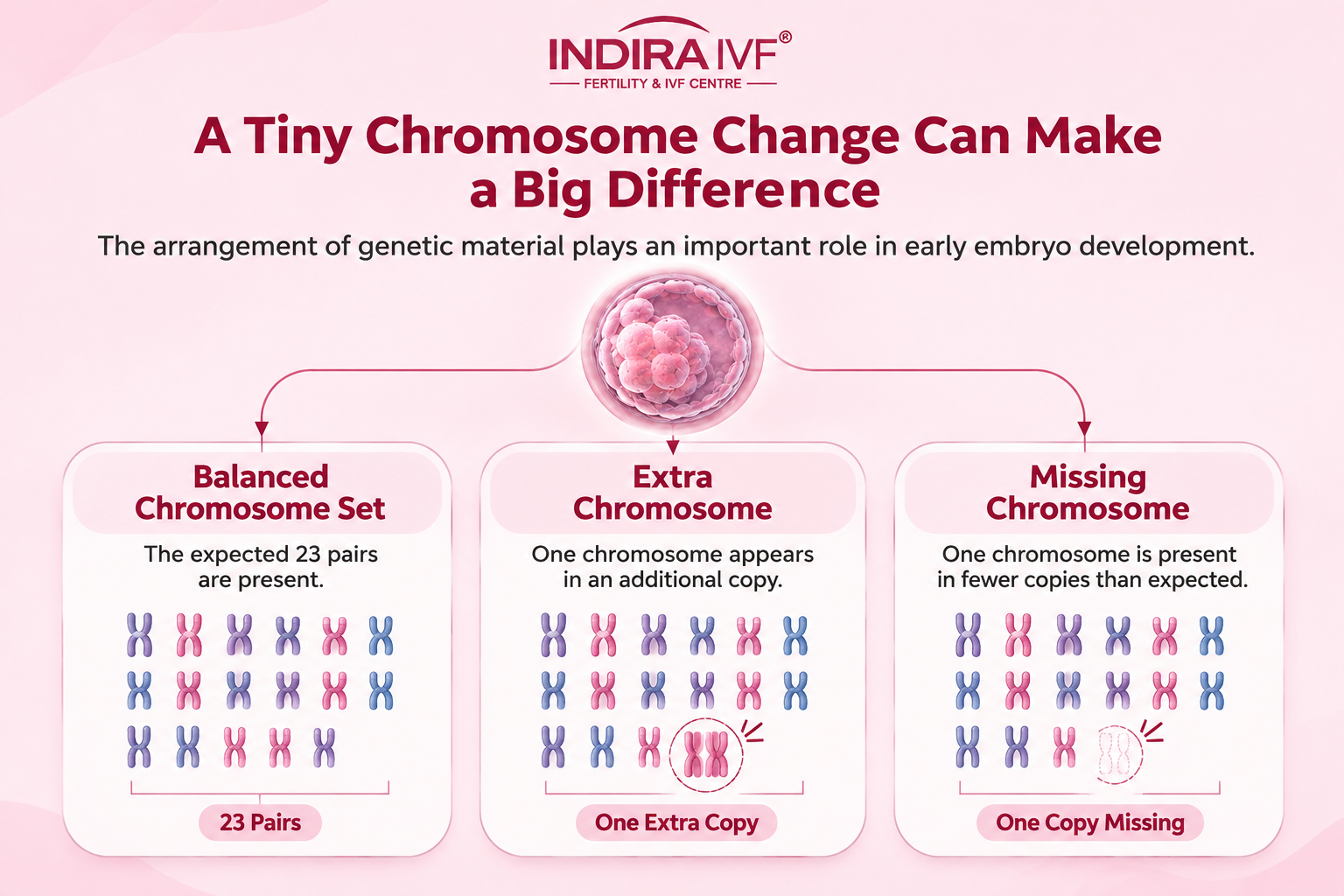
An euploid embryo has the right number of chromosomes. The normal number of chromosomes is 23 pairs (46) for a human being. These chromosomes carry genetic material from both parents. Thus, a euploid embryo has the expected number of chromosomes. Identifying euploid embryos could help fertility experts determine which embryos have a higher probability of implanting and developing successfully.
If an embryo is euploid, the result doesn't mean it has no other genetic conditions. It primarily suggests that the embryo contains the right number of chromosomes from the cells examined.
Preimplantation genetic testing for aneuploidy (PGT-A) can evaluate embryos. This test examines the number of chromosomes in cells obtained from an embryo. A result is typically obtained after the embryo is frozen while the laboratory conducts testing, and it may help determine which embryo to transfer during a future IVF.
What Is an Aneuploid Embryo?
An aneuploid embryo contains an abnormal number of chromosomes. This can result in a duplicated or missing chromosome. The term aneuploid embryo is relevant because the presence of chromosome abnormalities may impact embryo development. A few aneuploids may fail to develop prior to implantation. Some may fail to implant, while others may result in miscarriage.
Some chromosomal abnormalities may also lead to genetic disorders if the pregnancy progresses. The effects would be determined by the nature of the chromosome involved (extra or missing) and by the identity of the chromosome.
Eggs and sperm cells may be formed with aneuploidy as a natural process. The likelihood of chromosome abnormalities in embryos generally increases with maternal age, although aneuploid embryos can occur at any reproductive age.
Euploid vs Aneuploid Embryos: What Is the Difference?
The main difference between a euploid vs aneuploid embryo is the number of chromosomes.
| Feature | Euploid embryo | Aneuploid embryo |
|---|---|---|
| Chromosome Status | Expected chromosome number | Extra or missing chromosome(s) |
| Embryo development | Generally more favourable | May have impaired development |
| Implantation potential | Generally higher | Generally lower |
| Risk of miscarriage | Lower compared with aneuploid embryos | Generally higher |
| Role in embryo selection | May be considered for transfer | Usually not selected for transfer |
In IVF, a euploid embryo is usually the better choice for transfer, as the number of chromosomes is in the normal range. But a euploid result isn't a guarantee of implantation or pregnancy.
Likewise, not all embryos that appear good under a microscope will be euploid. This is because the appearance of embryos and their chromosome status are regarded as distinct factors.
Euploid and aneuploid are two terms that one may come across during embryo selection. Understanding this distinction is important for a better embryo to be transferred but the success of an IVF doesnt solely depend on this.
- DR BHARGAVI DUBE
How Do Doctors Know if an Embryo Is Euploid?
The most common method for determining if an embryo is euploid is preimplantation genetic testing.
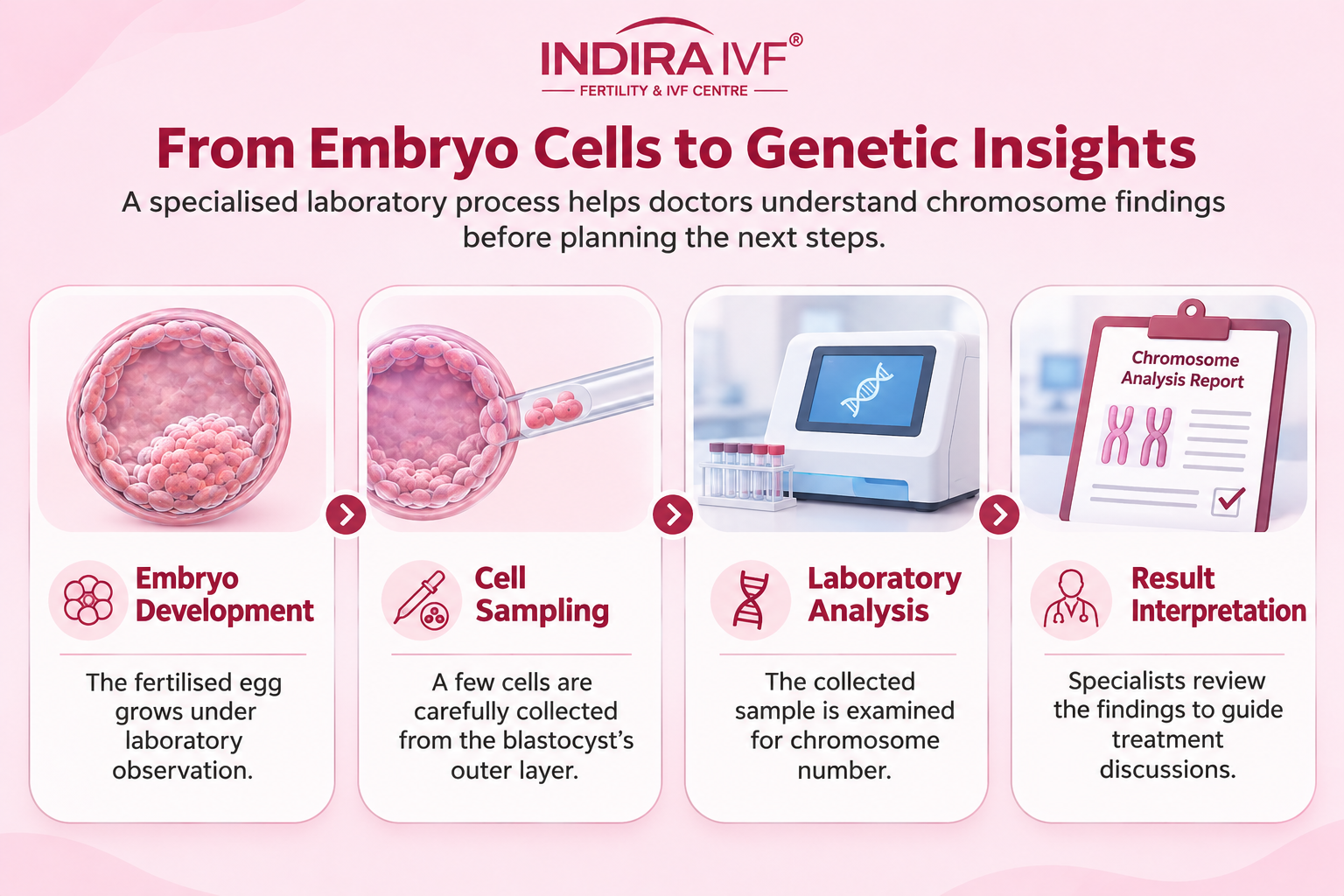
In IVF, doctors bring eggs into the laboratory, fertilise them, and culture them until embryos form. When the embryo is at the right developmental stage, some of the outer cells can be taken and studied in a special laboratory.
PGT-A can distinguish whether the cell that is being tested has the right number of chromosomes. The embryo is usually frozen as it is being tested during the biopsy process.
In some cases, a result may categorize the embryo as euploid, aneuploid, or even mosaic. In cases where mosaic results are obtained, there is a need for caution in interpretation and genetic counselling.
PGT-A is not performed on all cells, and results should be used in conjunction with the whole IVF treatment.
What Is the Difference Between Euploid and Embryo Grade?
Euploid status and embryo grade are not the same thing. Embryo grading is done based on the appearance of the embryo under a microscope. Embryologists assess factors such as embryo development, the appearance of the inner cell mass and the outer cell layer. It gives information regarding the morphology of the embryo.
A euploid result, on the other hand, provides information about chromosome number based on genetic testing. The embryo can be a good morphological grade, and it can be aneuploid. Likewise, the best morphological grade does not equal the euploid embryo.
Fertility specialists consider both of these factors, among others, when selecting an embryo. Neither embryo grading nor chromosome testing alone provides a complete picture of reproductive capability.
Can a Euploid Embryo Still Have Genetic or Chromosomal Problems?
Yes. It is important to remember that even a euploid embryo may have some genetic or chromosomal issues. PGT-A mostly tests the number of chromosomes in the examined cells. However, PGT-A does not detect all genetic problems, including all the single gene diseases or other genetic abnormalities.
Testing is performed on a sample of cells, not all cells of the embryo. Hence, a euploid diagnosis does not imply a thorough genetic investigation.
Sometimes, additional tests may be necessary if the patient has a genetic condition that is hereditary or carries a certain genetic risk. Tests for monogenic disorders (PGT) may be considered in specific circumstances. A fertility specialist and genetic counsellor can help interpret IVF genetic test results and explain what they do and do not detect.
Can an Aneuploid Embryo Result in a Healthy Baby?
The answer would vary depending on the specific chromosome abnormality and the type of result.
An aneuploid embryo is very unlikely to progress to a successful continued pregnancy. Many such embryos do not implant or result in miscarriage. But chromosome studies may be complicated. In some embryos, the results are mosaic, with the cells of the embryo having different chromosome patterns. A small number of mosaic embryos may have reproductive potential, depending on the chromosome involved and the level and type of mosaicism.
These cases must be assessed on a case-by-case basis. Before embryo transfer, genetic counselling may be useful to provide information on potential outcomes and uncertainties. Thus, the terms aneuploid and mosaic should not be used interchangeably. The exact laboratory finding matters.
Which Embryo Has the Highest Chance of IVF Success?
Euploid embryos have a higher likelihood of implantation and ongoing pregnancy than embryos identified as aneuploid through PGT-A. This is because chromosomally abnormal embryos are more likely to fail to implant or result in miscarriages. But a euploid result does not guarantee a successful IVF cycle.
Other factors continue to play a role in the results. These include embryo quality and development, uterus quality, endometrial receptivity, maternal age, sperm factors and other fertility conditions. Embryo testing does not aim to guarantee a successful pregnancy. Rather, the test gives more information that could assist fertility experts when selecting embryos.
What Happens After a Euploid or Aneuploid Embryo Result?
The fertility specialist discusses the genetic test results with the patient/couple. How many and what kind of embryos are present will determine the next step. The fertility team may consider frozen embryo transfer if the embryo is euploid. The lining of the uterus is prepared based on the treatment method used, and the embryo is placed at the right stage.
If the tested embryos have all proven to be aneuploid, the fertility specialist will discuss the options with the patient. The next IVF cycle might be indicated depending on the individual case.
More complex outcomes might need further consultation with a genetic counsellor. The clinical guidance and the nature of the genetic finding will determine whether or not the embryo should be considered for transfer. All IVF treatment plans are individualised based on the patient's circumstances. The embryo report is not the deciding factor in the decision-making process.
Key Takeaways
- A euploid embryo contains the normal number of chromosomes.
- An aneuploid embryo will contain an extra or missing chromosome.
- Embryo chromosome status, whether euploid or aneuploid, is different from embryo grading.
- PGT-A can give information about the number of chromosomes in embryos selected for testing.
- Having a euploid result does not exclude all genetic or developmental disorders.
- Aneuploid embryos have a lower likelihood of implantation and successful pregnancies.
- Mosaic results do not automatically mean aneuploidy and may require specialist counselling.
- Use genetic testing alongside embryo quality and other clinical factors when deciding on embryo selection.