
Overview
When you are trying to lower high FSH levels, the first thing you need to do is find out what is causing your FSH to be high. A high FSH level isn’t a disease but a sign that the ovaries or testes might not be responding as they should. Sometimes, addressing root causes like thyroid problems, nutritional deficiencies, inadequate sleep, stress, or some hormonal imbalances may help improve FSH levels.
If the high FSH is due to age-related decline of the ovaries or menopause, the number may not be lowered. This guide covers causes, symptoms, diagnosis, treatment options, and lifestyle changes that support overall reproductive health.
Table of Contents
- What Is High FSH?
- What Are Normal FSH Levels?
- What Causes High FSH Levels?
- Symptoms of High FSH Levels
- How Does Stress Impact FSH Levels?
- Can You Reduce High FSH Levels?
- How is High FSH Diagnosed?
- Medical Treatment For Elevated FSH
- Does Diet Affect FSH Levels?
- Role Of Exercise And Body Weight
- Acupuncture And Traditional Medicine For High FSH
- Can Supplementation Help in Reducing High FSH Levels?
- What Lifestyle Changes Improve Ovarian Response?
- Conclusion
What Is High FSH?
Follicle-Stimulating Hormone (FSH) is produced by the pituitary gland and plays an essential role in reproduction. In women, it helps eggs mature within the ovaries, while in men, it supports sperm production.
High FSH levels usually indicate that the ovaries or testes are not responding adequately, prompting the pituitary gland to release more FSH. Although elevated FSH itself is not a disease, it often points to an underlying reproductive or hormonal condition.
What Are Normal FSH Levels?
The Follicle-Stimulating Hormone is important for sexual development and reproduction in both males and females. Normal FSH levels can differ depending on a person’s age and reproductive status.
An estimate of normal FSH levels in females:
Age | Normal FSH Levels (General Value) |
Before puberty | 0 to 4.0 mIU/mL |
During puberty | 0.3 to 10.0 mIU/mL |
After puberty | 4.7 to 21.5 mIU/mL |
After menopause | 25.8 to 134.8 mIU/mL |
In males:
Age | Normal FSH Levels (General Value) |
Before puberty | 0 to 5.0 mIU/mL |
During puberty | 0.3 to 10.0 mIU/mL |
Adult | 1.5 to 12.4 mIU/mL |
What Causes High FSH Levels?
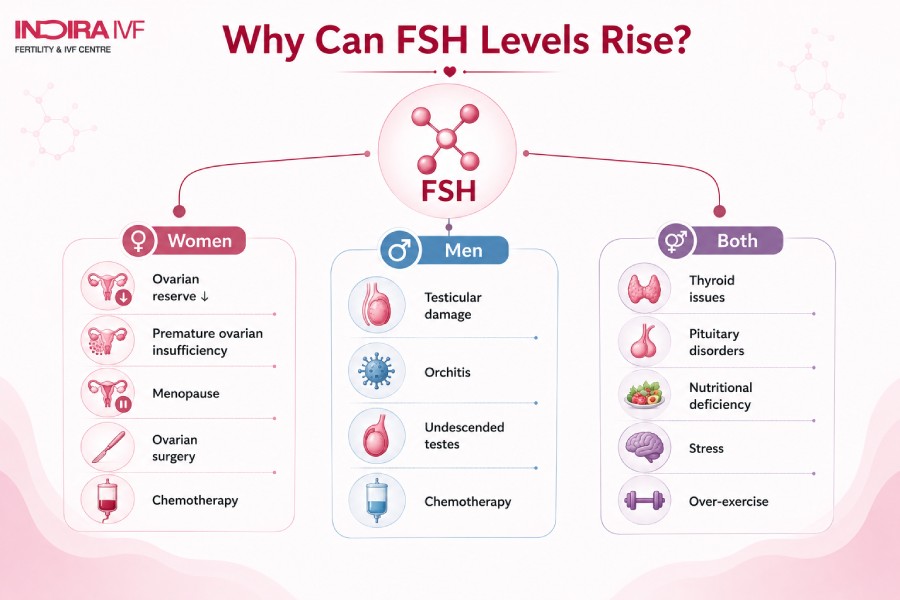
High FSH is not a disease in itself, but rather a signal. The pituitary gland releases more FSH when it receives insufficient feedback from the ovaries or testes. Common causes of elevated FSH can include:
In women
- Decreasing ovarian reserve
- Premature ovarian insufficiency
- Natural menopause or perimenopause
- Autoimmune conditions affecting the ovaries
- Chromosomal disorders like Turner syndrome
- Previous Chemotherapy or Radiation to the pelvic area
- Ovarian surgery
In men
- Primary testicular failure
- Orchitis or prior testicular injury
- Chemotherapy or radiation
- Cryptorchidism (undescended testes)
In both men and women:
- Pituitary tumours
- Severe nutritional deficiencies
- Extreme stress
- Over-exercise can lead to hypothalamic disruption.
It is important to understand the root cause of high FSH levels before intervention, as treatment depends entirely on the underlying cause.
Symptoms of High FSH Levels
The symptoms ofhigh FSH levels depend on the underlying cause and whether the condition affects ovarian or testicular function. Some people may not notice any symptoms until fertility problems arise, while others may experience changes in their reproductive health. Recognising these signs early can help with timely diagnosis and treatment.
In Women
Women with high FSH may experience:
- Irregular or missed periods
- Difficulty getting pregnant
- Reduced ovarian reserve
- Hot flashes and night sweats
- Vaginal dryness
- Mood changes
- Decreased libido
In Men
Men with high FSH may notice:
- Difficulty conceiving due to reduced sperm production
- Low sperm count
- Reduced sexual desire
- Smaller testicular size in some cases
- Fatigue or hormonal imbalance, depending on the underlying condition
How Does Stress Impact FSH Levels?
Chronic stress can activate the hypothalamic-pituitary-adrenal (HPA) axis, leading to increased cortisol levels in the body. High cortisol levels, in turn, suppress GnRH production from the hypothalamus, disrupting LH and FSH secretion patterns. Acute severe stress contributes to low FSH levels, and chronic low-grade stress commonly causes poor ovarian response and hormonal dysregulation.
Here are a few activities you can do to regulate your stress levels:
- Yoga: Regular yoga practice can lower cortisol levels and improve reproductive hormone levels.
- Adequate Sleep: It is important that you get 7-9 hours of sleep every night, as chronic sleep deprivation can disrupt the HPG axis.
- Mindfulness-Based Stress Reduction (MBSR reduces psychological distress and can improve hormonal outcomes.
Can You Reduce High FSH Levels?
Whether or not there is a way to reduce high FSH levels depends on the underlying cause. If high FSH is a result of irreversible ovarian decline, such as natural menopause or advanced premature ovarian insufficiency, FSH may not be able to be reduced to a level that makes natural conception achievable. Even if FSH can be lowered with intervention, it may not improve fertility.
On the other hand, when high FSH levels are linked to reversible factors such as nutritional deficiencies, extreme stress, poor-quality sleep, thyroid dysfunction, or elevated prolactin that disrupt ovarian function, correcting the underlying cause can restore normal FSH levels.
How is High FSH Diagnosed?
Doctors diagnose high FSH levels using a blood test that measures the amount of follicle-stimulating hormone in the bloodstream. In women, the test is often performed during the early days of themenstrual cycle for accurate interpretation. Your doctor may also recommend additional hormone tests such as LH, AMH, oestrogen, testosterone, thyroid function tests, or prolactin levels, along with an ultrasound, to identify the underlying cause of elevated FSH.
Medical Treatment For Elevated FSH
Treatment | When Used | Does It Lower FSH? |
Oestrogen Priming | Commonly used before IVF in women with diminished ovarian reserve to temporarily suppress FSH. | Yes, temporarily. It lowers FSH for a short period but does not reverse ovarian ageing. |
DHEA Supplementation | Recommended in selected women with diminished ovarian reserve or premature ovarian ageing under medical supervision. | May help in some women. Evidence is mixed, and it should only be taken after consulting a doctor. |
Thyroid Treatment | Used when high FSH is linked to hypothyroidism or other thyroid disorders. | Yes. Correcting thyroid hormone levels can restore hormonal balance if thyroid disease is the cause. |
Treatment for High Prolactin | Given when elevated prolactin disrupts normal reproductive hormone signalling. | Yes. Treating high prolactin can help normalise FSH levels in appropriate cases. |
Hormone Replacement Therapy (HRT) | Used for women with premature ovarian insufficiency (POI) to manage symptoms and protect bone and heart health. | May reduce FSH, but it does not restore fertility or ovarian reserve. |
Does Diet Affect FSH Levels?
Nutrition is widely recognised as an essential factor in hormone regulation, and there are dietary methods to lower FSH levels.
The Mediterranean diet, characterised by the consumption of beans, fresh vegetables, fish, olive oil, and unprocessed cereals, provides numerous benefits regarding reproductive performance and ovarian reserve. This type of diet has anti-inflammatory and antioxidant effects on ovarian follicles, thereby making them resistant to oxidative damage.
FSH concentration is lowered by adopting a low-fat, high-fibre, plant-rich diet. One should eat lean meat, green leafy vegetables, berries, and food sources rich in omega-3 fatty acids. Foods rich in trans-fat, refined sugars, and animal fat should be minimised. One needs to keep in mind that very strict fat diets negatively affect estrogen production, which subsequently influences FSH balance.
Processed foods and refined sugar should not be part of the diet as they increase one’s susceptibility to insulin resistance and general inflammation. Soy consumption should also be minimal, as phytoestrogens may have estrogen-like properties that interfere with the hormone feedback loop.
Role Of Exercise And Body Weight
Both extreme underweight and overweight conditions may cause FSH to deviate from its regular range. For severely underweight females, especially those with very low body fat, the brain perceives that their bodies are not in a healthy state to reproduce, and therefore decreases the hormonal signals. Such a process can negatively affect the entire hormonal sequence, including FSH.
In the case of overweight individuals, excess weight causes constant low-grade inflammation and increased levels of insulin. These factors affect the communication between the ovaries and the pituitary gland. Losing just five to ten per cent of body weight among overweight women can considerably enhance reproductive hormones.
Basically, being both underweight and overweight can interfere with FSH levels, acting in an inverse relationship. As higher body weight, or obesity, is linked with low serum FSH concentrations, weight loss can lead to a small increase in FSH.
Acupuncture And Traditional Medicine For High FSH
Traditional medicine is an age-old practice that involves balancing the various energies in the body and their opposites. Through practices such as acupuncture, herbs, massage, and dietary therapies, it helps manage pain and functional diseases.
Regarding high FSH levels, acupuncture, herbs, and massages are thought to increase blood flow to the reproductive organs, thus helping maintain hormonal balance. This might even help some women with high FSH levels become pregnant successfully.
Can Supplementation Help in Reducing High FSH Levels?
Supplements and lifestyle changes may help lower high FSH levels, especially in women with reduced ovarian reserve. While they help bring hormonal balance to the body, they do not improve egg quality.
The following supplements have shown potential benefits in reducing high levels of FSH:
- Omega-3 Fatty Acids: There has been an observed decrease in FSH in normal-weight women who were given dietary omega-3 supplementation.
- DHEA: DHEA serves to increase ovarian reserve and regulate hormones.
- CoQ10: Also known as coenzyme Q10, it is an antioxidant in your mitochondria which helps with egg quality.
- Vitamin D: Vitamin D deficiency is common and has been associated with reduced ovarian reserve and elevated FSH levels.
- B Vitamins: B vitamins support methylation and hormonal detoxification pathways. Deficiency in B12 or folate has been linked to reproductive dysfunction.
If you are considering the use of the above supplements for lowering your high levels of FSH, you should consult your doctor first.
What Lifestyle Changes Improve Ovarian Response?
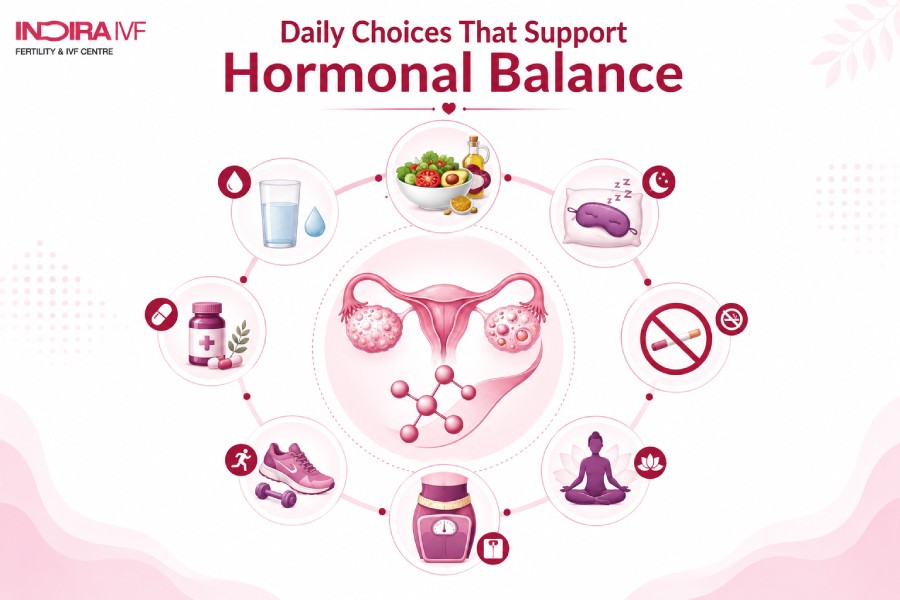
Lifestyle factors can often be the most underestimated variables in hormonal health. These include:
- Maintain a Healthy Weight: Maintaining a healthy body weight supports balanced hormone production. Being underweight may reduce oestrogen levels, while excess weight can affect the communication between the ovaries and the pituitary gland. Achieving a healthy BMI may help support normal reproductive hormone function.
- Sleep 7–9 Hours: Good-quality sleep plays an important role in hormone regulation. Sleeping for 7–9 hours each night helps maintain the body's natural circadian rhythm and supports healthy hormone release. Consistent sleep may contribute to better reproductive health and overall well-being.
- Quit Smoking: Smoking has been linked to faster egg loss and changes in reproductive hormone levels. Quitting smoking is one of the most beneficial lifestyle changes for overall fertility and long-term health. It may also reduce further damage to ovarian function.
- Reduce Stress: Long-term stress can interfere with the body's hormonal balance by affecting communication between the brain and reproductive organs. Managing stress through yoga, meditation, deep breathing, regular physical activity, or mindfulness practices may support overall reproductive health and emotional well-being.
Conclusion
High FSH levels can feel overwhelming, but worrying won’t get you anywhere. The key takeaway is that whether there is a way to reduce FSH levels depends entirely on the underlying cause. When the root cause is something reversible like a nutrient deficiency, thyroid problems, chronic stress, poor sleep, or your body weight, methods like dietary modification, lifestyle changes, and appropriate medical care can bring FSH levels back toward a healthier range. When the cause is age-related ovarian decline or primary ovarian insufficiency, the goal shifts from reducing the number to protecting the overall hormonal health and egg quality.
None of the solutions alone will solve the problem effectively. It is important to follow a holistic approach to treatment, which includes medical assessment, dietary improvement, stress management, and supplement use under the guidance of a healthcare professional.