
IVF After Miscarriage: When to Seek Medical Guidance and Emotional Care
Reviewed by Dr. P R Sahana
Gynaecologist & IVF Specialist
10+ years of experience
 Expert Verified
How is this page expert verified?
This information has been reviewed and approved by an experienced fertility specialist at Indira IVF to provide accurate and up-to-date guidance for our readers.
Overview
Month after month of waiting, hoping, and going through treatment can sometimes be emotionally exhausting. When an IVF pregnancy ends in miscarriage, the loss can feel especially difficult. You may have questions about what happened and whether you can try again.
An IVF miscarriage does not mean that future treatment will fail. Miscarriage can happen even after successful IVF. In many cases, it is linked to embryo-related problems that occur by chance. It is also important to remember that a miscarriage is not usually caused by something you did or did not do. The next step after a miscarriage after IVF depends on your physical recovery, medical history, and fertility plan. Some people may be able to try again soon, while others may need further evaluation.
Understanding IVF after miscarriage can help you make informed decisions with your fertility specialist. Give yourself time to recover, ask questions, and seek support when needed.
Table of Contents
- What Happens to Your Body After a Miscarriage?
- When Should You Seek Medical Guidance After a Miscarriage?
- When Is It Safe to Try IVF After a Miscarriage?
- What Should You Discuss With Your Doctor Before Trying IVF Again?
- Can an IVF Miscarriage Affect Future IVF Treatment?
- How Can You Take Care of Your Emotional Health After a Miscarriage?
- What Emotions Are Common After a Miscarriage?
- How Can Couples Support Each Other After Miscarriage?
- How Can You Prepare Emotionally for IVF After Miscarriage?
- What Can Help With Physical Recovery Before the Next IVF Cycle?
- Key Takeaways
What Happens to Your Body After a Miscarriage?
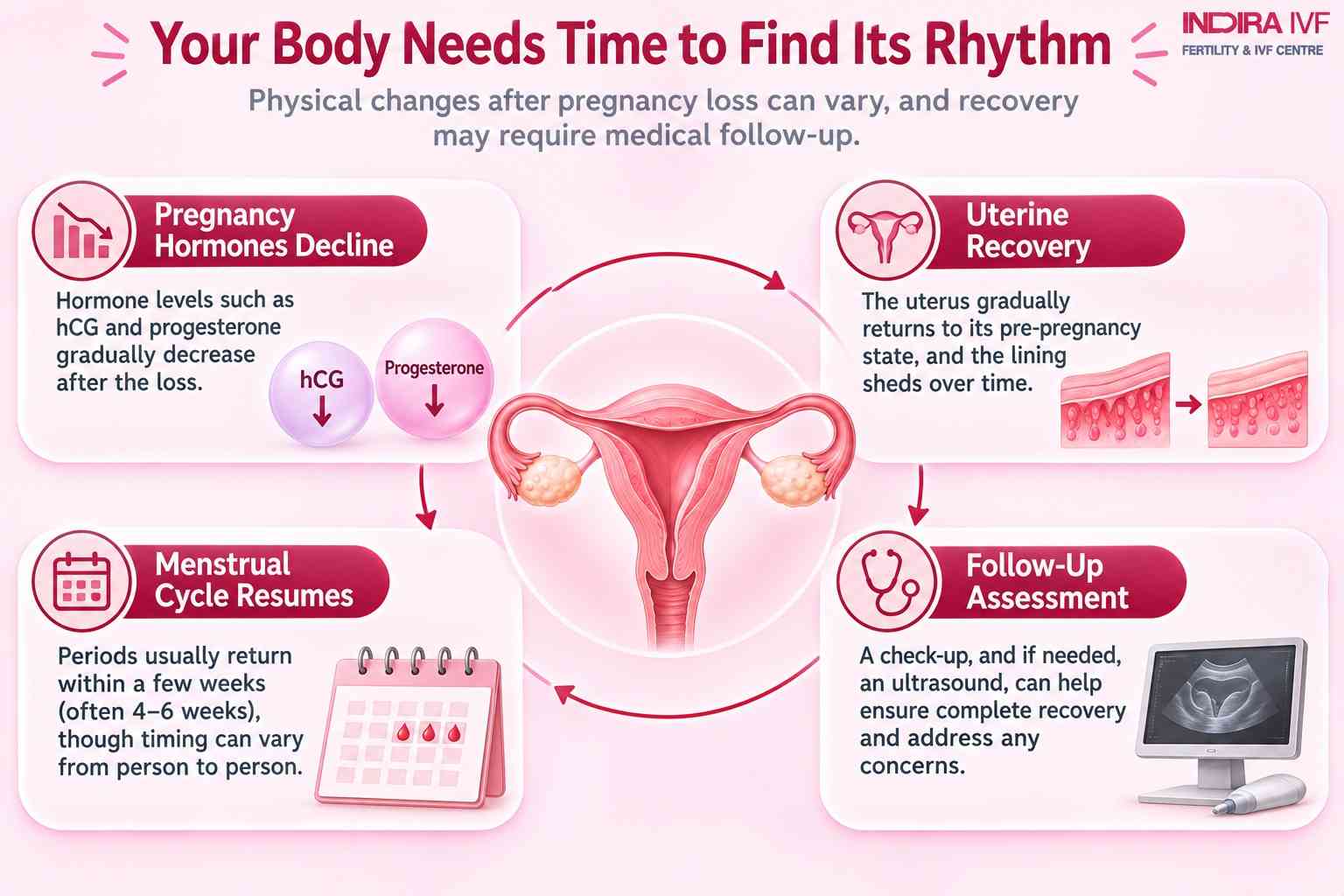
Your body needs time to end the pregnancy and restore its normal hormonal balance. Bleeding and abdominal pain are usual during that period. They vary in intensity and duration according to the stage of pregnancy reached and the way the miscarriage occurred.
Hormone levels in the pregnant woman decrease gradually. The menstrual cycle takes time to restore itself. Ovulation happens prior to the first period; therefore, pregnancy may occur soon after miscarriage. The doctor may advise you to undergo an ultrasound or blood test to ensure that the miscarriage has happened fully, especially in case of continued symptoms or fear of retained products of pregnancy.
This is not only a physical process but also an emotional one, with hormone fluctuations, fatigue, and the impact of losing a baby.
When Should You Seek Medical Guidance After a Miscarriage?
Medical guidance after miscarriage is very significant, especially for an IVF pregnancy. Your fertility specialist can evaluate the pregnancy and suggest your next steps.
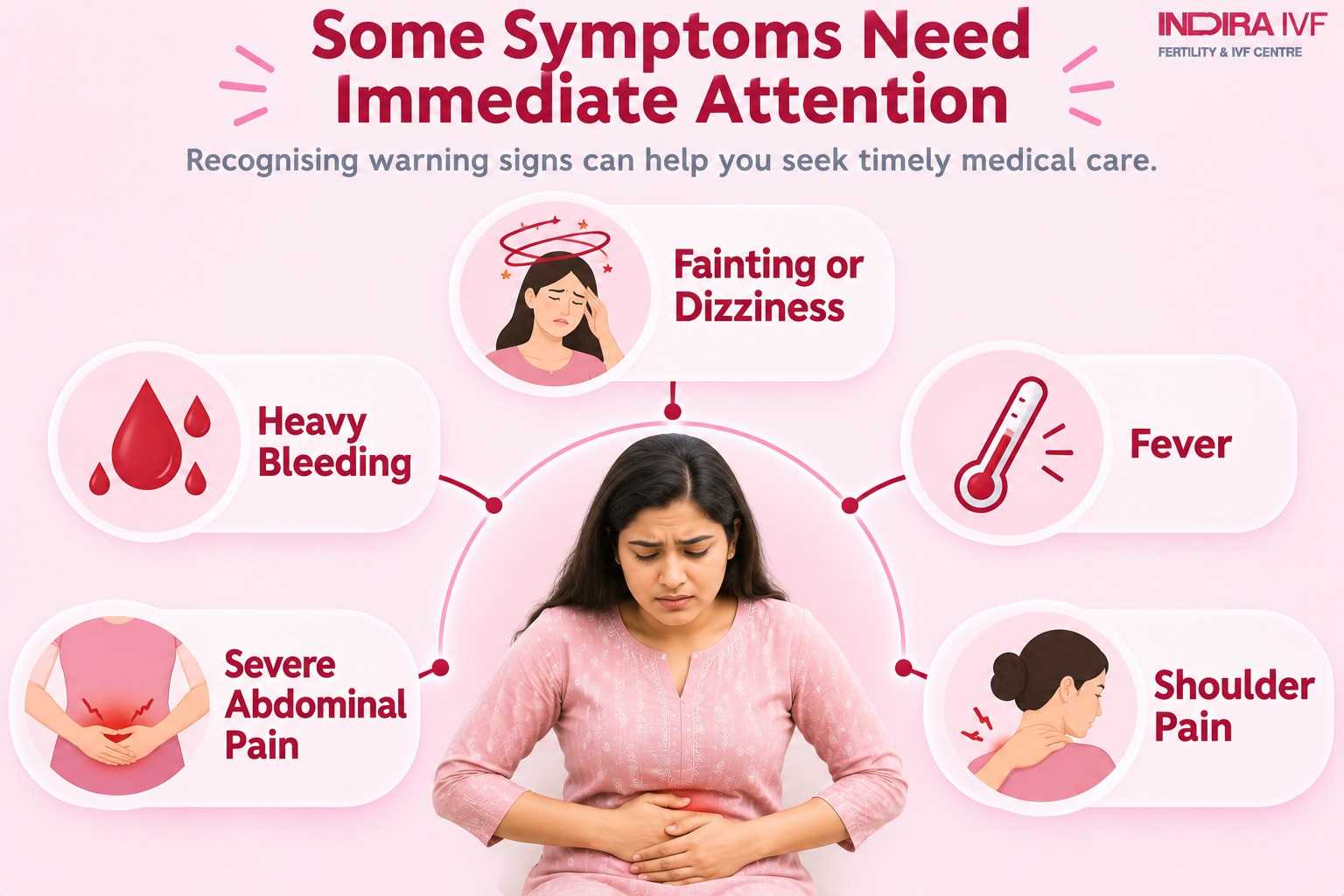
Visit the hospital if you have excessive bleeding, abdominal pain or pelvic pain, fainting, dizziness, shoulder pain or fever. Such conditions require immediate medical assistance. Consult with your doctor if you have persistent bleeding or pain. It is possible that you need an ultrasound examination or some other tests to find out if there is some pregnancy tissue retained in your uterus. After an ectopic pregnancy or any other problems, you might be advised to take some time before starting treatment again.
When Is It Safe to Try IVF After a Miscarriage?
Everyone recovers differently after a miscarriage. Determining when to start IVF after miscarriage depends on several things that must be considered with your doctor. Such considerations include recovery time, hormonal levels, menstrual cycle, and the reason for the miscarriage.
After an uncomplicated early miscarriage, some patients may be medically ready to try again once the pregnancy has resolved and they have recovered. Your fertility specialist may want your hCG level to return to the non-pregnant range before starting another treatment or embryo transfer. For some patients, waiting for one menstrual cycle may make treatment easier to plan. This does not mean that every patient needs to wait that long for medical safety.
So, when is IVF safe after miscarriage? In many cases, treatment can be considered once the miscarriage is complete and there are no complications. However, the timing should be personalised. The situation may be different after a later pregnancy loss, ectopic pregnancy, molar pregnancy, infection, significant bleeding, or a procedure requiring additional recovery.
When is IVF safe after miscarriage will also depend on the presence of complications and whether your doctor advises additional tests before starting the procedure. In case you need to undergo IVF after miscarriage, talk to your fertility specialist about the time frame rather than adhering to the recommended waiting periods you see online.
What Should You Discuss With Your Doctor Before Trying IVF Again?
Before starting the IVF process again, it is recommended that you seek advice from your fertility specialist concerning the previous treatment and what might be done differently this time around.
Reviewing Your Previous IVF Cycle
In your last IVF treatment cycle, your doctor will discuss various aspects related to it, including drugs, egg collection, fertilisation, development of embryos and embryo transfer. Your doctor will also consider your age and other potential influences on your fertility. A single miscarriage does not automatically mean that your IVF protocol needs to change.
Discussing Embryo and Pregnancy History
Your doctor may look at the embryo transferred, its development, and the pregnancy's progress. If there were previous pregnancy losses, the pattern of those losses may also be relevant.
The reason for miscarriage is not always identifiable. Many early miscarriages are associated with chromosome abnormalities in the embryo. Current ASRM guidance notes that recurrent pregnancy loss requires a more detailed evaluation, particularly when there have been two or more pregnancy losses.
Understanding Tests and Treatment Options
Not everyone needs extensive testing after one miscarriage. Additional tests may add expense and worry without changing the outcome. In the case where miscarriages occur often, there are a few tests your doctor might recommend. This could involve checking the uterus, thyroid, blood sugar, or antiphospholipid syndrome. In some cases, doctors may also test pregnancy tissue for chromosome changes.
Your doctor may also discuss embryo genetic testing. Whether it is useful depends on your individual situation. Not every IVF miscarriage needs this testing.
Can an IVF Miscarriage Affect Future IVF Treatment?
A miscarriage does not mean that future IVF cannot work. Many people go on to have a healthy pregnancy after a miscarriage. The effect on future treatment depends on the reason for the miscarriage and other fertility factors. A single early miscarriage is often a one-time event.
Repeated miscarriages are different. According to ASRM, recurrent pregnancy loss is defined as two or more pregnancy losses, and they advocate for evidence-based evaluation rather than ineffective treatments. This is why it is important for the discussion regarding IVF and miscarriage risk to be considered according to your age, embryo-related issues, past medical history and pregnancy history. IVF does not ensure the prevention of miscarriage.
If you are worried about miscarriage after IVF, it is best to talk to your specialist regarding your past cycle and pregnancy history. It is better to have your case evaluated than to compare it to someone else's.
How Can You Take Care of Your Emotional Health After a Miscarriage?
Emotional care after miscarriage is an important part of recovery. You may feel ready to try again quickly, or you may need more time. Neither response is wrong. Consider speaking with a counsellor who understands fertility and pregnancy loss. Support groups can also help some couples feel less alone. Do not feel pressured to appear strong all the time. It is possible to experience grief in cycles. Some specific days, pregnancy announcements, or fertility visits may trigger such grief.
If grief or other emotions are affecting your day-to-day activities, you should consult a mental health specialist. Psychological counselling is an essential component in helping those suffering from recurrent pregnancy loss and hoping for another pregnancy.
What Emotions Are Common After a Miscarriage?
Grief, Sadness and Disappointment
Miscarriage can result in the feeling of losing something deeply precious. After fertility treatment, the grief can become even more pronounced when one has spent many months or even years trying to conceive. This profound feeling of sadness can be caused by the loss of pregnancy, anticipation of the future, or just a loss of that journey. There is no set time for miscarriage recovery after IVF. Everyone recovers differently, physically and emotionally.
Anxiety About Trying Again
Worrying about becoming pregnant again is normal. You might be worried about testing positive or getting to the point where you had the miscarriage before. These feelings don't mean you are not ready. Talking through your concerns with your fertility team can help.
Guilt, Anger or Feelings of Isolation
Some people blame themselves after miscarriage. Others feel angry or isolated when people around them do not understand the experience. A miscarriage is usually not something you caused. Giving yourself compassion can be an important part of emotional care after miscarriage.
How Can Couples Support Each Other After Miscarriage?
Partners may grieve differently. While one partner may want to talk about it, the other may prefer to stay busy to keep their mind off things. Make sure you provide room for each response. Discuss whether you want to start treatment right away or take some time off. Sometimes even smaller things matter. For instance, going to doctor's visits together, calling when things get tough, or just sitting down and listening without offering solutions can help a lot. If communicating is hard, try counselling as a healthy outlet.
How Can You Prepare Emotionally for IVF After Miscarriage?
You do not have to rush into another cycle. Take the time you need to feel ready. Before considering IVF after miscarriage, one should consider the support needed, which may include counselling or family support.
Discuss any concerns with your medical practitioners and what to expect during the future pregnancy. One may feel both hope and fear at the same time. It is completely okay.
What Can Help With Physical Recovery Before the Next IVF Cycle?
Follow your doctor's advice and give yourself time to recover. Keep your follow-up appointments so your doctor can check that everything is progressing well.
For couples trying IVF after miscarriage, it can help to discuss your health, medicines, supplements, and recovery with your doctor. Taking folic acid and maintaining healthy habits may also support your health before pregnancy.
No diet or supplement can guarantee another miscarriage will not happen. Be careful with treatments that claim to reduce IVF and miscarriage risk. Speak to your specialist before trying them. If you have been diagnosed with an issue, talk to your doctor about when and how to start the treatment before going for another round of IVF after miscarriage.
Key Takeaways
- An IVF miscarriage can be heartbreaking; however, it does not mean that the next phase of treatment will also result in failure.
- A successful IVF after miscarriage can happen after miscarriage once you recover. The timing can vary.
- When to start IVF after miscarriage depends on your physical condition, medical history, hormonal balance, treatment and your emotional and physical readiness.
- Consult your doctor right away if you experience sharp abdominal pain, excessive bleeding, fainting, dizziness, shoulder pain, and fever.
- One instance of miscarriage does not necessarily involve numerous tests.
- In case of recurring miscarriages, further testing and analysis will be required.
- Medical guidance after miscarriage can help you assess whether there is a need for additional tests to be done or whether your existing treatment needs to be adjusted. Emotional recovery is an integral part of recovering from miscarriage.
A miscarriage can leave you confused about what to do next. However, it doesn’t mean future pregnancies aren't possible. Proper IVF treatment after miscarriage, combined with medical and emotional support, will help you take a step forward whenever you are ready.