
Overview
It is very common for most couples to start their fertility journey by using Ayurvedic and natural methods. These methods not only help in improving overall health but also support when it comes to conception. Here, we will explain how Ayurveda can be useful and where you really need a medical diagnosis. Also, why delaying the fertility evaluation of conditions like blocked tubes, low ovarian reserve, or severe male infertility can have an impact on the outcomes of parenthood.
Table of Contents
Introduction
If you are planning a family, you may have been looking for natural ways to improve fertility. Perhaps a friend recommended Ayurvedic herbs or a family member suggested dietary changes. Couples usually give themselves a chance to start their family naturally.
But it can be emotionally draining to wait month after month without understanding why pregnancy isn’t happening. You might wonder if you simply need more patience or if there is some sort of medical condition that needs to be attended to.
There is no denying that Ayurveda can play a valuable role in supporting overall reproductive health. But it works best when combined with a clear understanding of your fertility. Knowing the exact cause of infertility can allow you to make informed decisions and not simply rely on guesswork.
Why Do Couples Explore Ayurveda First?
When couples dream of starting a family, medical treatment is rarely a part of that dream. Most believe that it will happen naturally.
When it doesn't, many couples turn to Ayurveda as their first step, hoping to support their fertility naturally before considering medical treatment.
- Want to get pregnant without medical help
- They trust the traditional healing systems they grew up with
- They want to avoid medical procedures if possible
- There is a desire to improve their overall health first
- They feel more emotionally comfortable with remedies they know
How Does Ayurveda Support Fertility?
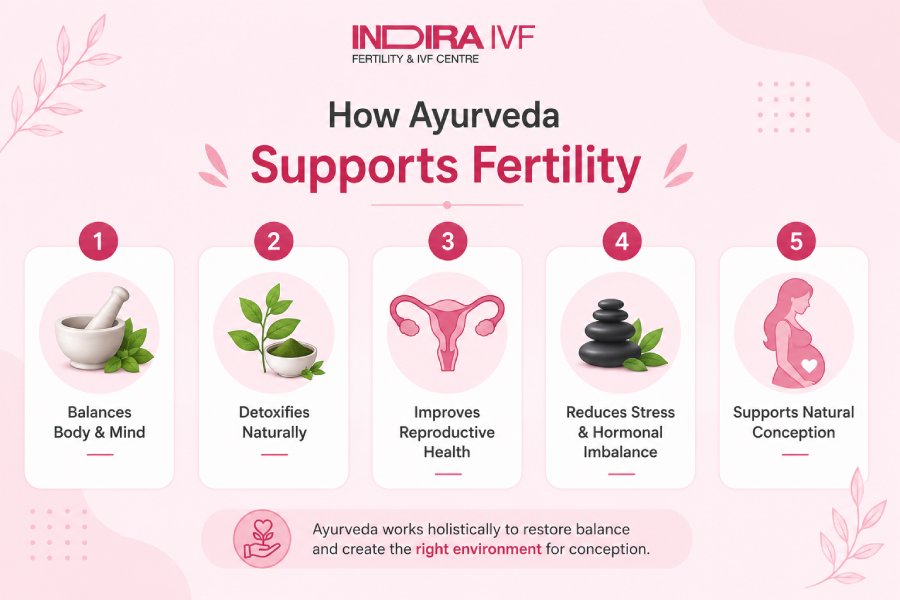
Ayurveda sees conception as a process that depends on your body's balance. According to Ayurvedic principles, healthy digestion, proper nourishment, hormonal balance, and emotional well-being can all contribute to your reproductive health. Some common practices recommended in Ayurveda include:
- eating freshly prepared, nutritious meals
- maintaining a healthy sleep schedule
- Reducing stress through yoga and meditation
- incorporating physician-prescribed herbs such as Ashwagandha or Shatavari when appropriate
- following a consistent daily routine
There are certain infertility issues and complications that require attention and cannot be treated with alternative medication.
Can Lifestyle Choices Alone Influence Fertility?
Healthy eating, regular exercise, and stress management can certainly improve overall health. They may even support fertility in some situations.
But fertility isn't always influenced solely by lifestyle.
Sometimes the issue is physical, sometimes hormonal, and sometimes related to egg or sperm quality. Those problems usually need medical testing before anyone can identify them.
These conditions usually cannot be confirmed through symptoms alone. A woman may have regular periods and still have blocked tubes. A man may feel healthy and still have a low sperm count.
This is why a timely fertility evaluation becomes important.
What Can Waiting Actually Cost?
Couples often believe that waiting another six months won't make much difference.
In reality, those months can matter, particularly when the woman is in her mid-30s or when an underlying fertility condition is quietly progressing.
During that time:
- ovarian reserve may continue to decline
- egg quality naturally reduces with age
- endometriosis can become more severe
- untreated male-factor infertility remains unnoticed
- treatment options that were once simple may become more complex
None of this means every couple needs IVF right away. It simply means that knowing the cause early gives you more choices.
When Is IVF The Most Suitable Option
While many couples are able to conceive naturally or with simpler fertility treatments, there are certain medical conditions that require IVF to overcome the underlying problem.
- Both fallopian tubes are blocked or non-functional (bilateral tubal factor):
When both tubes are blocked, absent, or severely damaged due to conditions such as pelvic inflammatory disease (PID), bilateral hydrosalpinx, previous ectopic pregnancy, or bilateral salpingectomy, the egg and sperm cannot meet naturally. IVF bypasses the fallopian tubes entirely, making pregnancy possible.
- Severe male factor infertility requiring ICSI
In cases of severe oligozoospermia (very low sperm count), asthenozoospermia (poor sperm motility), teratozoospermia (abnormal sperm shape), or azoospermia requiring surgical sperm retrieval (PESA, TESA, TESE, or Micro-TESE), natural fertilization and IUI are usually not effective. IVF with ICSI allows a single healthy sperm to be injected directly into the egg.
- Genetic testing of embryos is required (PGT)
Couples at risk of passing on inherited genetic conditions (PGT-M), those with balanced chromosomal translocations or structural rearrangements causing recurrent pregnancy loss (PGT-SR), or those requiring embryo chromosome screening (PGT-A) need IVF because embryos must be created in the laboratory before they can be biopsied and tested.
- Severe endometriosis (Stage III or IV):
Advanced endometriosis can distort pelvic anatomy, damage the ovaries and fallopian tubes, and significantly reduce the chances of natural conception. In these situations, IVF often offers the highest pregnancy success rates.
- Ovulation disorders that do not respond to treatment
Some women with PCOS, hypothalamic amenorrhea, or other ovulatory disorders do not ovulate despite medications such as clomiphene citrate, letrozole, or gonadotropins. When first-line treatments fail, IVF becomes the most effective next step.
- Repeated IUI failure or unexplained infertility
If several well-timed IUI cycles have been unsuccessful or infertility remains unexplained despite a thorough evaluation and first-line treatments, IVF offers a significantly higher chance of pregnancy.
- Diminished ovarian reserve or advanced maternal age
As ovarian reserve declines or maternal age increases, both egg quantity and quality decrease. IVF helps maximize the number of eggs and embryos obtained in each cycle and, when appropriate, allows the use of PGT-A to improve embryo selection and optimize the chances of a successful pregnancy.
When Should You See a Fertility Specialist?
If you are a couple under 35 years of age and have been trying to conceive for 12 months without success, you should consult a fertility specialist.
Couples over 35 should seek medical advice if they are unable to conceive after 6 months.
You may also need an earlier assessment if you have blocked fallopian tubes, severe male factor infertility, advanced endometriosis, ovulation disorders, recurrent IVF failures, diminished ovarian reserve, or a known genetic condition. In these situations, IVF may offer the safest and the most reliable path to pregnancy.
Final Thoughts
Most couples start their journey of starting a family, hoping that small, healthy changes will make all the difference. They eat better, sleep early, and do yoga or practice Ayurveda to prepare their bodies for pregnancy. These are important steps, and Ayurveda can be a great help in supporting both your overall health and your emotional well-being. But if month after month goes by without a positive pregnancy test, it might be your body’s way of telling you that you need more than just lifestyle changes. Infertility is a medical condition, and it’s just as important to understand why pregnancy isn’t happening as it is to support your health naturally.
A simple fertility assessment can often provide answers that months or even years of trial and error can’t. If all appears normal, you can continue trying naturally with greater confidence. But if a problem is identified, you can select the appropriate treatment without losing valuable time.
The sooner you find out what is affecting your fertility, the more options are generally available to you, and that can make a real difference to your parenthood journey.
AtIndira IVF, the approach is to help couples understand their fertility health, identify possible causes, and receive guidance based on their age, medical history, test results, and parenthood goals.