
Should Both Partners Attend IVF Consultation and Counselling Sessions?
Reviewed by Dr. Shalini K R
Gynaecologist & IVF Specialist
10+ years of experience
 Expert Verified
How is this page expert verified?
This information has been reviewed and approved by an experienced fertility specialist at Indira IVF to provide accurate and up-to-date guidance for our readers.
Overview
Month after month of waiting, hoping, and facing disappointment can be emotionally exhausting. When you decide to explore IVF, you may have many questions about what lies ahead. For IVF treatment, the first step is an IVFconsultation, where you can talk with your doctor about your experiences and learn about different treatments. It is also a chance to ask the questions on your mind and get a clearer idea of what comes next. A common question is whether both partners need to be there. If you can attend consultations together, that will help because you'll both hear the same advice, ask questions, and make decisions together.
However, sometimes it may not be possible for both of you to be present at each visit because of work, travel, or other life commitments. That's fine. Staying connected, keeping each other informed, and offering support can matter just as much.
Table of Contents
- Should Both Partners Attend an IVF Consultation?
- What Happens During an IVF Consultation?
- Why Should Both Partners Attend IVF Counselling Sessions?
- Which IVF Appointments Should Your Partner Attend?
- Why is Partner Support Important During IVF?
- What Is Discussed During IVF Counselling?
- What Should Couples Keep in Mind During IVF?
- How Can IVF Affect a Relationship?
- Key Takeaways
Should Both Partners Attend an IVF Consultation?
When possible, both partners should consider attending the IVF consultation. Fertility problems can involve either partner, both partners, or sometimes have no clearly identified cause.
An IVF consultation with both partners allows both people to hear the same information. It can also make it easier to discuss treatment decisions later.
During this consultation, the IVF doctor will discuss both patients' medical and fertility history. Depending on the situation, the investigations might include semen analysis, ovarian reserve tests, scans, or any other fertility-related investigation.
Couples are not required to attend every appointment together. If one partner cannot attend an IVF consultation, they can ask the clinic how they can stay informed.
The goal is not simply to have two people in the room. It is to encourage shared understanding and informed decision-making.
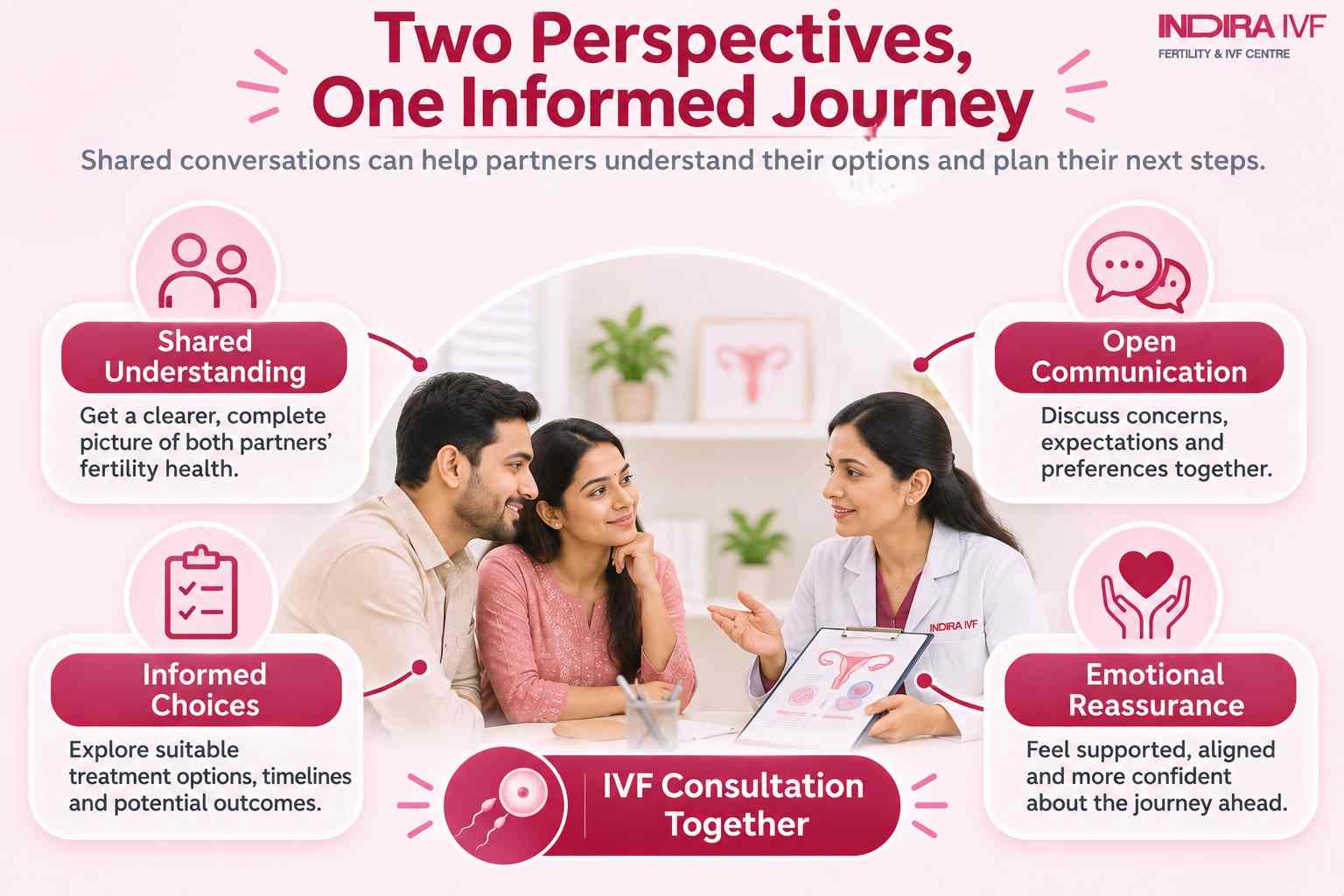
Benefits of Attending IVF Consultations Together
An IVF consultation with partner can offer several benefits:
- Both partners receive the same medical information.
- Couples can ask questions together.
- Couples can discuss important decisions as a team.
- One partner may remember details the other misses.
- Emotional support can make the appointment feel easier.
- Couples can better understand what treatment may involve.
Preparing IVF consultation questions together can also make the appointment more useful.
Role of a Partner During IVF Treatment
A partner can provide support in many ways. This could include going to appointments with the patient, helping them manage procedures, and being there during moments of distress. Partners can always provide emotional support without needing to fix the problem. Moreover, the partner who isn't going through the procedures may also feel stressed or disappointed too. IVF is therefore something couples may need to navigate together.
What Happens During an IVF Consultation?
If you are wondering what happens in IVF consultation, the appointment usually begins with a discussion about your fertility history and concerns.
The IVF consultation process varies from person to person. The IVF doctor may discuss:
- Previous. Fertility treatments
- Menstrual and reproductive history
- Previous investigations
- Medical and surgical history
- Medicines and relevant health conditions
- Semen analysis or other male fertility assessments
- Ovarian reserve and other female fertility assessments
- Possible reasons, for difficulty conceiving
- IVF and other suitable treatment options
- Potential risks and limitations
- Further tests that may be needed
- Possible next steps
An IVF consultation means more than choosing to go ahead with IVF or learning about the different steps involved. It is a chance to discover more about your fertility and the options available for treatment.
The doctor might explain what the IVF consultation process involves and what treatment could come next. Not every person needs this kind of treatment. Each person has their treatment route depending on their health and the goals they have for fertility.
Why Should Both Partners Attend IVF Counselling Sessions?
IVF counselling offers psychological and psychosocial help during infertility treatment.
In most cases, infertility issues can cause stress and anxiety. Infertility treatment may bring uncertainty, waiting, decision-making, and changes in emotions. Couples might react to this differently. One partner may feel ready to proceed while the other feels uncertain. IVF treatment counsellingcan provide a platform for these discussions.
IVF counselling does not mean that the relationship is in trouble. It simply means you need extra support during a difficult time. Both partners can undergo IVF counselling, especially when they are having trouble communicating about their feelings.
Which IVF Appointments Should Your Partner Attend?
Your partner doesn't need to attend every IVF consultation or appointment. However, it is especially helpful when he or she accompanies you at:
- The initial IVF consultation, where your fertility history and treatment options will be discussed.
- The appointment where the doctor explains your test results and individualised treatment plan.
- Discussions concerning critical procedures such as egg collection and embryo transfer.
- Appointments where we explain possible risks, benefits, or next steps.
- Visits where you have several IVF consultation questions or need to make important decisions.
Sometimes the clinic has a specific policy on whether the patient’s partner must be present at certain appointments or during certain procedures. These include policies on consent or presence during various stages of treatment. The best thing to do is clarify with the clinic in advance which appointments and/or procedures require or recommend the partner's presence.
If your partner can't attend an appointment during your IVF consultation, they can still play an active role in the process.
Why is Partner Support Important During IVF?
Partner support during the IVF process helps make the experience less lonely for both partners. The procedure for IVF may require medications, visits to the doctor, treatment, waiting, and uncertainty that may feel very stressful.
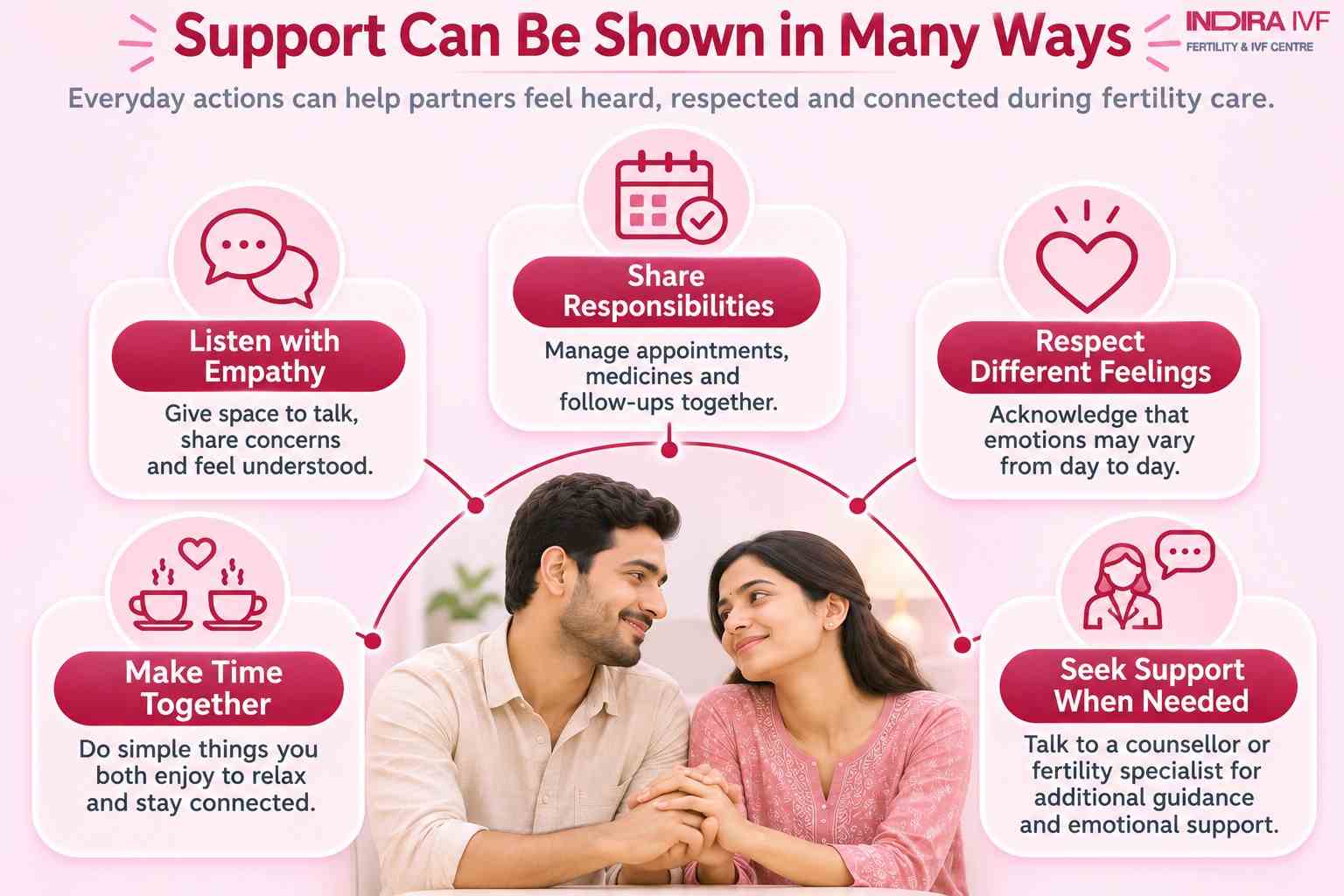
A supportive partner can help in the following ways:
- Nonjudgmental listening.
- Help with tasks.
- Company at doctor visits.
- Remembering the instructions.
- Respecting the other person's emotions.
- Not placing blame on one another.
- Making time for regular activities outside of treatment.
- Encouraging professional support when needed.
Partner support during IVF should work both ways. The partner who is not undergoing procedures may also need emotional support.
What Is Discussed During IVF Counselling?
The topics covered during IVF counselling depend on the individual's or couple's needs.
Discussions may include:
- Emotional responses to infertility
- Anxiety about treatment
- Coping with uncertainty
- Communication between partners
- Different expectations about treatment
- Stress management
- Family or social pressure
- Concerns about treatment outcomes
- Coping with disappointment
- When additional emotional support may be helpful
IVF treatment counselling can also help couples understand how they each cope with stress.
The purpose is not to tell someone how they should feel. It provides a supportive environment where you can discuss concerns openly.
What Should Couples Keep in Mind During IVF?
Good communication can make the fertility journey easier to manage. Before an IVF consultation, it can help to write down your concerns. Preparing IVF consultation questions beforehand means you are less likely to forget something important during the appointment.
You may also want to discuss how much you both know about IVF, any concerns you have, and how you will manage scheduling appointments, work, and other responsibilities. You can also consider what you want to tell your families and where you will find your emotional support in case treatment is not entirely successful.
Attending the IVF consultation does not mean that you will begin the treatment immediately. It only means you'll learn more about your options and what to do next.
How Can IVF Affect a Relationship?
IVF affects different couples in different ways. It can bring some couples closer together through mutual support, while it may create stress and arguments for others. For example, one partner may want to talk about treatment frequently. The other may prefer to take breaks from the subject. Neither response is necessarily wrong. Making time for the relationship outside fertility treatment can help couples stay connected. If communication becomes difficult, IVF counselling may provide a useful space to discuss concerns.
An IVF consultation with the partner can also encourage shared understanding from the beginning.
Key Takeaways
- An IVF consultation helps couples understand their fertility situation and treatment options.
- Both partners can benefit from attending an IVF consultation when possible.
- An IVF consultation with a partner helps both of you hear the same information.
- The IVF consultation process is individualised.
- Understanding what an IVF consultation means can help couples prepare.
- Preparing IVF consultation questions can make the appointment more productive.
- IVF counselling can provide emotional and psychosocial support.
- IVF treatment counselling can help couples manage stress and communication challenges.
- Partner support during IVF can include emotional and practical support.
- Your partner does not need to attend every appointment.
- If your partner cannot attend an IVF consultation, ask the clinic about ways to keep them involved.