
Overview
If you have recently seen the term "oxidative stress" on a semen analysis report, or come across it while trying to understand a fertility diagnosis, it is natural to feel unsure about what it actually means for you. Oxidative stress happens if the body has too many unstable molecules known as free radicals and not enough antioxidants, the substances that neutralise them. In sperm, this imbalance can damage the outer membrane, the genetic material inside, and the way sperm move and are shaped, which is why it is linked to lower sperm quality and, in some cases, male infertility. This guide explains what oxidative stress in sperm means, how it shows up in a semen analysis, what commonly causes it, and what can be done to reduce it and treat it.
Table of Contents
- What Is Oxidative Stress in Sperm?
- How Does Oxidative Stress Affect Sperm Quality?
- What Does Oxidative Stress Mean in a Semen Analysis?
- What Causes Oxidative Stress in Men?
- What Is the Link Between Oxidative Stress and Male Infertility?
- How Can You Reduce Oxidative Stress on Sperm?
- How Is Oxidative Stress in Sperm Treated?
- Conclusion
What Is Oxidative Stress in Sperm?
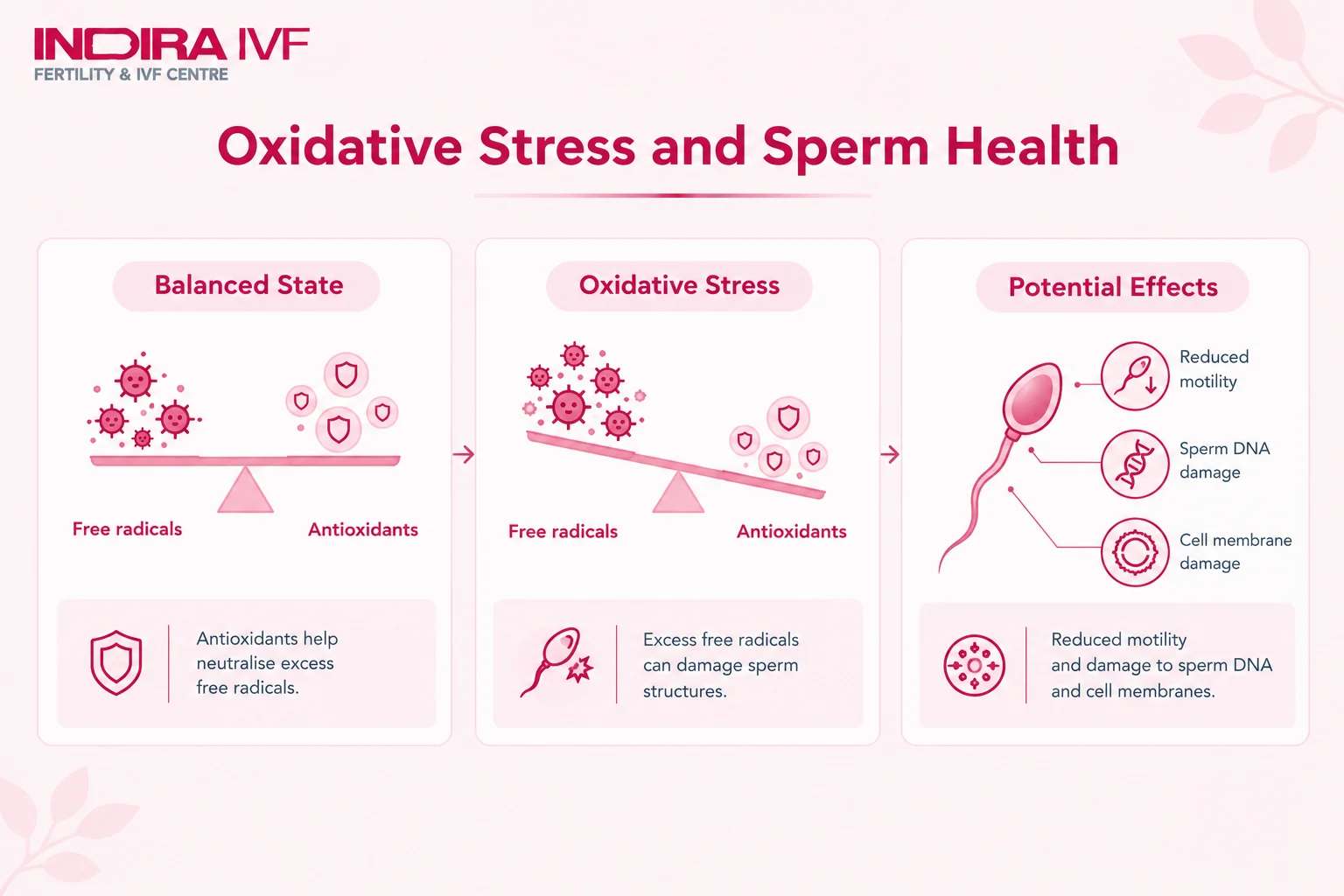
Oxidative stress in sperm occurs when free radicals, unstable molecules that damage nearby cells while trying to stabilise themselves, outnumber the antioxidants that would normally neutralise them. According to a 2025 study published in Frontiers in Endocrinology, oxidative stress refers to the situation when there is an imbalance between ROS production and the body’s ability to neutralise or detoxify these harmful molecules through its antioxidant defenses.
Free radicals steal electrons from healthy cells to become stable, and this process damages the cell in return. Sperm cells are especially vulnerable to this kind of damage because their outer membrane contains a type of fat that reacts easily with free radicals. Seminal fluid normally contains its own antioxidants to guard against this, so oxidative stress reflects an imbalance rather than the simple presence of free radicals, which are a normal part of cell activity.
How Does Oxidative Stress Affect Sperm Quality?
Oxidative stress can affect nearly every measurable aspect of sperm quality, sometimes all at once.
Effect on Sperm Motility
Motility means a sperm's ability to swim towards and reach an egg. It depends on energy produced inside the sperm's tail. Free radical damage to this energy-producing structure can reduce how well sperm move. This can in turn make it harder for them to reach an egg even when the sperm count is normal.
Effect on Sperm Morphology and Count
Morphology means the size and shape of sperm. Sperm count is simply how many sperm are present in a sample. Oxidative stress can damage the sperm-producing cells in the testicles over time. This may lead to a lower number of sperm produced and a lower proportion of sperm with a normal shape.
Effect on Sperm DNA
Sperm carry the genetic material that combines with an egg's genetic material to form an embryo. Oxidative stress can break or damage strands of this genetic material. This problem is known as sperm DNA fragmentation. Even when sperm look normal on a basic semen analysis, high DNA fragmentation can still lower the chances of fertilisation or a healthy pregnancy. According to a 2004 study published in Reproductive Biomedicine, oxidative stress is a leading cause of DNA fragmentation in spermatozoa.
What Does Oxidative Stress Mean in a Semen Analysis?
A standard semen analysis measures sperm count, motility, morphology, volume, and a few other factors. However, it does not directly test for oxidative stress on its own. Oxidative stress is usually identified through a separate, specialised test that measures free radical levels or antioxidant capacity in semen, sometimes alongside a sperm DNA fragmentation test. A report that mentions oxidative stress means an imbalance between free radicals and antioxidants was found. This may also help explain unclear or borderline results on a standard semen analysis.
What Causes Oxidative Stress in Men?
Several everyday and medical factors can push the balance of free radicals and antioxidants in the wrong direction.
- Smoking and tobacco use, which introduce large numbers of free radicals into the body
- Obesity, since excess body fat is linked to higher oxidative stress throughout the body
- Alcohol use, which can add to the overall free radical load
- Heat exposure to the testicles, such as frequent sauna or hot tub use
- Varicocele, which means an enlargement of veins in the scrotum and is thought to raise testicular temperature and reduce blood flow in ways that increase oxidative stress
- Infections, chronic illness, and environmental toxin exposure
What Is the Link Between Oxidative Stress and Male Infertility?
Oxidative stress is one of the mechanisms researchers believe connects several common causes of male infertility. Conditions such as varicocele are thought to lower fertility partly through the oxidative damage they cause to sperm. This does not mean oxidative stress is the only factor at play, since infertility often involves more than one cause together, but it helps explain why addressing modifiable factors, such as smoking or excess heat exposure, sometimes improves semen analysis results even without other treatment.
How Can You Reduce Oxidative Stress on Sperm?
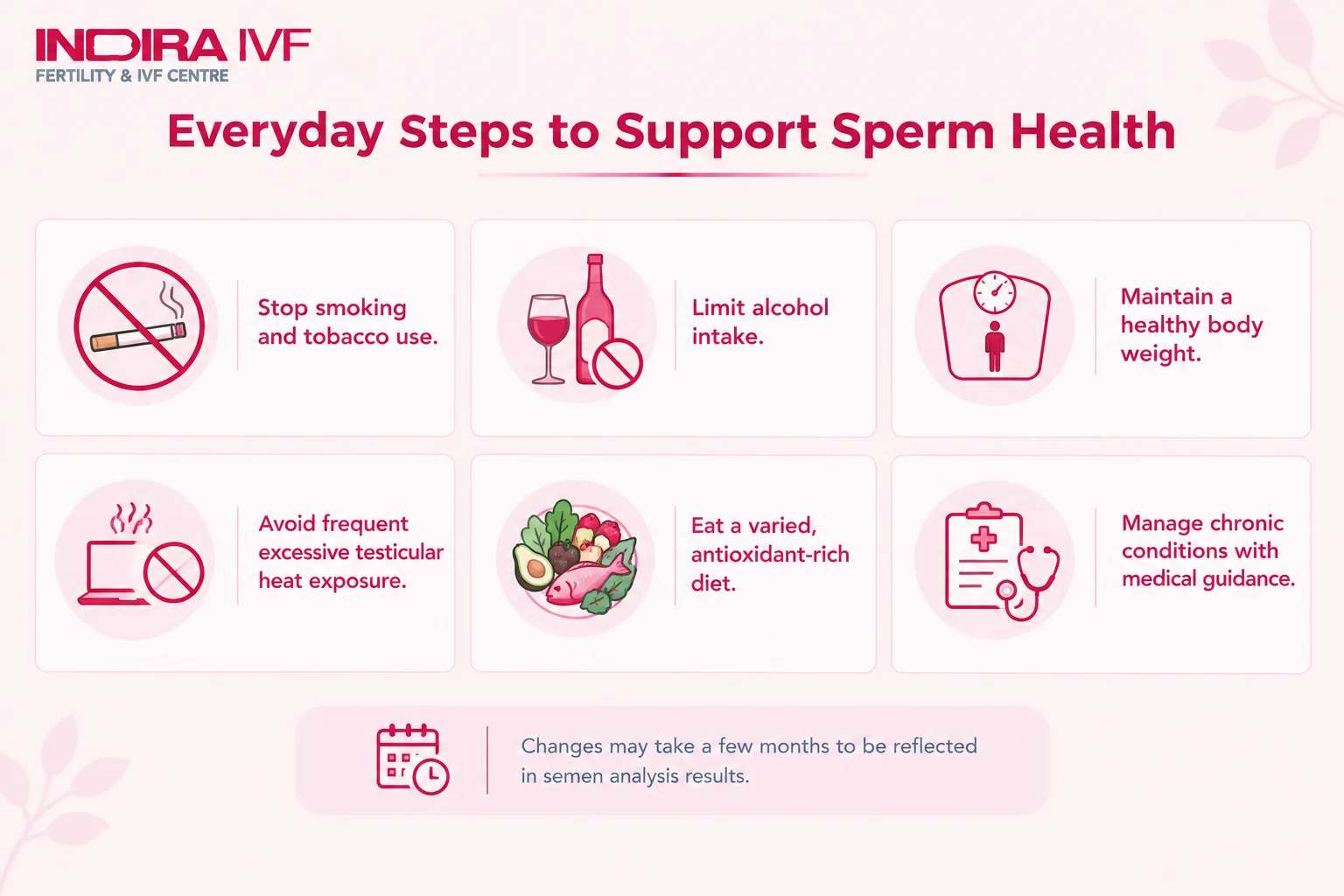
A few practical changes can help shift the balance back towards antioxidants and away from excess free radicals.
- Stopping smoking and limiting alcohol intake
- Reaching or maintaining a healthy body weight
- Avoiding frequent heat exposure to the testicles, such as prolonged sauna, hot tub, or laptop-on-lap use
- Eating an antioxidant-rich diet, including vitamin C from citrus fruits, vitamin E from nuts, and selenium from seafood
- Managing chronic conditions such as diabetes with your doctor's guidance
These changes support general sperm health, though they may take a few months to reflect in a semen analysis, since new sperm take roughly that long to develop.
How Is Oxidative Stress in Sperm Treated?
Treatment usually starts with addressing whatever is driving the oxidative stress in the first place. If a varicocele is contributing, your doctor may discuss surgical repair, which can improve sperm quality in some men. Where lifestyle factors are the main driver, the changes described above are usually tried first. Antioxidant supplements are sometimes recommended, though the evidence on which specific antioxidants help, and by how much, is still developing. So, this is a conversation worth having directly with your fertility specialist rather than starting supplements on your own.
Conclusion
Oxidative stress in sperm reflects an imbalance between free radicals and the antioxidants that neutralise them. It can affect sperm motility, shape, count and genetic material. It is identified through specialised testing rather than a standard semen analysis alone, and several of its common causes, including smoking, obesity and heat exposure, are within your control to change. Whether the cause turns out to be lifestyle-related or linked to a condition such as varicocele, there are clear, evidence-based steps available, and a fertility specialist can help you work out which ones apply to your specific results.