
Overview
Modern reproductive science increasingly centres on cellular health, and it is important to focus on the role of nutrients such as Coenzyme Q10 (CoQ10). Since egg and sperm cells need a lot of energy to develop properly, some people take CoQ10 for fertility as they approach a natural conception or fertility treatment.
By understanding the science behind CoQ10 and the established medical research on it, couples can make informed, safe decisions about whether to supplement with this enzyme.
Table of Contents
- What is CoQ10?
- How Does CoQ10 Work in the Body?
- Why is CoQ10 Important for Fertility?
- CoQ10 and Female Fertility
- CoQ10 and Male Fertility
- Potential Benefits of CoQ10 for Fertility
- What Does the Research Say About CoQ10 and Fertility?
- Who May Benefit from CoQ10?
- Can CoQ10 Improve IVF Outcomes?
- How Long Does CoQ10 Take to Work?
- Is CoQ10 Safe?
- Natural Food Sources of CoQ10
- Lifestyle Habits That Support Fertility Alongside CoQ10
- Common Myths About CoQ10 and Fertility
- When Should You Consult a Fertility Specialist?
- Conclusion
What is CoQ10?
Coenzyme Q10 (or coQ10) is a fat-soluble compound present in nearly all cells of the body. Known as ubiquinone, this natural compound is part of the ubiquinone class, which is naturally produced by the body for normal cellular processes.
CoQ10 plays a vital role in how mitochondria function, helping convert nutrients into the energy needed to build cells, repair them, and keep them going. It works well as an antioxidant too, protecting cells from harm caused by unstable molecules. The body makes CoQ10 on its own and can also be obtained through diet and supplements.
How Does CoQ10 Work in the Body?
To understand how the body uses CoQ10, it is important to look at the electron transport chain in the cell mitochondria. In the body’s efforts to create adenosine triphosphate (ATP), which is the primary energy molecule the body needs for its most essential cellular functions, CoQ10 helps to assist electron transfer. CoQ10 also helps ward off oxidative stress and may protect the body’s proteins, genetic material, and other structures from the damage caused by free radicals.
This dual role is especially important for reproductive cells because eggs and sperm require substantial energy to function properly. Natural CoQ10 production declines with age, reducing cellular efficiency and potentially affecting the health of reproductive cells.
Why is CoQ10 Important for Fertility?
The relationship between oxidative stress and reproductive difficulties has remained a significant field of investigation in the field of fertility. Excessive oxidative stress can damage reproductive cells and disrupt the process leading up to conception. High energy levels are also needed for cellular processes, such as early embryonic development, egg maturation, and sperm motility. These functions may be impaired by reduced cellular energy, resulting in suboptimal reproduction.
CoQ10 contributes to ATP production and helps protect against free radical damage, thus supporting the healthy function of eggs and sperm. This biological function is what makes CoQ10 for fertility a popular topic in reproductive medicine and preconception care.
CoQ10 and Female Fertility
- May Support Egg Quality
Women are born with a limited supply of eggs that stay in the ovaries for decades. As these cells age naturally and through prolonged exposure, they become more susceptible to cellular degradation. Specific antioxidant support can help them maintain the integrity of the structure and ensure optimal efficiency of CoQ10 for egg quality.
- Role in Ovarian Function
Maintaining healthy ovarian function requires adequate cellular energy and a proper balance in the follicular environment. CoQ10 plays an important role in this process by contributing to the maintenance of the environment required for egg growth and maturation.
- Age-Related Fertility and CoQ10
As women get older, their egg mitochondria deteriorate, impairing cell division. This is one reason why CoQ10 has gained attention as a supportive supplement for age-related fertility concerns.
- CoQ10 Before IVF
Adequate CoQ10 before IVF can enhance egg quality prior to retrieval and support early embryonic development.
CoQ10 and Male Fertility
Sperm Motility
Sperm have to swim a very long distance to reach an egg and fertilise it, so they have to keep moving forward. The central portion of each sperm is packed with mitochondria, and CoQ10 promotes the production of energy required to move the tail and to maintain healthy motility.
Sperm Count
A healthy sperm count is essential for natural conception. Sperm typically take about 74 days to develop, and a cell must always be supplied with energy. Improved coenzyme levels may have a protective effect on sperm production, which highlights the importance of CoQ10 for healthy sperm.
Sperm Morphology
Sperm morphology is a method for determining the size, shape, and structure of sperm cells. This enables the sperm to swim more efficiently towards their target egg, resulting in fertilisation. CoQ10 may help protect mature sperm from oxidative damage during maturation.
Protection Against Oxidative Stress
Sperm membranes are highly sensitive to oxidative injury. Excessive free radicals can lead to DNA fragmentation, and CoQ10 in seminal fluid acts as an antioxidant, protecting sperm cells and paternal genetic material.
Potential Benefits of CoQ10 for Fertility
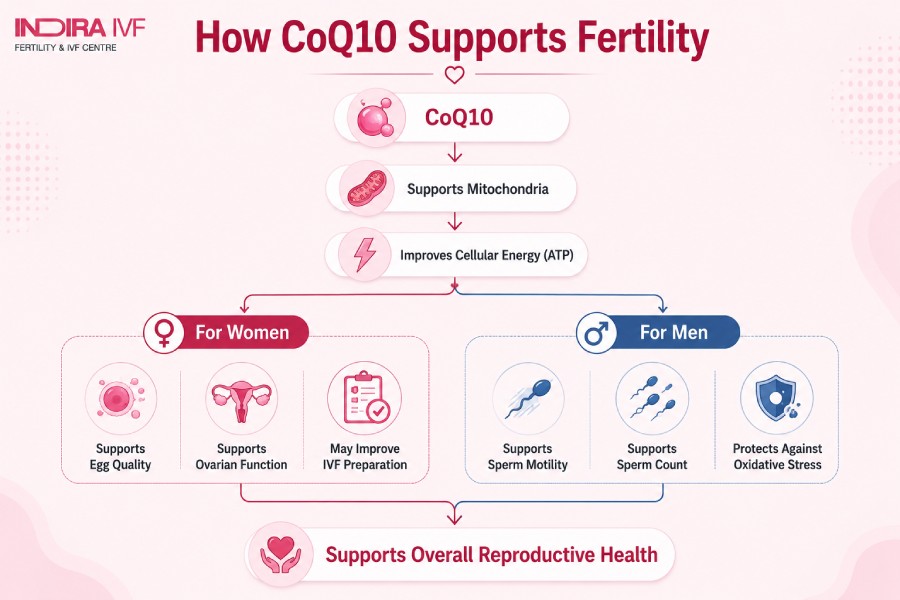
Here are some key benefits of CoQ10:
Potential Benefit | How It May Help |
Enhanced Cellular Energy | Boosts mitochondrial ATP production in both mature eggs and developing sperm cells. |
Antioxidant Protection | Inhibits free radicals in the cellular space and reduces exogenous genetic fragmentation and membrane injury. |
Support for Ovarian Response | Assists the ovaries in responding appropriately to natural and clinical hormonal signals. |
Improved Sperm Parameters | Supports progressive sperm motility, concentration, and structural development. |
Pre-Treatment Optimisation | To prepare the reproductive microenvironment before performing advanced assisted cycles. |
What Does the Research Say About CoQ10 and Fertility?
Research exploring the use of CoQ10 in fertility care is rapidly expanding, as evidenced by the large number of studies, either randomised controlled trials or systematic reviews. Research on female fertility mainly assesses pregnancy rates, embryo quality and the risk of miscarriage. These findings suggest that regulating mitochondrial activity may help improve oocyte quality throughout ageing, particularly in women of advanced reproductive age.
Several studies have reported an association between higher CoQ10 levels and improved sperm parameters, although further research is still needed. Research on patients who took CoQ10 supplements for several months has reported improved sperm motility and reduced oxidative stress. Due to differences in individualised needs, fertility specialists recommend seeking thorough medical advice before starting supplementation.
Who May Benefit from CoQ10?
- Women of Advanced Reproductive Age: If a woman is trying to get pregnant at age 35 and later, there is a gradual age-related decrease in mitochondrial activity inside the egg. During this change, supplementation can provide cellular energy support.
- Women with Diminished Ovarian Reserve: Women who are facing a diminished reserve of oocytes often have issues with embryo quality and hormonal response. The immediate task is to optimise the remaining follicular environment.
- Men with Certain Sperm Quality Concerns: Men with a diagnosis of poor sperm motility, low sperm count, or oxidative stress can use specific antioxidants to prevent further damage to DNA in germ cells.
- Couples Preparing for Fertility Treatment: Micronutrient support is frequently introduced to partners planning on undergoing intrauterine insemination or assisted reproductive cycles to prepare cellular health beforehand.
Can CoQ10 Improve IVF Outcomes?
Healthy eggs require sufficient energy to support fertilisation and early embryo development. For this reason, in select cases of diminished ovarian reserve or advanced maternal age, fertility specialists may recommend CoQ10 before an IVF cycle. The clinical evidence demonstrates that improved mitochondrial function may contribute to ovarian response to stimulation and to the retrieval of healthy, mature oocytes. In addition, providing sufficient cellular energy can also help embryos develop to the blastocyst stage.
Nonetheless, CoQ10 is a supplemental aid and not an isolated cure. A successful IVF treatment can be achieved only with a personalised treatment plan as per the individual's needs, which is prepared by an experienced fertility specialist.
How Long Does CoQ10 Take to Work?
It takes time for biological processes, and human egg and sperm cells can take weeks to mature. Therefore, the use of CoQ10 has no immediate effects. For the egg cell, it takes 90 days to mature before ovulation, and nearly as long for sperm to develop and mature in a man. Since egg and sperm development take several weeks, noticeable CoQ10 fertility benefits generally require consistent use over a few months. Regular use is important because CoQ10 needs time to build adequate levels in the body. Inconsistent supplementation may reduce its potential benefits. Consistent adherence to a currently supervised routine provides steady support during the embryonic cell course.
Is CoQ10 Safe?
The general safety profile of CoQ10 is excellent because the body produces it naturally. Standard oral doses in adults are usually well tolerated and do not cause serious side effects. In clinical monitoring, the substance is processed and metabolised regularly in the body.
Although uncommon, light, temporary side effects can occur when taking supplements. These may include mild digestive disturbance, brief nausea, slight insomnia or headache. The timing of the dosage and/or consuming the supplement with a fatty meal can overcome these mild problems.
Drug interactions must be taken into account when initiating a new treatment plan. CoQ10 is structurally similar to Vitamin K, so it may interact with certain blood-thinning drugs or certain blood pressure drugs. This is one of the reasons that people must only start taking supplements with the advice of a qualified healthcare professional.
Natural Food Sources of CoQ10
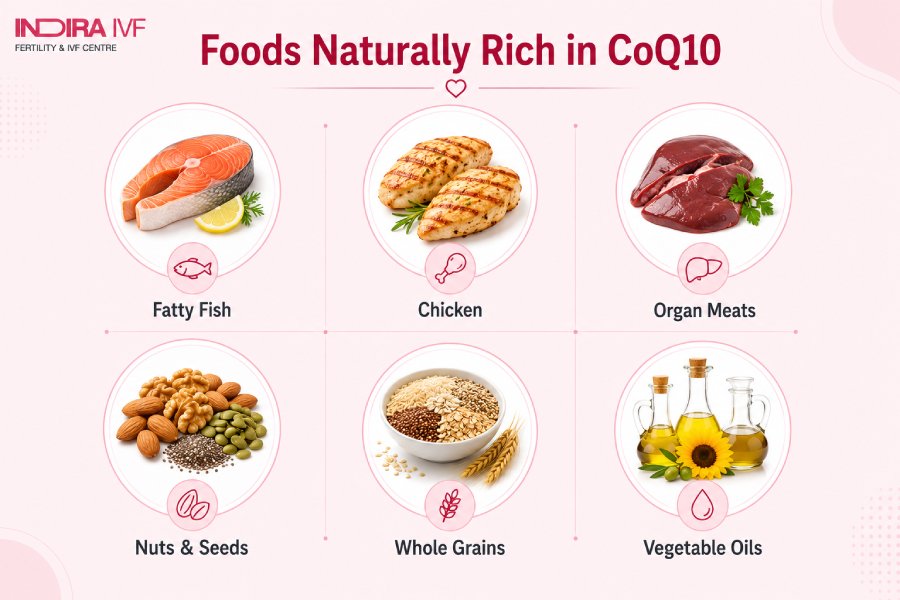
- Fatty Fish: Cold-water fatty fish like salmon are good sources of CoQ10, as well as heart-healthy omega-3 fatty acids.
- Organ Meats: Some of the most natural sources of CoQ10 are found in the beef heart, liver, and kidneys, which have high metabolic activity.
- Chicken: Dark chicken meat is a good source of CoQ10, and chicken, in general, is a good source of protein.
- Nuts and Seeds: Moderate amounts of CoQ10 are found in peanuts, walnuts, and sesame seeds. Their good fats also aid nutrient absorption.
- Vegetable Oils: A small amount of CoQ10 can also be found in soybean, canola and olive oils. These can be drizzled over salad dressings or added to your regular cooking routine.
- Whole Grains: Whole grains (such as wheat germ, whole wheat bread, and other unrefined grains) are a good source of CoQ10, fibre, vitamins, and minerals, supporting a balanced diet.
Lifestyle Habits That Support Fertility Alongside CoQ10
- Follow a Balanced Diet: Eating plenty of vegetables, lean protein, healthy fats, and whole grains provides your cells with the energy and nutrients needed for reproduction to function effectively.
- Regular exercise: Moderate exercise improves blood circulation to the reproductive organs, but excessive exercise increases physical stress.
- Maintain a Healthy Body Weight: Keeping a balanced body weight supports balanced hormone levels, normal ovulation, and fertility.
- Avoid Smoking: Smoking induces oxidative stress and cellular ageing; it negatively affects egg and sperm cells.
- Moderate Alcohol consumption: Heavy drinking can affect hormone levels and sperm quality, so trim your alcohol intake down to the healthy limits.
- Manage Stress: Along with yoga itself, mindfulness or counselling may help keep the stress levels at bay, which can ultimately go a long way in supporting hormonal health.
- Have a good night's sleep: Get 7 to 8 hours of sleep for hormone balance, cellular repair, and reproductive health.
Common Myths About CoQ10 and Fertility
Myth: CoQ10 eliminates the need for expensive clinical fertility treatments.
Fact: Micronutrients are made to support cellular health, but they cannot cut structural blockages or massive disturbances of hormones. They are not substitutes but add value to your medical regimen.
Myth: COQ10 should be taken by everyone when trying to conceive.
Fact: Many people naturally have optimal amounts of coenzyme. Any recommendations should be individualised to a person's situation and history.
Myth: High doses will produce quicker and better results.
Fact: The human digestive tract has a certain limit of fat-soluble compound absorption. There is no additional benefit to taking more than recommended, and some risk that they may cause slight discomfort in the digestive tract.
Myth: It is safe for use, has no physiological risks and no interactions because it is an over-the-counter supplement.
Fact: Natural remedies can interfere with prescription drugs and change the processes that take place in the body. Under professional clinical supervision, intake control helps avoid various unexpected health issues.
When Should You Consult a Fertility Specialist?
The timing of seeking expert advice is a crucial aspect of fertility treatment. Although lifestyle changes and nutritional support are helpful in overall reproductive health, some require a medical evaluation. If the couple is younger than 35, after 12 months of regular, unprotected sex without a pregnancy, they should see a fertility specialist. This period is 6 months for women aged 35 or older.
Other indications for medical consultation include recurrent pregnancy loss ,irregular periods ,endometriosis, or abnormal semen analysis (sperm count and motility). Supplements should be used in conjunction with, and not as a substitute for, an extensive fertility evaluation and treatment.
Conclusion
For fertility and reproductive support, CoQ10 can help by providing the energy the cells need for reproduction and offering potent antioxidant protection. Since it supports the healthy function of eggs and sperm, it has found its way into many aspects of fertility care in the modern day.
While supplements may be beneficial with treatment, fertility care also works most effectively when coupled with a healthy lifestyle, evidence-based supplements and expert medical support. Since every fertility journey is distinctive, a fertility specialist can assist you with your treatment plan to maximise your chances of lifelong fertility and health.