
IVF vs test-tube baby: Are They the Same? Understanding the Difference

Reviewed By Dr. Shikha Singh
MBBS, MS
Executive Director
5+ Years of Experience
Overview
Fertility treatment is an emotional journey for many couples, bringing along hope, stress, and lots of questions. One question that is quite common for those looking at options is whether a test-tube baby is simply another term for IVF. If you or someone you know is exploring fertility treatment, you deserve to have simple and honest answers at your disposal. In this article, we will break down the difference between IVF and a test-tube baby, and hopefully, by the end, you will have more clarity and make informed decisions in your parenthood journey.
Table of Contents
- IVF vs. test-tube baby: What Is the Difference?
- What Is IVF?
- What Does the Term “test-tube baby” Mean?
- Is IVF the Same as a test-tube baby?
- How Does IVF Treatment Work?
- Why Is IVF Called a test-tube baby?
- IVF and Natural Conception: What Is the Difference?
- Can IVF Be Successful Without Fallopian Tubes?
- Is IVF More Painful Than Other Fertility Procedures?
- Common Myths About IVF and Test-Tube Babies
- What Factors Can Affect IVF Success?
- Key Takeaways
- Conclusion
IVF vs. test-tube baby: What Is the Difference?
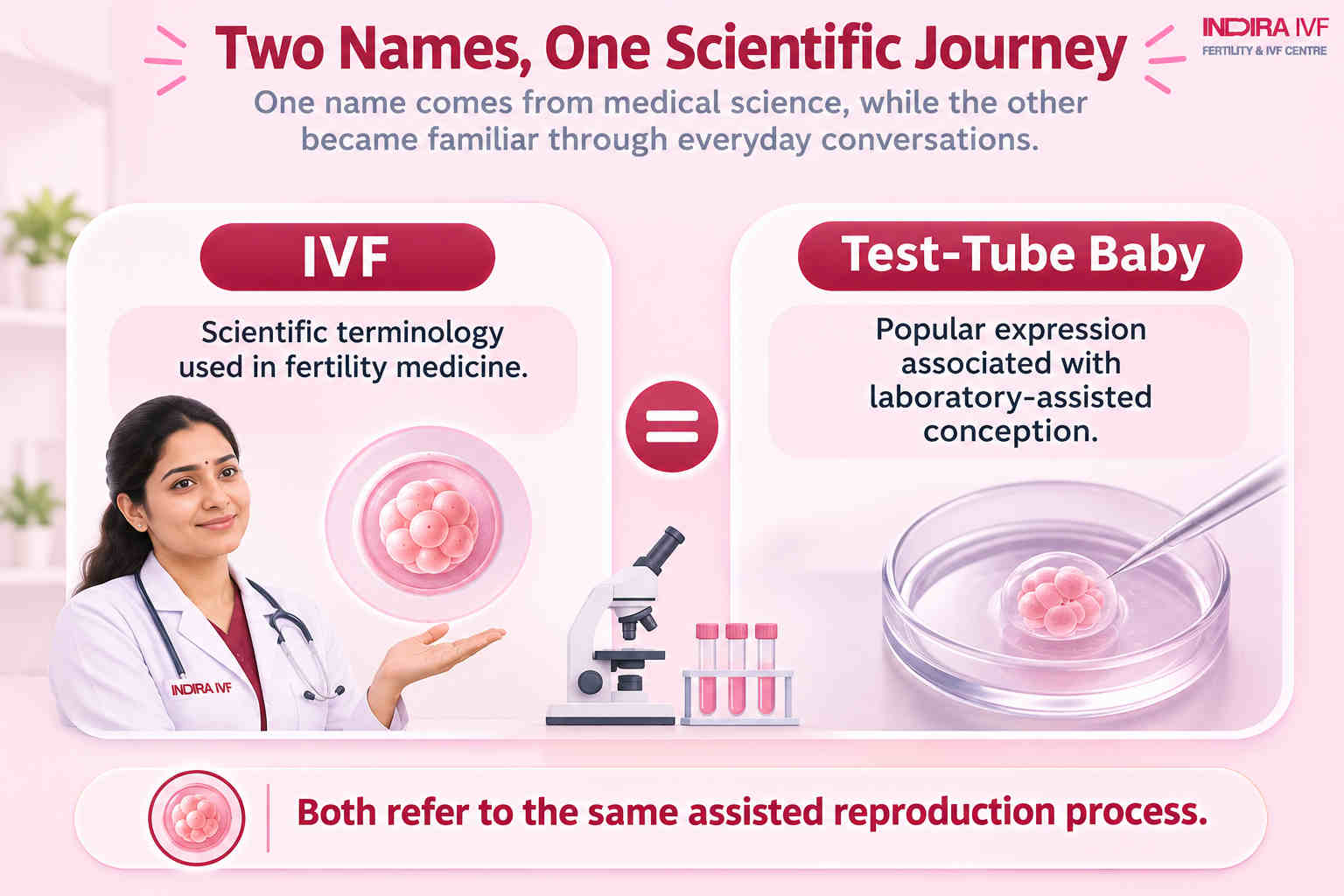
To clear up the confusion early, yes, IVF and test-tube baby are different terms for the same medical procedure. While IVF, or in vitro fertilisation, is the medical and scientific term for it, ‘test-tube baby’ is used more casually.
What Is IVF?
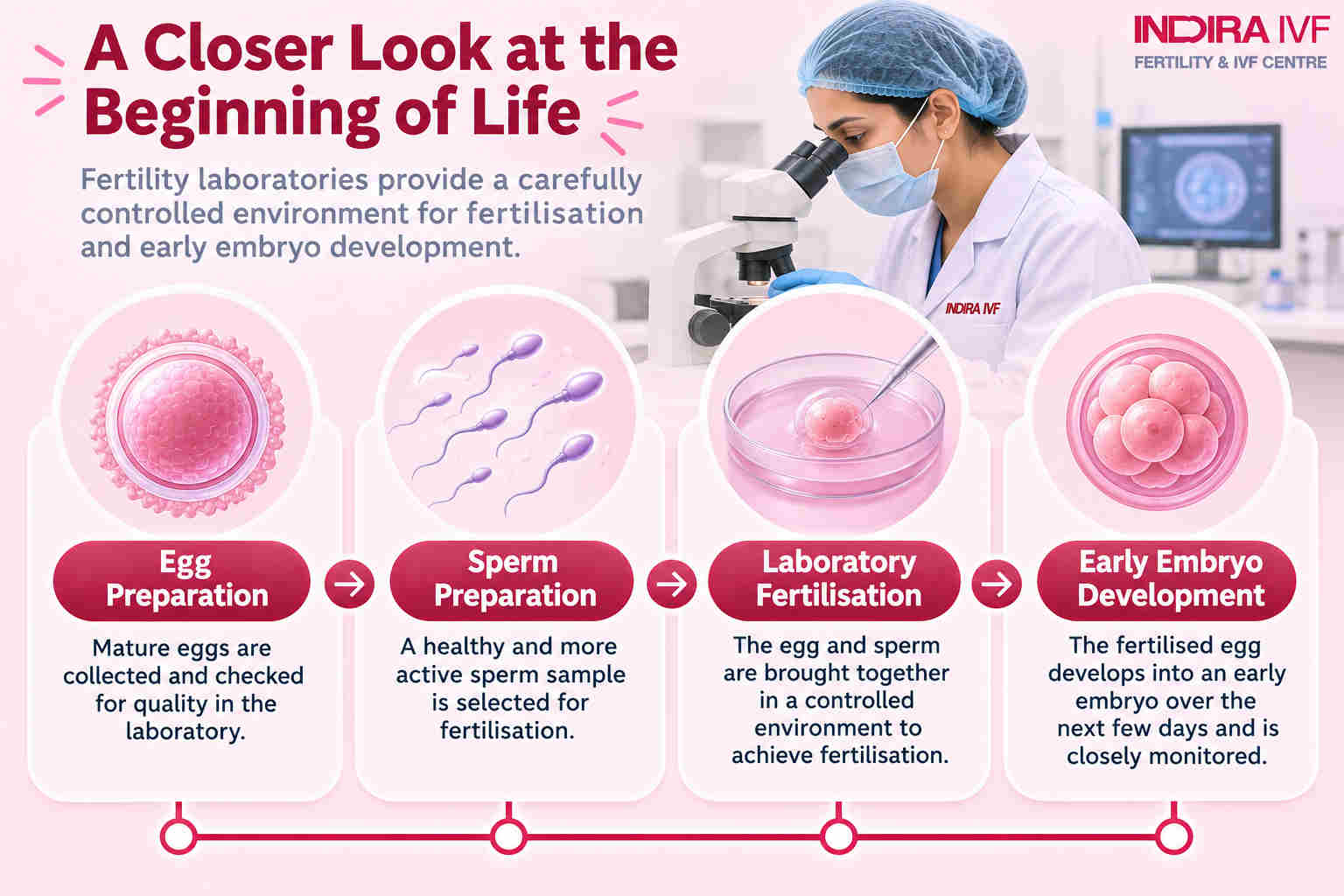
The term “in vitro” comes from Latin and means “in glass”. It refers to a procedure in which fertilisation happens outside the female body, in a laboratory. It is a highly sought-after treatment for infertility by couples who still want to achieve their dream of having a biological child. In the process, a doctor retrieves mature eggs from the woman and fertilises them with the man’s sperm. The resulting embryo is then placed in the uterus, where it will develop into a foetus after successful implantation. The entire IVF process can take anywhere between 2 and 3 weeks, or longer in some cases.
To understand the IVF meaning in simple terms, “a treatment method in which male sperm & female egg are fertilised outside the female partner’s body under a controlled lab environment. The fertilised zygote is grown into an embryo and then placed in the womb.”
What Does the Term “test-tube baby” Mean?
A “test-tube baby” is an older and more informal term used to describe the same treatment or the babies that are conceived through IVF. As the name suggests, it is based on the idea that fertilisation is happening outside the female body, in a test tube. However, in reality, the fertilisation actually takes place in a small lab dish. While doctors may not use this term anymore, it is still quite common in everyday conversation. In short, test-tube baby meaning refers to a baby that has been conceived through fertilisation outside the body.
Is IVF the Same as a test-tube baby?
Yes. A test-tube baby is simply a baby that is born through the process of IVF. No separate treatment is linked to the term. So, if you were searching for “IVF vs test-tube baby”, the answer is simple: they mean the same thing. One is a medical term while the other is simply a nickname.
To directly answer the question of “is test-tube baby and IVF baby the same?”, yes, they refer to the same process, just described in different ways.
How Does IVF Treatment Work?
If you or someone you know is due for an IVF treatment in the coming days, it is understandable that you might be feeling anxious, especially if you do not know what to expect. Understanding how a test-tube baby is conceived can help the process feel less intimidating.
The process is broken down into simple steps below to help you understand it.
Step 1: Ovarian Stimulation – Doctors often recommend hormone drugs to stimulate the ovaries to produce multiple mature eggs in one cycle. This increases your chances of success by producing as many eggs as possible. A woman will have to take the medication for 8 to 14 days. The process may take longer if the follicles mature slowly.
Step 2: Egg Retrieval – The doctor will retrieve eggs from your ovaries about 34 to 36 hours after your last stimulation shot and before you ovulate. The ultrasound device is inserted into the vagina to look for follicles. The eggs are then retrieved using a thin needle and suction device. The harvested mature eggs are placed in a liquid where they develop.
Step 3: Sperm Collection – A semen sample is collected from your partner on the morning of the egg retrieval process. The most common method of sperm collection is masturbation. Doctors may use a needle or surgery to extract the sperm directly from the testicle if the man cannot ejaculate or if there is no sperm in his semen.
Step 4: Fertilisation in the Laboratory – The egg and sperm are combined in a lab dish and kept in a controlled environment called an incubator. Here is where the nickname “test-tube baby” comes from, since fertilisation is taking place outside the body.
Step 5: Embryo Transfer – Once the embryos are formed, a long, thin, and flexible catheter is placed into the vagina through the cervix. When it reaches the uterus, a syringe containing one or more embryos is attached to the end of the catheter and injected into the uterus.
Step 6: Pregnancy Test – If the IVF process was successful, the embryo will be implanted into the uterine lining in about 6 to 10 days. Doctors recommend waiting for 2 weeks after the procedure to take a pregnancy test.
Why Is IVF Called a test-tube baby?
The world’s first successful IVF case took place in the late 1970s, with the birth of Louise Brown. “Test-tube baby” became a simple way to describe a complex medical breakthrough, and the term has stuck with the public since. “Test-tube baby” was used to describe fertilisation which took place outside the human body, in a laboratory. Even though the fertility treatment uses lab dishes and not actual test tubes, the phrase found its place in popular language and is still widely used.
This is exactly where IVF treatment and test-tube baby are used interchangeably by people in everyday conversation.
IVF and Natural Conception: What Is the Difference?
Fertilisation in natural conception takes place in the fallopian tubes. After a couple engages in intercourse, the sperm naturally meets the egg, resulting in fertilisation. Meanwhile, IVF involves fertilisation that takes place outside the body, in a laboratory. The fertilised embryo is then placed directly in the womb. Both processes result in a true pregnancy. While the process of fertilisation is different, the foetus grows the same way in both cases.
Can IVF Be Successful Without Fallopian Tubes?
Since fertilisation happens outside the body, IVF is an important treatment option for those struggling with tubal infertility. In IVF, fertilisation completely bypasses the fallopian tubes, which means that those women with blockages in their tubes can still become pregnant.
Previously, tubal reconstructive surgery or tuboplasty was a common treatment method for women with blocked fallopian tubes. However, IVF is the preferred option today since the fallopian tubes are not at all a factor here, and it also offers higher success rates in many patients.
Is IVF More Painful Than Other Fertility Procedures?
Although everyone experiences pain differently, there may be some discomfort involved in each step of the IVF procedure, but not severe pain. Just remember:
- You may experience some soreness from the hormone shots.
- Egg retrieval is done under sedation, so the pain is minimal.
- Embryo transfer is most likely to feel like a routine gynaecological exam.
Compared to other procedures like hysterosalpingography (HSG), IVF is much more manageable for most patients. Remember that every fertility journey is different. Your fertility specialist will be able to guide you through several pain management options if the need arises.
Common Myths About IVF and Test-Tube Babies
There are many myths that are floating around even today when it comes to IVF and test-tube babies. Some of the most common ones are:
“A test-tube baby grows in a test tube.” Only fertilisation happens outside the mother’s body, and even that takes place in a lab dish, not a test tube. The baby grows normally, like every other child, in the womb.
“IVF babies are genetically different.” IVF babies share the same genetic makeup as naturally conceived children since the egg and sperm come from the same sources.
“You always have to use a donor egg or sperm.” If there are no complications with the couple’s egg and sperm, there is no need to use donor eggs or sperm.
“IVF guarantees a pregnancy.” While IVF improves the chances of fertility for those struggling with infertility, there is never a guarantee. Some couples may need multiple cycles before they conceive and have a baby.
What Factors Can Affect IVF Success?
IVF increases the chances of fertility in couples who have been struggling to conceive. However, success is not always guaranteed, and it is based on several factors, including:
- Age and Egg Quality: Younger women tend to have higher-quality eggs. Egg quality declines with age, especially after a woman turns 35.
- Sperm Health: While a man’s age may not really affect IVF success, his sperm health is an influential factor. Sperm count, shape and motility matter here, as poor sperm health can decrease fertilisation rates.
- Embryo Quality: The better the grade of the embryo, the more likely the embryo is to implant. But even couples with low-grade embryos can have successful, healthy pregnancies.
- Uterine and Overall Reproductive Health: A healthy uterine lining is necessary for implantation. But things like fibroids and endometriosis can impact success rates. You should also consider a person’s overall reproductive health.
Your fertility specialist should be able to evaluate all of the above-mentioned factors before starting treatment.
Key Takeaways
- IVF and test-tube baby refer to the same medical process. One is a medical term, while the other is more commonly used in conversation.
- Test-tube baby is an older, informal nickname for IVF babies.
- Fertilisation takes place in a lab dish rather than a real test tube.
- If your fallopian tubes aren’t healthy, IVF can still work.
- Age, sperm health and embryo quality all play a role in IVF success.
Conclusion
It is true that fertility journeys can be daunting, but understanding the exact science behind IVF can offer some much-needed comfort to the patient. While looking into treatments, couples might get confused trying to understand the difference between IVF and test-tube baby. In reality, IVF and test-tube baby are two names for the same hopeful process, which helps hundreds of families bring home a healthy baby each year.
If you’re considering IVF, know you’re not alone. Fertility care has come a long way. With the right support and medical guidance, parenthood can absolutely be your reality.