
Overview
Free radicals are unstable molecules that build up naturally as cells function, and oxidative stress occurs when the body can't clear them fast enough. Egg and sperm quality are among the first things affected, since both cells rely heavily on mitochondria and aren't renewed the way most other cells are. Antioxidants, found in food and made by the body itself, help offset this damage, though their effect on fertility outcomes varies by individual and isn't a guaranteed fix for conditions like diminished ovarian reserve or a blocked fallopian tube. This article will help you understand what antioxidants do, which ones matter most for egg and sperm health, and when it's worth discussing supplementation with an IVF doctor.
Table of Contents
- Introduction
- What Are Antioxidants?
- What Is Oxidative Stress and How Does It Affect Fertility?
- Why Are Antioxidants Important for Fertility?
- Benefits of Antioxidants for Female Fertility
- Benefits of Antioxidants for Male Fertility
- Key Antioxidants That Support Fertility
- Best Food Sources of Antioxidants for Fertility
- Can Antioxidant Supplements Improve Fertility?
- Antioxidants and Fertility Treatments
- Lifestyle Habits That Complement Antioxidants
- Can Too Many Antioxidants Be Harmful?
- Common Myths About Antioxidants and Fertility
- Conclusion
Introduction
Antioxidants matter for fertility because of what they counteract: free radicals, the unstable molecules that build up naturally as cells carry out normal activity. The body clears most free radicals using its own antioxidant supply. Oxidative stress occurs when free radicals accumulate faster than they are removed. Egg and sperm quality are among the first things affected. Those effects carry into embryo development after fertilisation. Both cells depend heavily on mitochondria for energy. Neither is replaced on a regular cycle, unlike most cells in the body. That gives them less room to recover from oxidative damage.
Diet is one of the few ways a patient can keep that balance in check, since antioxidants from food are what the body draws on to clear free radicals in the first place. It won't reverse a woman's ovarian reserve declining with age or repair a diagnosed condition like a blocked fallopian tube, but it's one of the few things a patient can actually control day to day while other treatment decisions are made.
A woman with diminished ovarian reserve and a man with abnormal semen parameters need different guidance, which is why an IVF doctor is better equipped to say where antioxidants for fertility fit into a specific care plan.
What Are Antioxidants?
Antioxidants are compounds that neutralise free radicals before they can damage cells. Free radicals are unstable molecules that accumulate during normal cellular activity, and smoking and chronic stress increase their levels. Left alone, they damage cell membranes and DNA. An antioxidant stabilises a free radical by donating it an electron before that damage happens.
The body makes some antioxidants for fertility on its own, including glutathione and superoxide dismutase, and gets the rest from food, such as vitamin C, vitamin E, selenium, and zinc, as well as polyphenols in fruits, vegetables, tea, and coffee.
Oxidative damage accumulates year after year and is a known contributor to heart disease as arteries age. That's why antioxidants are crucial for overall health, not just fertility.
A woman is born with every egg she will ever have, and a sperm cell takes about three months to develop. Neither is swapped out and renewed the way skin or blood cells are, so oxidative damage that builds up in them tends to stay. Egg and sperm cells run on mitochondrial energy, and mitochondria are especially exposed to oxidative stress. Damage at that level first shows up in egg and sperm quality, then carries over into embryonic development after fertilisation.
What Is Oxidative Stress and How Does It Affect Fertility?
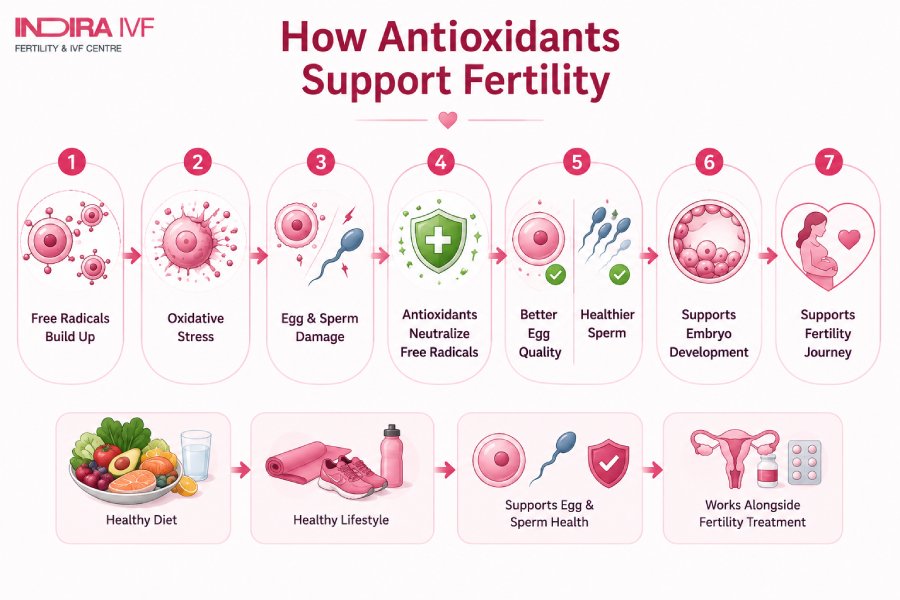
A developing egg sits in follicular fluid. Oxidative stress disrupts the egg's mitochondrial function. This has been linked to reduced egg quality, particularly in women over 35 or with diminished ovarian reserve. Oxidative stress also damages the sperm membrane and fragments sperm DNA, which affects motility and fertilisation, and that same fragmentation has been tied to poorer embryo development after fertilisation.
Smoking, alcohol use, obesity, poor sleep, and chronic inflammation all raise oxidative stress. Age has a similar impact, as the body's natural antioxidant defences decline over time. These causes compound one another rather than acting independently, so addressing even one, quitting smoking, for example, can meaningfully lower the overall load on the body's antioxidant defences.
Why Are Antioxidants Important for Fertility?
Antioxidants for fertility protect the cells most exposed to oxidative damage during reproduction. In women, that's the egg and its surrounding follicular fluid. In men, it's the sperm cell itself, which carries limited antioxidant defences of its own and depends partly on antioxidants present in seminal fluid.
Supporting egg and sperm function is different from guaranteeing pregnancy. Current research on antioxidants for fertility shows improvements in egg and sperm parameters and in embryo quality across several studies. However, the effects on live birth rates are less consistent, and trial sizes are often small.
1. Oxidative stress can affect egg and sperm quality, potentially influencing reproductive outcomes.
2. Nutrition and evidence based Antioxidant support may help support cellular health and protect reproductive cells from oxidative damage.
- Dr. Shruthi
Benefits of Antioxidants for Female Fertility
Supporting Egg Quality
Antioxidants for fertility may help support the mitochondrial function eggs rely on to mature, which becomes more important as natural mitochondrial output declines with age. Coenzyme Q10 is one of the more important antioxidants in this context.
Protecting Ovarian Function
Ovarian tissue takes on oxidative damage over the years, and by a woman's late 30s, that damage starts to affect how the ovary responds to fertility treatment. Antioxidants are one way to slow that build-up.
Reducing Oxidative Stress
The follicular fluid around a developing egg is one of the easier places to see the effects of antioxidant supplementation. Oxidative stress there tends to drop measurably with use.
Supporting Fertility Treatment Outcomes
Antioxidant supplementation is associated with improved egg and embryo quality during fertility treatment.
Benefits of Antioxidants for Male Fertility
Supporting Sperm Count
Antioxidant supplementation can raise sperm concentration in men whose semen analysis comes back below the normal range.
Improving Sperm Motility
Sperm rely on mitochondria to generate the energy needed to move. Coenzyme Q10 and vitamin E both support energy production, and motility is one of the more consistent benefits linked to antioxidant use in men.
Protecting Sperm DNA
Oxidative stress damages the genetic material in sperm, leading to DNA fragmentation. Antioxidants for fertility guard against this damage. Less fragmented sperm DNA gives an embryo a better starting point after fertilisation.
Supporting Overall Semen Quality
A semen analysis measures three things: sperm count, movement, and shape. Vitamin C, vitamin E, zinc, selenium, and N-acetyl cysteine have each shown a benefit on at least one of these measures.
Key Antioxidants That Support Fertility
- Coenzyme Q10 (CoQ10) - Supports the mitochondrial energy eggs and sperm need to mature and move. It is crucial for women over 35 and men with low sperm motility.
- Vitamin C - Protects sperm from oxidative damage.
- Vitamin E - Targets the sperm cell membrane directly, where it sits and prevents damage from spreading.
- Zinc- Men with low sperm counts often test low in zinc as well. Zinc plays an important role in testosterone production.
- Selenium- Sperm need selenium to move properly. Men with low levels tend to show slower, less coordinated movement.
- Folic Acid - Best known for its role in preventing neural tube defects,folic acid also affects egg quality and sperm count.
- Lycopene- A red pigment in tomatoes that has a possible link to sperm shape and movement, though the evidence here is thinner than for CoQ10 or vitamin E.
- Omega-3 Fatty Acids - Not antioxidants for fertility themselves, but they lower inflammation and support the membranes of both egg and sperm cells.
- N-Acetyl Cysteine (NAC) - Converts to glutathione in the body, one of its main internalantioxidants for fertility. It is known mainly for sperm DNA health and for ovulation in women with PCOS.
Best Food Sources of Antioxidants for Fertility
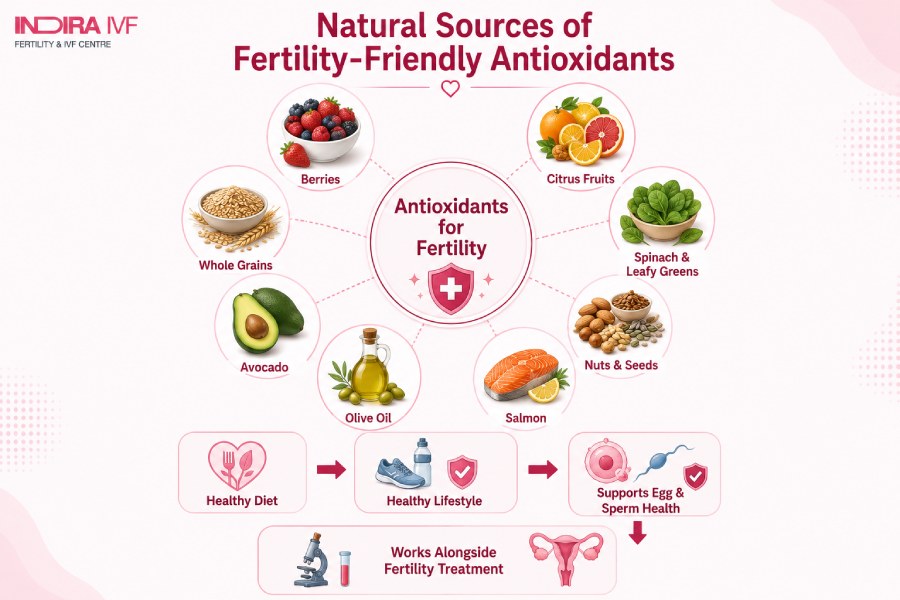
- Fruits and Vegetables - Berries and oranges are good sources of vitamin C. Leafy greens like spinach are a good source of folate.
- Nuts, Seeds, and Grains - A small handful of almonds or sunflower seeds is enough to get your daily requirement of vitamin E. Whole grains like oats are a reliable source of selenium.
- Fish and Oil - Oily fish, such as salmon, provide omega-3 fatty acids and selenium. Olive oil and avocado help the body absorb fat-soluble antioxidants, such as vitamin E, from other foods eaten in the same meal.
A diet built around these foods can provide meaningful antioxidant intake for many people trying to conceive, without needing a supplement.
Can Antioxidant Supplements Improve Fertility?
Research on antioxidant supplements is still developing.CoQ10 trials with women with diminished ovarian reserve report higher egg counts and better embryo quality. Antioxidant combinations in men with highsperm DNA fragmentation report similar gains. Other studies, including larger randomised trials, found no measurable change in sperm parameters after several months of supplementation.
Supplements may help people with identified oxidative stress markers more than they help others. Someone with a normal semen analysis and no diagnosed ovarian reserve issue may see little added benefit from supplementation beyond what a balanced diet already provides. They do not resolve infertility caused by structural, hormonal, or genetic factors, and dosing and duration should be determined by an IVF doctor rather than a product label, since the amounts used in clinical trials often differ from those sold over the counter.
Antioxidants and Fertility Treatments
Some IVF doctors recommend antioxidant supplementation for two to three months before starting a treatment cycle, timed to the natural maturation cycle of eggs and sperm. This applies particularly to women with diminished ovarian reserve and men with abnormal semen parameters.
Antioxidants for fertility are sometimes continued through a treatment cycle alongside monitoring and medication. Since sperm regenerate roughly every three months, antioxidant use during this window is a common focus ahead of IUI,IVF, or ICSI.
An IVF doctor tailors antioxidant use to each patient's diagnosis and test results rather than applying one protocol to everyone.
Lifestyle Habits That Complement Antioxidants
- Eat a Balanced Diet- Fruits, vegetables, nuts, seeds, and healthy fats can provide most of the antioxidants your body needs for fertility.
- Exercise Regularly - Moderate activity most days is the target. Several intense sessions with no rest in between can work against fertility rather than for it.
- Maintain a Healthy Weight - A BMI at either extreme, too low or too high, can disrupt ovulation and lower sperm count.
- Avoid Smoking - Cigarette chemicals speed up egg ageing. In men, they have a lower sperm count too.
- Limit Alcohol Intake - A drink or two a week is fine. Daily drinking is where fertility risk starts.
- Get Adequate Sleep - Most adults need seven to nine hours. Irregular sleep patterns affect the same hormones involved in ovulation and sperm production.
- Manage Stress - Talking to a therapist or counsellor, even a few sessions, can meaningfully lower day-to-day stress load.
Can Too Many Antioxidants Be Harmful?
More is not automatically better. A small amount of oxidative activity is part of normal cell signalling, including the process of egg maturation, so some studies suggest that high-dose antioxidant supplementation could disrupt this balance.
Food sources carry less risk of excess than concentrated supplements, since food comes with natural upper limits and other nutrients that support absorption. Always consult with your doctor before you start taking supplements.
Common Myths About Antioxidants and Fertility
Antioxidants cure infertility
Not true. They can support egg and sperm quality, but a blocked fallopian tube,endometriosis, or a low sperm count due to a medical condition requires its own treatment.
More antioxidants mean better fertility
Also not true. Very high supplement doses haven't shown better results in studies, and some research has linked them to poorer egg quality instead.
Supplements work better than food
Whole foods deliver antioxidants together with fibre and other nutrients that support how the body uses them, in a way that a supplement alone does not replicate.
Everyone trying to conceive needs antioxidant supplements
Many people get enough antioxidants through diet and do not need extra supplementation.
Antioxidants guarantee IVF success
IVF outcomes depend on age, diagnosis, and embryo quality. No supplement changes that on its own.
Conclusion
Antioxidants for fertility help manage oxidative stress, which affects egg and sperm quality and embryo development. CoQ10 for egg quality in women with diminished ovarian reserve and antioxidant combinations for sperm DNA fragmentation in men both have encouraging evidence, even though results vary across individual studies.
Diet remains the most reliable way to build antioxidant intake, and habits like regular exercise, adequate sleep, and quitting smoking work alongside it. From here, the next step is to see an IVF doctor who can review your specific history and test results and build a plan around them.