
How to Deal With IVF Comparison: Why Every Fertility Journey Is Different
Reviewed by Dr. P R Sahana
Gynaecologist & IVF Specialist
10+ years of experience
 Expert Verified
How is this page expert verified?
This information has been reviewed and approved by an experienced fertility specialist at Indira IVF to provide accurate and up-to-date guidance for our readers.
Overview
When you are trying to get pregnant, month after month of waiting, hoping, and facing disappointment can be emotionally exhausting. Fertility treatment adds another layer to that weight. Scans, injections, waiting rooms, and results can disrupt your day-to-day life. In the middle of all this, comparison creeps in quietly. A cousin conceives in her first IVF cycle, or a colleague shares a scan photo of the pregnancy. Someone in an online support group posts a positive result after the same protocol that did not work for you.
The comparison feels natural. It also hurts. Understanding why every fertility journey is different can ease some of that pain and keep couples focused on their own treatment. Read on to learn more.
Table of Contents
- Why Is Every Fertility Journey Different?
- How Can Comparing Your IVF Journey With Others’ Affect You?
- What Should You Know About the Emotional Side of Your IVF Journey?
- Why Does IVF Treatment Not Look the Same for Everyone?
- How Can You Stop Comparing Your IVF Journey With Others?
- What Should Couples Know Before Starting IVF?
- How Can You Cope With IVF-Related Stress?
- What Are the Benefits of Focusing on Your Own Fertility Journey?
- How Can You Handle IVF Success Stories Without Feeling Discouraged?
- When Should You Seek Emotional Support During IVF?
- Conclusion
- Key Takeaways
Why Is Every Fertility Journey Different?
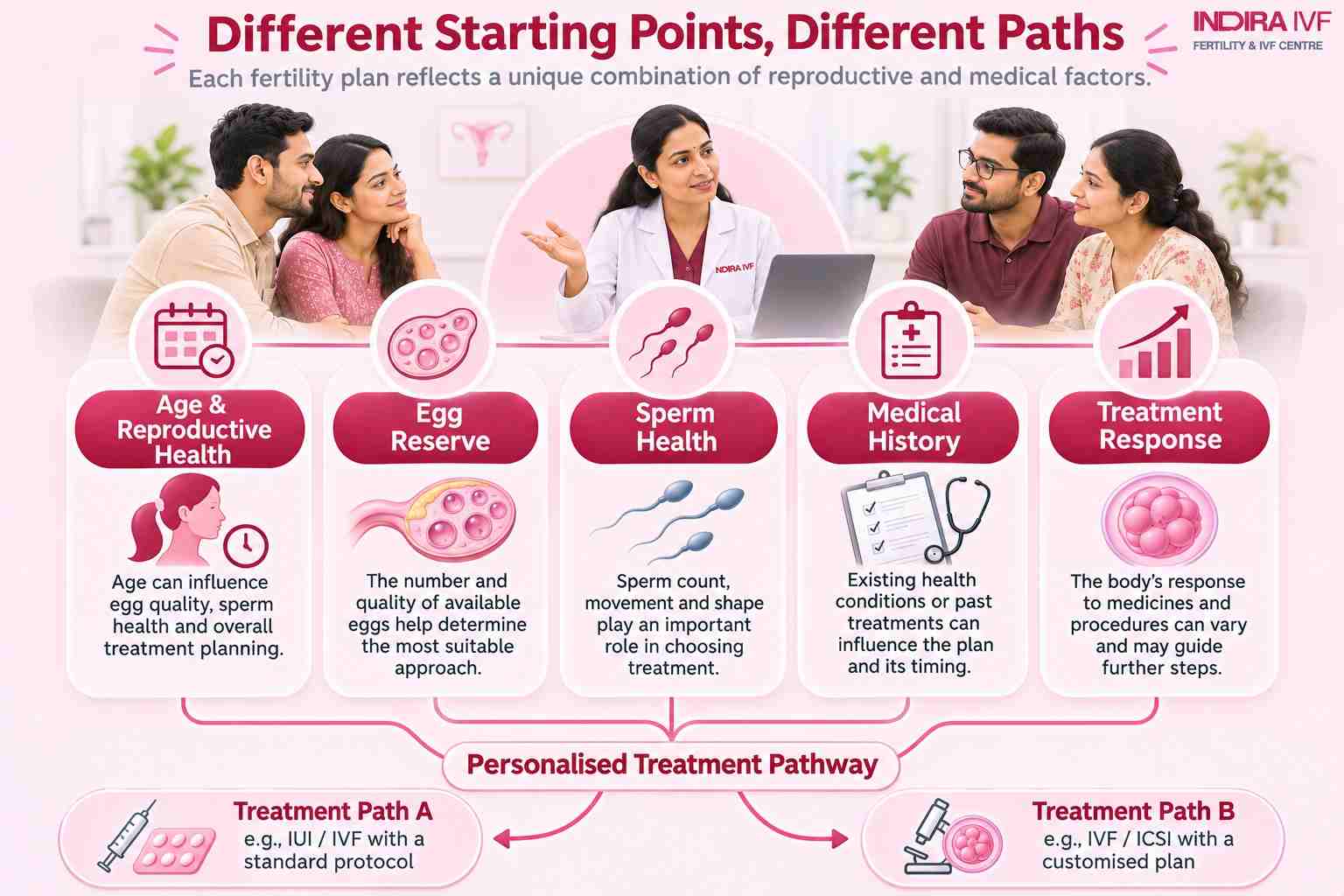
Fertility is not a single condition with a single cause. It reflects the health, history, and biology of two people at one point in time.
Several factors shape an individual fertility journey:
- Age of both partners
- Ovarian reserve, measured through AMH levels and antral follicle count
- Sperm count, motility, and morphology
- Underlying conditions such as PCOS, endometriosis, fibroids, or blocked fallopian tubes
- Previous pregnancies, miscarriages, or pelvic surgery
- Thyroid function, insulin resistance, and body weight
- Duration of infertility before treatment begins
No two couples arrive at the clinic with the same combination. A woman with a high AMH and a partner with normal semen parameters follows a very different path from a couple facing severe male factor infertility. The fertility journey meaning changes from person to person because the starting point changes.
How Can Comparing Your IVF Journey With Others’ Affect You?
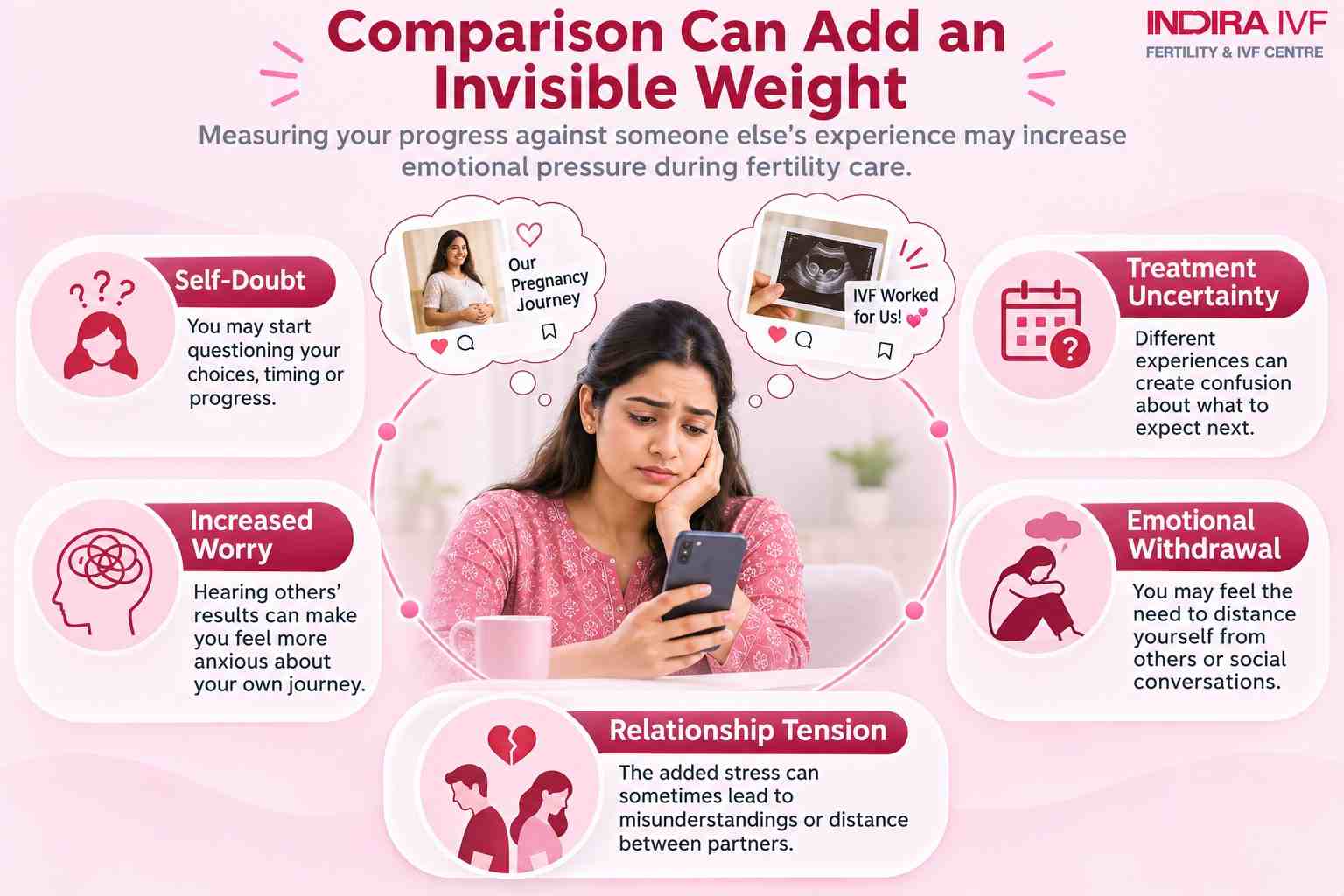
Comparing IVF journeys rarely produces useful information. It usually produces pressure. When another couple succeeds faster, many patients begin to wonder what they did wrong, even when they did nothing wrong at all.
Common effects of constant IVF comparison include:
- Loss of confidence in the treatment plan
- Questioning a doctor's advice without clinical reason
- Rushing into a second cycle before the body has recovered
- Requesting medications or add-ons that suited someone else
- Withdrawal from friends and family
Guilt directed at oneself or at a partner
What Should You Know About the Emotional Side of Your IVF Journey?
The emotional side of fertility treatment is real and well documented. Studies have found levels of distress in fertility patients comparable to those seen in people managing serious chronic illness. Hormonal medications add to this. Stimulation drugs can bring mood swings, irritability, disturbed sleep, and fatigue. However, these reactions are physiological and shouldn’t be seen as a sign of weakness.
Fertility journey and mental health are closely linked. Anxiety and low mood do not cause infertility, and they do not ruin a cycle. They still deserve care on their own.
Why Does IVF Treatment Not Look the Same for Everyone?
Different Fertility Treatments and Approaches
Not every patient starts with IVF. Treatment is chosen according to the cause of infertility.
Treatments that work with the couple's own eggs and sperm:
- Ovulation induction
- Intrauterine insemination (IUI)
- Conventional IVF
- ICSI
- Surgical sperm retrieval followed by ICSI
Options that involve a third party:
- Donor eggs, donor sperm, or donor embryos
- Gestational surrogacy
Differences in Medications and Treatment Response
Two women can receive the same drug at the same dose and respond differently. One may produce fifteen viable eggs; another only four. High responders face a risk of ovarian hyperstimulation and often need dose reduction or a modified trigger. Low responders may need a longer, gentler approach.
Egg number also says little about egg quality. A cycle that yields many eggs does not guarantee many usable embryos, and a cycle with fewer eggs can still produce a strong blastocyst. This single point explains why so many comparisons between friends fall apart.
Different Number of IVF Cycles and Outcomes
A few couples conceive in the first cycle. Many need two or three. Research on cumulative outcomes shows that live birth rates keep rising across repeated cycles, especially through the third and fourth attempt.
A cycle that does not end in pregnancy still carries value. It shows the treating team how the ovaries responded, how the embryos developed, and how the endometrium behaved. That information shapes the next plan. AnIVF success journey is measured by progress toward a healthy pregnancy, not by the number of attempts it requires.
How Can You Stop Comparing Your IVF Journey With Others?
Coping with IVF comparison begins with practical limits.
Steps that may help:
- Mute or unfollow accounts that trigger distress. This includes support groups that post mostly results.
- Set a fixed time for fertility reading; twenty minutes in the evening works well. Leave the rest of the day free of fertility content.
- Write down your own clinical details, including AMH, semen analysis, and protocol. Reread them when doubt appears.
- Bring questions to your doctor instead of to a search engine.
- Prepare a short reply for personal questions, such as "We are working on it and will share news when there is news."
- Track your own milestones, such as completed scans and embryos frozen, rather than other people's outcomes.
Comparison loses power when the treatment plan feels clear. Ask your fertility specialist to explain why they chose your protocol. A plan you understand is much harder to doubt.
What Should Couples Know Before Starting IVF?
A realistic picture at the start prevents a great deal of distress later. Here are a few useful points to discuss during counselling:
- Expected success rate for your age group and diagnosis
- Number of cycles that may be needed
- Total cost, including medications, freezing, and future transfers
- Time commitment for scans and visits
- Possible complications such as ovarian hyperstimulation
- Plan for surplus embryos
- Point at which the plan would be revised
Both partners benefit from attending consultations together. The male factor contributes to roughly half of all infertility cases, and shared appointments keep the treatment from resting on one person's shoulders.
How Can You Cope With IVF-Related Stress?
Stress management during treatment works best when it is simple and repeatable. Approaches that patients find useful may include:
- Gentle movement such as walking, stretching, or prenatal yoga, once cleared by the doctor
- Structured breathing or guided relaxation for ten minutes a day
- Regular sleep and meal timings during stimulation
- Continuing work, hobbies, or study where possible, to keep life from narrowing around the cycle
- Scheduled conversations with a partner about feelings rather than logistics
- Limiting alcohol and stopping smoking, both of which affect outcomes
What Are the Benefits of Focusing on Your Own Fertility Journey?
Your attention should be on your own fertility treatment journey. Couples who stay focused on their own plan tend to:
- Follow medication schedules more accurately
- Attend monitoring scans on time
- Communicate openly with the clinical team
- Make decisions about donor options or additional cycles with a clear mind
- Experience fewer conflicts as a couple
- Remain in treatment long enough to benefit from cumulative success rates
How Can You Handle IVF Success Stories Without Feeling Discouraged?
Success stories carry value, but they arrive without context. A post announcing a positive result rarely mentions the diagnosis, the protocol, the donor gametes, or the failed cycles that came before. Applying that headline to your own case creates an invalid comparison.
Here are a few adjustments that make these stories easier to receive:
- Remember that the outcome belongs to a different body and a different diagnosis.
- Allow yourself to feel both happy for them and sad for yourself. Both can be true at once.
- Step away from a conversation or celebration when you need to. Declining an invitation is acceptable.
- Look for stories about resilience and coping rather than only about positive results.
When Should You Seek Emotional Support During IVF?
Certain signs point to a need for professional support. Speak with a fertility counsellor or mental health professional if you notice:
- Low mood or tearfulness lasting more than two weeks
- Anxiety that interferes with work or sleep
- Loss of interest in activities once enjoyed
- Growing conflict or distance within the relationship
- Avoidance of social situations involving children or pregnancy
- Difficulty making treatment decisions
- Thoughts of self-harm
Thoughts of self-harm need immediate help. Most fertility centres offer counselling as part of routine care. Support groups led by trained facilitators focus on coping, which makes them a useful addition.
Conclusion
Every fertility journey is unique, and many couples go on to conceive with the right treatment. The path may take longer than expected. It may include a protocol change, a shift to ICSI, or a frozen transfer instead of a fresh one. None of that reflects failure. It reflects care being adjusted to fit one specific couple.
Your cycle deserves your full attention. Give it to your own scans, your own results, and your own conversations with your doctor. The comparison will always be there. It simply does not belong in your treatment plan.
Key Takeaways
- Age, ovarian reserve, sperm parameters, and underlying conditions shape every couple's outcome differently.
- IVF protocols, medications, and doses are chosen for the individual.
- Egg numbers do not predict egg quality or embryo quality.
- Success rates rise across repeated cycles.
- Social media shows positive outcomes far more often than negative ones.
- Emotional distress during fertility treatment is common and treatable.
- Counselling, structured routines, and clear communication with the clinical team ease the urge to compare.