
Overview
If a fertility test has come back mentioning "sperm DNA damage," or you and your partner have been trying to conceive without success, it is natural to feel confused. Male infertility gets discussed less than female infertility. Sperm DNA fragmentation means the genetic material inside a sperm cell has broken strands. It does not always show up on a standard semen test, yet it can affect natural conception and outcomes after IVF (in vitro fertilisation) or ICSI (intracytoplasmic sperm injection). This article covers its causes, testing and how modern sperm sorting techniques for male infertility help choose healthier sperm.
Table of Contents
- What Is Sperm DNA Fragmentation?
- Causes of Sperm DNA Fragmentation
- How Does Sperm DNA Fragmentation Affect Fertility?
- Signs and Symptoms of Sperm DNA Fragmentation
- How Is Sperm DNA Fragmentation Diagnosed?
- What Is Sperm Sorting Technology?
- How Can Modern Sperm-Sorting Technology Help?
- Sperm Sorting During IVF and ICSI
- Who May Benefit From Advanced Sperm Selection?
- Can Sperm DNA Fragmentation Be Reduced?
- What to Expect When Seeking Treatment for Male Factor Infertility
- Conclusion
What Is Sperm DNA Fragmentation?
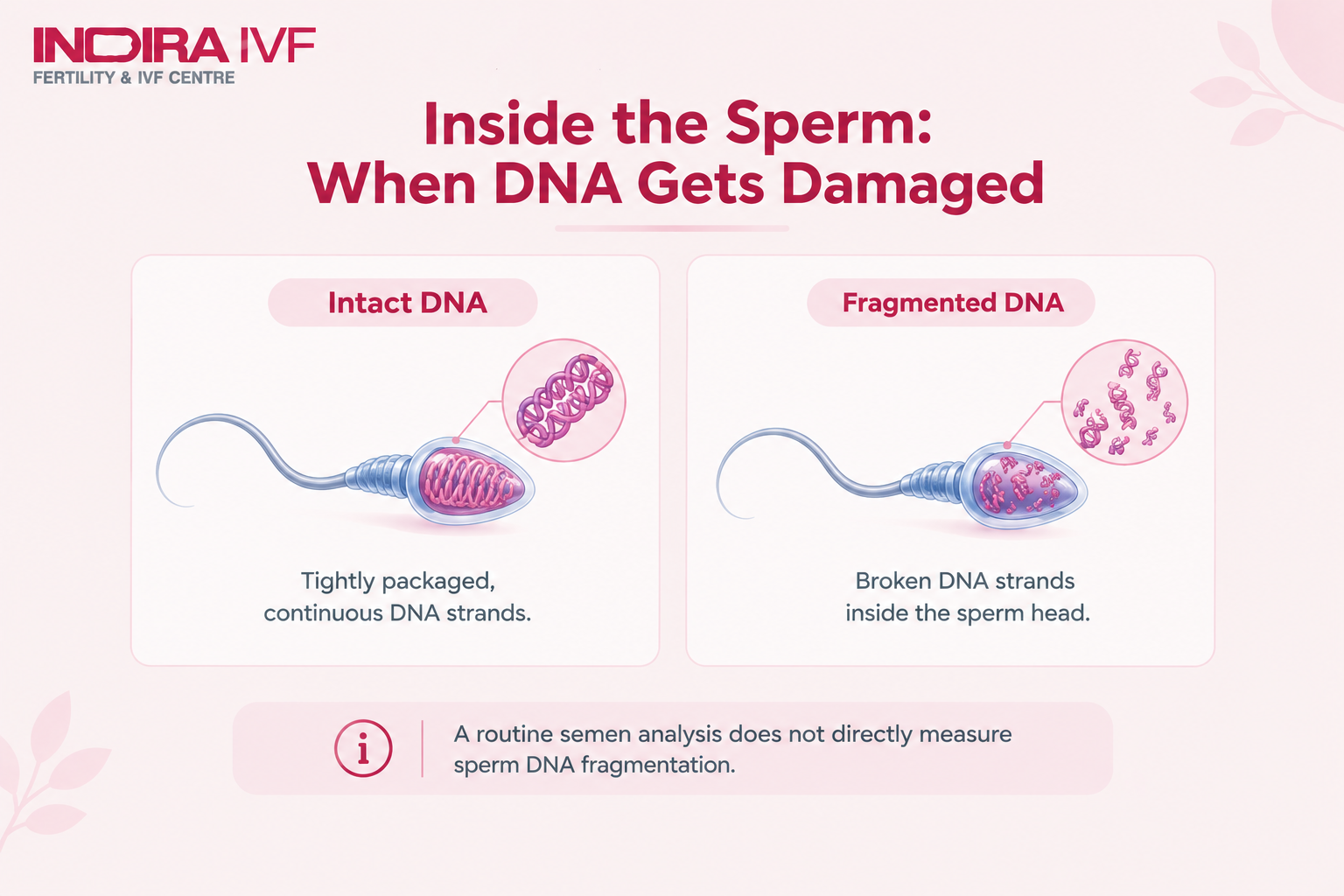
Sperm DNA fragmentation means the DNA inside a sperm cell has broken strands instead of one unbroken chain. A standard semen analysis checks sperm count, movement, and shape, not the DNA itself. So, two men can have similar reports and very different levels of DNA damage.
Understanding Sperm DNA and Male Fertility
Each sperm cell carries half the genetic material needed to create an embryo. This DNA is normally packaged tightly during development. If packaging goes wrong, or sperm is damaged afterwards, strands can break, though a small amount of fragmentation is normal.
What Does a High Sperm DNA Fragmentation Level Mean?
Fragmentation is measured as the DNA fragmentation index (DFI), a percentage showing how many sperm cells carry damage. According to a 2026 clinical review in Human Reproduction, a DFI of 20% or higher is generally treated as significant, and above 30% counts as high. A higher DFI does not mean pregnancy is impossible; it means the sperm may need extra support.
Causes of Sperm DNA Fragmentation
Sperm DNA fragmentation usually comes from a mix of factors, not one single cause.
Oxidative Stress and Lifestyle Factors
The most common cause is oxidative stress, when the body has too many unstable molecules called reactive oxygen species (ROS) and too few antioxidants to balance them. A poor diet, being overweight, chronic stress, and poor sleep all raise it.
Infections and Medical Conditions
Reproductive tract infections, including untreated sexually transmitted infections, can trigger inflammation that damages sperm DNA. A varicocele (enlarged veins in the scrotum, like varicose veins) also raises testicular temperature.
Heat, Smoking, Alcohol and Environmental Exposure
Frequent hot tub use, tight clothing, and long laptop-on-lap hours can raise scrotal temperature. Smoking, alcohol and pesticide or chemical exposure are also linked to higher DNA damage.
Age and Other Factors Affecting Sperm Health
Fragmentation tends to rise with age, particularly after the mid-forties. Certain medications, radiation, and chemotherapy also raise it.
How Does Sperm DNA Fragmentation Affect Fertility?
Sperm DNA fragmentation can affect fertility at more than one stage.
Impact on Natural Conception
Sperm with significant DNA damage can still fertilise an egg, but are less likely to lead to an ongoing pregnancy, and some research links high fragmentation to a longer time to conceive.
Effect on Fertilisation and Embryo Development
After fertilisation, the egg can repair some sperm DNA damage, but high fragmentation can overwhelm this capacity. This may show up as slower embryo growth, or embryos that stop developing before the blastocyst stage, usually reached five to six days after fertilisation.
Possible Impact on IVF and ICSI Outcomes
The impact of sperm DNA fragmentation on IVF has been studied widely, though findings vary. A meta-analysis on PubMed found high fragmentation linked to lower live birth rates after IVF and ICSI, though other large studies show a weaker link.
Signs and Symptoms of Sperm DNA Fragmentation
Sperm DNA fragmentation has no physical symptoms of its own. You cannot feel it, and it does not change how semen looks. It is usually suspected only after difficulty conceiving, repeated pregnancy loss or unexplained failure of fertility treatment. It gets found through testing, not through symptoms.
How Is Sperm DNA Fragmentation Diagnosed?
Sperm DNA fragmentation needs a specific laboratory test, separate from a routine semen analysis.
When May a Test Be Recommended?
Knowing when sperm DNA fragmentation should be tested helps avoid unnecessary testing. It is typically recommended for unexplained infertility despite normal standard results, recurrent pregnancy loss, repeated failed IUI or IVF/ICSI cycles, or a diagnosed varicocele.
Common Tests for Assessing Sperm DNA Fragmentation
Common methods include the SCSA (Sperm Chromatin Structure Assay), which measures DNA breaks with a machine called a flow cytometer; the TUNEL assay, which labels broken strands for counting under a microscope; and the SCD test, which checks how sperm DNA spreads out when treated with certain chemicals.
Understanding Test Results
Results are reported as a DFI percentage, with many laboratories treating 20% as a meaningful cut-off and 30% as high, though exact ranges vary by test method.
What Is Sperm Sorting Technology?
Sperm sorting refers to laboratory methods that select the healthiest available sperm before it is used in IUI, IVF, or ICSI.
Conventional Sperm Selection
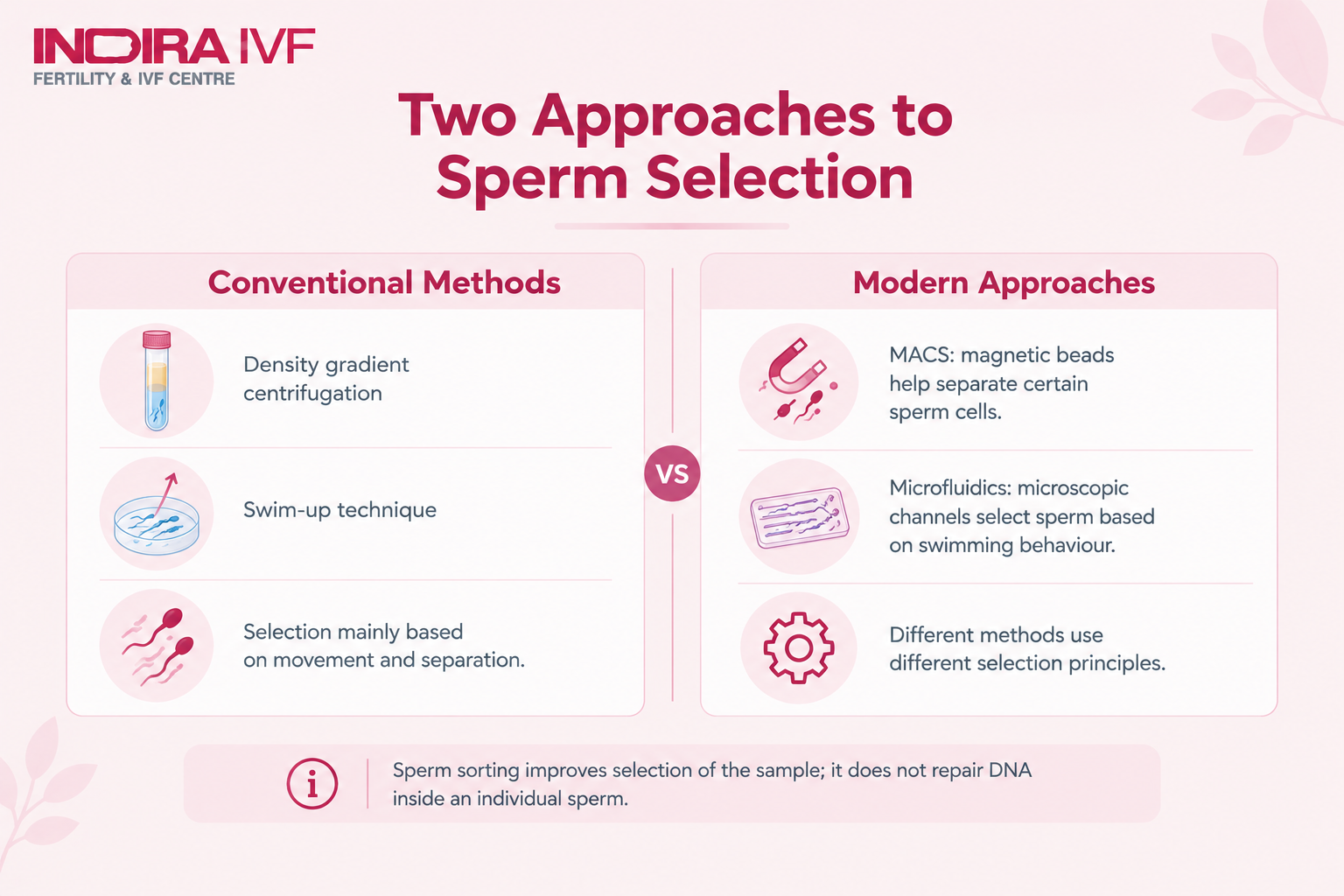
Traditional methods, such as density gradient centrifugation and the swim-up technique, spin or filter semen to separate faster sperm from slower ones. These improve concentration and motility but do not detect DNA damage.
Modern Sperm-Sorting Techniques
Newer sperm sorting techniques for male infertility identify and set aside damaged sperm, rather than relying on movement alone. These include magnetic-activated cell sorting (MACS), using magnetic beads that bind to damaged cells, and microfluidic sorting, which guides sperm through microscopic channels so only strong swimmers pass through.
How Sperm Sorting Differs From Standard Sperm Selection
Conventional methods select mainly by movement. Modern sorting adds selection based on DNA integrity and cell health, and microfluidic sorting also avoids the high-speed spinning used in centrifugation.
How Can Modern Sperm-Sorting Technology Help?
Modern sperm-sorting technology improves the sample used, not the DNA inside individual sperm cells.
Identifying Sperm With Better Characteristics
These techniques identify sperm with more typical shape, stronger movement, and healthier cell membranes, which are all linked to better fertilisation potential.
Selecting Sperm With Lower Signs of DNA Damage
MACS can separate sperm with high fragmentation once overall levels exceed 25%. Microfluidic sorting works toward the same goal by letting through only sperm with strong, sustained movement.
Supporting Sperm Selection for IVF and ICSI
Narrowing the sample down to sperm with better characteristics gives the embryology team a stronger starting point when fragmentation is high.
Sperm Sorting During IVF and ICSI
Sperm sorting is carried out as part of the IVF or ICSI process after the semen sample has been collected and before fertilisation. The sample is first prepared to separate the sperm from the seminal fluid. If the doctor feels it is appropriate, techniques such as MACS or microfluidic sorting may then be used to select sperm for fertilisation.
Using the Selected Sperm for ICSI
In ICSI, one selected sperm is injected directly into a mature egg with a fine glass needle. Since only one sperm is used per egg, its quality matters, which is why sperm selection is an active research area.
Monitoring Fertilisation and Embryo Development
The embryology team checks for signs of normal fertilisation over the following hours, then tracks embryo development over several days before a transfer is planned.
Who May Benefit From Advanced Sperm Selection?
Advanced sperm selection is not something every patient needs. Doctors may consider it when DFI is above the laboratory's recommended level, when infertility has no clear cause, after repeated IVF or ICSI failures, or in cases of recurrent pregnancy loss. Even then, sperm fragmentation is only one factor to consider when deciding on the next step.
Can Sperm DNA Fragmentation Be Reduced?
Sperm DNA fragmentation can often be reduced, depending on the underlying cause.
Lifestyle and Dietary Changes
Sperm takes around three months to develop, so changes you make today may only show up in a later sperm sample. Eating more fruit and vegetables, cutting down on alcohol, stopping smoking, maintaining a healthy weight and avoiding too much heat around the testicles are some of the steps often suggested when looking at how to reduce sperm DNA fragmentation naturally. According to a 2023 study in Basic and Clinical Andrology, men who took antioxidant micronutrients (vitamin E, coenzyme Q10, zinc, and folic acid) for three months saw their average DFI fall from 45.6% to 34.8%.
Managing Medical and Reproductive Health Conditions
Treating an underlying infection or a varicocele can lower fragmentation where these are contributing causes.
Medical and Fertility Treatment Options
If lifestyle changes and medical treatment do not improve the situation, fertility specialists may look at other options. These can include advanced sperm sorting or, in some cases, sperm retrieved directly from the testicles, where the level of DNA fragmentation may be lower.
What to Expect When Seeking Treatment for Male Factor Infertility
Getting help for male factor infertility generally starts with a few basic checks. These may include a medical history, physical examination, and semen analysis, followed by tests such as a DFI test or hormone testing when needed. Based on the findings, your fertility team can discuss the most suitable option, which may range from lifestyle changes and IUI to IVF or ICSI, with either standard sperm selection or advanced sperm sorting.
Conclusion
Sperm DNA fragmentation is only one part of male infertility, but it can still provide useful information when other tests do not explain what is going wrong. As testing methods improve, doctors also have more options when it comes to assessing and selecting sperm. For couples who have been trying without knowing why, the results may help point towards the next step, whether that means further testing, making some lifestyle changes or considering a suitable treatment.