
Can a Chromosomally Normal Embryo Still Fail to Implant?
Reviewed By Dr. Mohip Sahu
Gynaecologist & IVF Specialist
10+ years of experience
Overview
A chromosomally normal embryo has a good chance of developing into a healthy pregnancy, but chromosome status is only one part of the implantation process. Even when an embryo has the expected number of chromosomes, successful implantation depends on several other factors, including the embryo's continued development and the endometrium's condition and receptivity.
That’s a fair question: “can a healthy embryo fail to implant?” A euploid embryo has the expected number of chromosomes, but that does not guarantee implantation or a live birth. The embryo must also continue developing appropriately and establish a successful interaction with a receptive endometrium.
Embryo implantation can therefore fail even with no obvious problem. Sometimes, implantation simply does not occur despite everything appearing favorable.
Women who have questions or concerns about implantation may find this blog helpful. It explains the key factors that can influence the process and what they may mean for pregnancy.
Table of Contents
- What Does Embryo Implantation Mean in IVF?
- Can a Chromosomally Normal Embryo Still Fail to Implant?
- How Does the Uterus Affect Embryo Implantation?
- Does Embryo Quality Affect Implantation Even When Chromosomes Are Normal?
- How Is Embryo Implantation Failure Evaluated?
- What Can Be Done After a Euploid Embryo Fails to Implant?
- How Common Is Embryo Implantation Failure?
- When Should You Talk to a Doctor About Repeated Implantation Failure?
- Key Takeaways
- References
What Does Embryo Implantation Mean in IVF?
Patients looking for embryo implantation meaning should know that it is the process through which a developing embryo attaches to the lining of the uterus and begins interacting with the endometrial tissue. Before implantation can occur, the embryo must reach the blastocyst stage, and the endometrium must be well prepared.
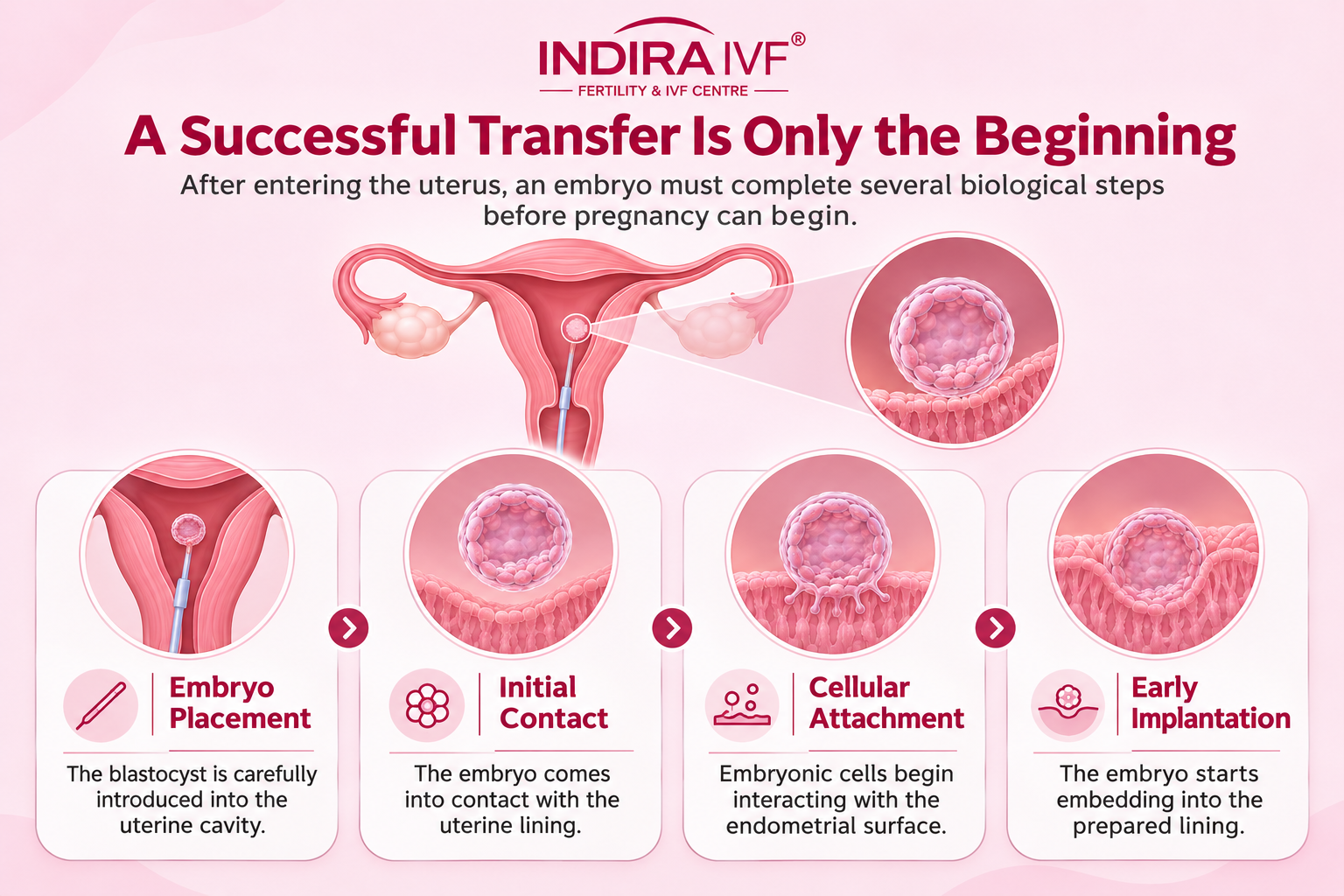
During embryo implantation in IVF, the embryo is placed directly into the uterine cavity through a process called embryo transfer. However, the transfer itself is not the same as implantation. Transfer is the stage before implantation.
After transfer, the embryo must still attach to the endometrium and establish the biological processes required for pregnancy. This requires coordination between the embryo and the endometrium.
Research has shown that implantation involves several stages, including attachment of the blastocyst to the endometrial surface and subsequent invasion into the underlying tissue. The endometrium must also undergo changes under the influence of reproductive hormones to become receptive.
Embryo implantation can fail even with a chromosomally normal embryo as a successful implantation depends on several other factors, including the embryo's continued development and the endometrium's condition and receptivity.
- DR. SHAINAZ TABASSUM
Note: Sometimes an embryo transfer can be successful while implantation still may not occur.
Can a Chromosomally Normal Embryo Still Fail to Implant?
Patients often keep thinking: what causes embryo implantation failure? They look for reasons.
The answer is that several factors can contribute, and some aren't even identifiable. Implantation depends on the embryo and the endometrium developing in coordination, so a problem with either side can affect the chance of pregnancy.
Doctors generally consider four areas:
- The uterus and endometrium
- Embryo characteristics
- Timing of endometrial preparation and transfer
- Other reproductive or health factors
Sometimes, evaluation finds a treatable issue, such as a uterine abnormality. In other cases, no clear cause is found. An unexplained failed transfer does not mean future transfers will also be unsuccessful.
Uterine and Endometrial Factors
The uterine cavity needs to be structurally suitable and healthy for implantation. Conditions such as endometrial polyps, submucosal fibroids, intrauterine adhesions, certain congenital uterine abnormalities, and fluid associated with hydrosalpinx can affect reproductive outcomes.
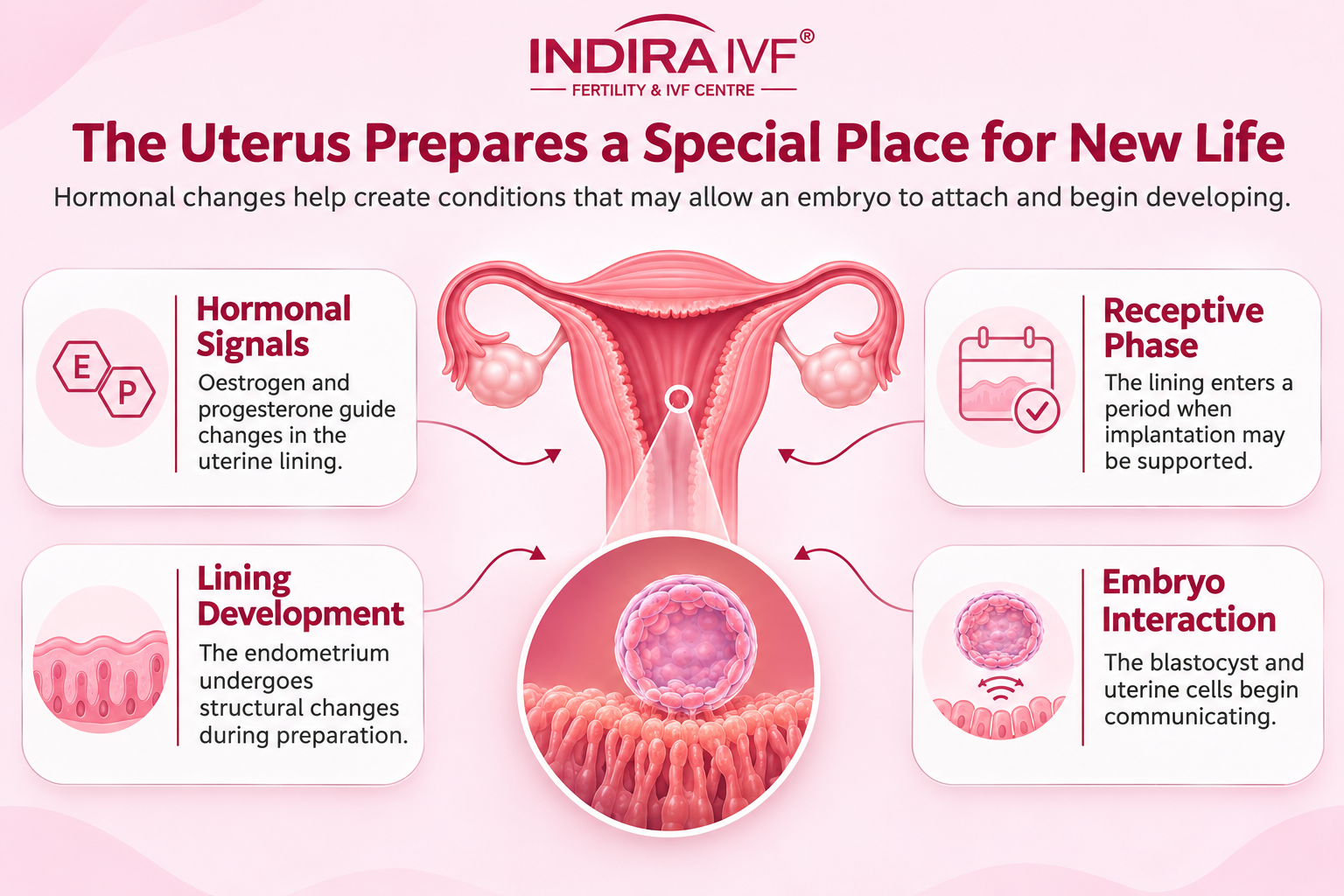
Adenomyosis and endometriosis may also contribute to factors, leading to a failed embryo transfer. The endometrium itself also needs to respond appropriately to hormonal stimulation. During a medicated frozen embryo transfer, for example, estrogen and progesterone are used to prepare the lining and coordinate it with embryo development.
When repeated implantation failure occurs, a fertility specialist may therefore consider whether a uterine or endometrial factor could be contributing.
Embryo Development and Quality
A euploid result does not mean that every euploid embryo has exactly the same developmental potential.
Embryologists assess blastocyst morphology using features such as expansion, the inner cell mass, and the trophectoderm. Research involving more than 2,000 euploid embryos has found associations between morphology and ongoing pregnancy or live birth outcomes.
Developmental timing may also provide additional information. Studies have reported different outcomes among euploid blastocysts based on the day they reached the blastocyst stage, although slower development does not mean an embryo cannot result in a live birth.
Timing of the Implantation Window
The endometrium does not remain equally receptive throughout the menstrual cycle. It undergoes hormone-driven changes that create a period during which it can support implantation.
The embryo and endometrium therefore need to be appropriately synchronized. In a programmed frozen embryo transfer, the timing of progesterone exposure and embryo transfer is especially important because the embryo is transferred according to the endometrium's developmental stage.
However, patients are advised not to stay reliable on commercially available tests.
Other Factors That May Affect Implantation
Age, underlying reproductive conditions, sperm and egg factors, embryo development, and aspects of the IVF cycle can all influence the probability of success.
Some factors are also outside anyone's control. Even when the embryo appears suitable and the uterine evaluation is reassuring, implantation may not occur because reproductive biology is not completely predictable.
This is one reason doctors generally avoid attributing a single failed transfer to something the patient did or did not do.
How Does the Uterus Affect Embryo Implantation?
The uterus provides the environment in which implantation occurs, but a failed transfer does not automatically indicate that the uterus is abnormal.
A fertility specialist may recommend certain tests to assess the uterine cavity when the clinical history suggests they could provide useful information. These tests may include ultrasound, saline infusion sonography, three-dimensional ultrasound, or hysteroscopy, depending on the patient's condition.
Clinicians closely review the results to identify issues such as polyps, adhesions, some fibroids, or structural abnormalities that may interfere with implantation.
However, the presence of a uterine abnormality does not automatically prove that it caused a particular failed transfer. The clinical significance depends on the type, size, location, symptoms, and individual reproductive history.
Does Embryo Quality Affect Implantation Even When Chromosomes Are Normal?
Yes. A euploid result is an important piece of information, but it does not mean that all euploid embryos have identical developmental potential. This is one reason why does a euploid embryo fails to implant can be a difficult question to answer in an individual IVF cycle.
PGT-A mainly evaluates chromosome copy number in the cells that are tested. It does not fully assess the biological processes involved in embryo development, implantation, and pregnancy establishment.
Embryo morphology can offer additional prognostic information. For instance, research involving euploid blastocysts has found associations between the quality of the inner cell mass and trophectoderm and subsequent pregnancy outcomes. Developmental timing has also been associated with differences in reproductive outcomes in some studies.
However, embryo grading should not be interpreted as a guarantee of success. A euploid embryo with a less favorable grade can still implant and result in a healthy baby, while an embryo with an excellent morphology can fail to implant. The chromosome result and embryo grade are therefore best understood as pieces of information that help estimate potential, rather than as a prediction of what will definitely happen.
How Is Embryo Implantation Failure Evaluated?
Evaluation of embryo implantation failure after IVF usually starts with a detailed review of the previous IVF cycle rather than immediately ordering numerous tests. The fertility specialist may review:
- The number and developmental stage of embryos transferred
- PGT-A results, if testing was performed
- Embryo morphology and developmental timing
- The type of embryo transfer used
- Endometrial thickness and preparation
- Estrogen and progesterone exposure and timing
- Previous pregnancy history
- Uterine imaging and surgical history
- Conditions such as endometriosis, adenomyosis, or hydrosalpinx
If repeated failures warrant further evaluation, the doctor may investigate the uterine cavity or other potentially relevant factors.
Not every test marketed for implantation problems has strong clinical evidence. This is particularly important for patients considering expensive IVF add-ons. Tests such as endometrial receptivity assessments and treatments such as immune therapies should not automatically be presented as proven ways to improve live birth rates.
What Can Be Done After a Euploid Embryo Fails to Implant?
Euploid embryo implantation failure does not necessarily mean that the next embryo will fail.
After a single unsuccessful transfer, the fertility team may review the cycle and decide whether anything needs to change before another transfer. If several suitable embryos have failed to result in pregnancy, a more detailed evaluation may be appropriate.
The approach depends on the individual case. If a uterine abnormality is found, treatment may be considered. The fertility specialist may also adjust the embryo transfer protocol or hormonal preparation for a future cycle.
However, not every failed transfer has a known or treatable cause. Repeated IVF failure can also be emotionally difficult, so psychological support may be helpful alongside medical care.
How Common Is Embryo Implantation Failure?
Implantation failure is not unusual in IVF because even embryos considered suitable for transfer do not have a guaranteed chance of establishing a pregnancy. The exact rate depends on factors such as maternal age, embryo stage and quality, chromosome status, the transfer protocol, and how implantation or pregnancy is defined.
Studies of euploid embryo transfers have reported substantially different implantation and live birth rates depending on embryo characteristics and patient factors. For example, research has found higher sustained implantation rates for good-quality day-5 euploid blastocysts than for some embryos with poorer morphology or later development.
Therefore, one failed transfer should not automatically be interpreted as evidence of infertility caused by the uterus or as evidence that an embryo was not truly euploid.
When Should You Talk to a Doctor About Repeated Implantation Failure?
Patients should discuss repeated unsuccessful embryo transfers with their fertility specialist, especially when good-quality or euploid embryos have been transferred without resulting in pregnancy.
Why do embryos fail to implant? To answer this question, doctors review the patient’s complete treatment history, although they may not identify a definite cause. The fertility specialist may consider factors such as embryo quality, uterine and endometrial health, transfer timing, and previous treatment outcomes when deciding whether further evaluation is needed.
No universal number of failed transfers proves something is wrong. Age, embryo characteristics, previous results, and the expected chance of implantation all play a role. A fertility specialist reviews these factors together and determines whether additional testing or changes to the treatment approach may be appropriate.
Key Takeaways
A failed implantation can be deeply disappointing, particularly when everything, especially an embryo, has been found to be chromosomally normal. However, one unsuccessful transfer does not mean that pregnancy is unlikely or that there is necessarily a problem with the uterus. Implantation depends on several factors, and in some cases, no definite reason for the failure can be identified.
When implantation fails repeatedly, a fertility specialist can review the previous IVF cycles, embryo characteristics, uterine health, endometrial preparation, and transfer timing to determine whether further evaluation or changes in treatment may be helpful.
Every fertility journey is unique, and a failed transfer does not determine the outcome of future attempts. Getting the right care and guidance matters, and it is even more important to see a specialised IVF doctor nearby. They provide the right information, answer a patient's questions, guide you through the process, and ensure the transfer is done appropriately.
References
- Akaeda, S., Aikawa, S., & Hirota, Y. (2024). Spatial and molecular anatomy of the endometrium during embryo implantation: A current overview of key regulators of blastocyst invasion. The FEBS Journal, 291(19), 4206–4221. https://doi.org/10.1111/febs.17077 PubMed
- Gharib Nazem, T., Sekhon, L., Lee, J. A., Overbey, J., Pan, S., Duke, M., Briton-Jones, C., Whitehouse, M., Copperman, A. B., & Stein, D. E. (2019). The correlation between morphology and implantation of euploid human blastocysts. Reproductive BioMedicine Online, 38(2), 169–176. https://doi.org/10.1016/j.rbmo.2018.10.007 PubMed
- Awadalla, M. S., Vestal, N. L., McGinnis, L. K., Ahmady, A., & Paulson, R. J. (2021). Effect of age and morphology on sustained implantation rate after euploid blastocyst transfer. Reproductive BioMedicine Online, 43(3), 395–403. https://doi.org/10.1016/j.rbmo.2021.06.008 PubMed